In Furnas, on São Miguel, two thermal baths sit only minutes apart: a pool inside a garden with more than 200 years of history, and a set of open-air pools surrounded by greenery. Most visitors to the valley wonder which one to pick, or whether it is worth doing both.
This guide gathers what the official websites of Terra Nostra Park and Poça da Dona Beija say about their history, their water and how to visit. Where the official information stops, we say what to confirm and where, because hours and prices change.
Overview
Terra Nostra Park describes the Furnas Valley as one of the world's largest hydropoles, with more than 30 springs, each carrying different minerals picked up from the soil the water crosses. This is the setting for both places in this guide, which share hot, iron-rich water but have a very different character.
Terra Nostra Park is a historic botanical garden with plant collections, shaded paths and a large thermal pool at its centre. Poça da Dona Beija is a place built for bathing, with several pools at around 39 degrees and opening hours that run into the night. For the rest of the valley, read our Furnas Valley guide, and for the island as a whole see the São Miguel island page.
Terra Nostra Park
History and layout
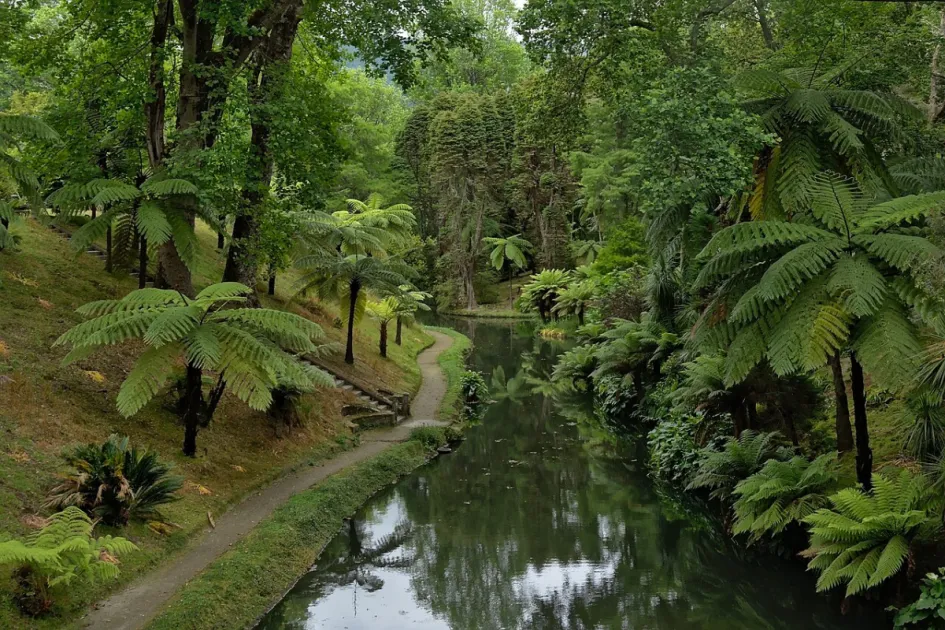
According to the official site, the gardens have more than 200 years of history and were named in 2015, by the book The Gardener's Garden (Phaidon Press), one of the 250 best gardens in the world. The layout is naturalistic, and each species is treated like a museum piece in what the park calls an open-air museum.
The points-of-interest page mentions the Memorial to the Viscondes da Praia and busts of Thomas Hickling and Vasco Bensaude, but it does not explain who they were or what role they played. The same site links the park to the Bensaude group and to the Terra Nostra Garden Hotel, which sits beside the garden. If you want dates and historical detail, ask on site or check the official website instead of relying on third-party summaries.
Collections and plants
The park covers 12.5 hectares of forest and garden, with 8 collections and 1,800 botanical species, according to the official site. The microclimate, volcanic soil, temperate climate and frequent rain and humidity explain the variety, which includes native Azorean flora and plants from America, Australia, New Zealand, China and South Africa.
Highlighted collections include camellias, ferns, cycads and bromeliads. The site also mentions trees such as the oak known as Carvalho-Roble and the araucaria, several watercourses running through the garden, and birds such as the ferruginous duck, the blackbird, the Azores starling and the canary.
Points of interest
Besides the thermal pool, the site lists the grottoes, the serpentine canal and the Victoria cruziana. The homepage also shows a seasonal autumn route, listed with hours from 10:30 to 16:30, about 3 km and 1 hour 30 minutes. Such routes change with the seasons, so confirm on the website that one is running on your date.
The thermal water
The Terra Nostra pool is fed by a volcanic spring at about 42 °C, according to the park's homepage. Another official page speaks of bathing temperatures between 37 and 40 °C and, for the spring feeding the pool, between 36 and 42 °C. If the figures matter to you, check the current numbers on the park's website.
The park says the water is rich in magnesium, iron and calcium, and credits it with anti-inflammatory and antioxidant properties, as well as historical use for muscle pain and skin problems. These are promotional statements with no sources cited on the page. Treat them as a description of what the park promotes rather than medical advice: if you are pregnant, have low blood pressure or any other health condition, speak to your doctor first.
The iron gives the water its brownish colour and can stain. Poça da Dona Beija expressly warns that textiles may be stained and that light or dyed hair may change colour. Terra Nostra's site says nothing on this point, but it is sensible to bring a swimsuit you do not mind losing. To compare with other options on the island, see our guide to hot springs and thermal pools on São Miguel.
Poça da Dona Beija
What it is
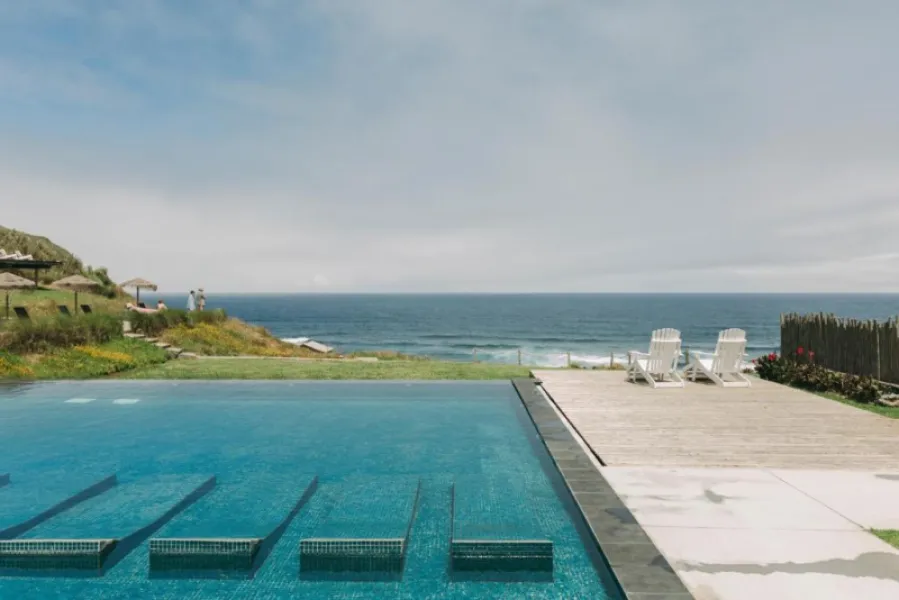
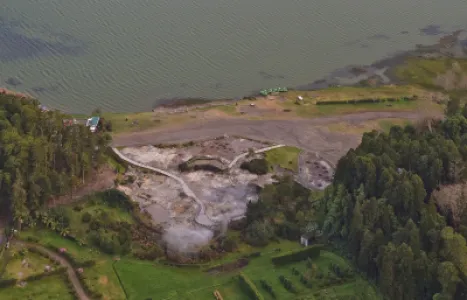
The official site describes Poça da Dona Beija as naturally hot, iron-rich water from the Furnas volcano, in a leisure and relaxation space surrounded by nature. It lists four bathing pools: Serena (39 °C, 80 cm deep), Mística (39 °C, 90 cm), Convívio Thermae (39 °C, 30/60 cm) and Meditação (39 °C, 130 cm). The spring itself is off limits for bathing.
A short, recent history
According to the history section of the site, in the 1900s hot water rose beside a small branch of the Ribeira dos Lameiros and enriched the soil where the local hot-water yams grow. By popular tradition, a local priest was the first regular user of a pool in a cave at Lomba das Barracas. Growing fame led to government intervention in 1988, and the spring became known as Poça da Dona Beija, a reference to a Brazilian telenovela that had aired locally. It has also been called Poça da Juventude, Água do Poço and Poça do Paraíso.
Rising, uncontrolled visitor numbers led the regional Environment and Sea Secretariat to call for an urgent intervention plan in 2005, and public access was closed in February 2007 for safety and public health reasons. The site reopened on 29 November 2010 after redevelopment, with management and maintenance awarded through a public tender to a private company. A further redevelopment followed in 2014 and 2015, and in 2021 and 2022 the changing rooms and toilets were renovated and facilities for reduced mobility were added.
Practical tips
Poça da Dona Beija
The info page lists opening hours of every day from 08:30 to 23:00, with last entry at 21:30 and pools to be left by 22:30. Each ticket allows 1 hour 30 minutes on site. Tickets are sold exclusively online, and a QR code, digital or printed, must be shown at the entrance. When we checked, the adult price was 12 euros before 17:30 and 16 euros from 18:00, with separate prices for children aged 2 to 6. There are no exchanges, refunds or returns, so only buy once you are sure of the date.
The ticket includes baskets for personal items, cold-water showers, changing rooms, toilets and parking subject to availability. Towels, lockers and hot showers are paid extras; towel rental was temporarily unavailable on the homepage when we looked, so bring your own. The site prohibits food and drink, alcohol, glass, pets (except assistance dogs), ball games, drones anywhere on the site, photography without prior approval, and soap in the pools. Swim diapers are mandatory for little ones. The homepage also shows special hours for 24 and 31 December, a closure on 25 December and special hours on 1 January, which should be confirmed every year.
The pools can only be reached by steps: the grounds are accessible, but staff do not provide accompaniment. In case of lightning, thunder or earthquakes, everyone must leave the water.
Terra Nostra Park
In the pages we consulted we did not find the park's opening hours or entry price, so we do not quote them. Confirm both, and the thermal pool's availability, on the official website parqueterranostra.com, which exists in Portuguese and English, or at the ticket office. The seasonal route has its own hours, so also check what is included in your ticket.
Combining it with the rest of the day
Since a bath at Poça lasts 1 hour 30 minutes and the garden calls for an unhurried stroll, many people set aside a full day for the valley. If your plan includes the local dish cooked in the volcanic ground, read our article on the cozido das Furnas before you decide the order of the day.
FAQ
Is the water at Terra Nostra the same as at Poça da Dona Beija?
No. They are two different places in the Furnas Valley, with their own springs and management. Both use hot, iron-rich water, but each site presents its own temperature figures.
How long can I stay at Poça da Dona Beija?
According to the official site, each ticket allows 1 hour 30 minutes on site. Last entry is at 21:30 and the pools must be left by 22:30.
Can I buy a Poça da Dona Beija ticket at the door?
The official site says tickets are sold exclusively online and that a QR code, digital or printed, is required at entry. Always confirm on the site before you go.
What should I avoid bringing into the water?
Poça da Dona Beija warns that the iron-rich water can change the colour of light or dyed hair, nails and jewellery, and stain fabrics. Bring a bath cap and a swimsuit that can take a stain.
Final thoughts
Terra Nostra Park and Poça da Dona Beija answer different wishes. The first is a garden for a slow walk, with more than two centuries of history and a thermal pool in the middle; the second is a place designed for bathing, with long opening hours and pools at 39 °C.
Make your choice with the official hours, prices and rules in front of you, because they are the ones that count. And if the weather allows, give the valley a whole day: there is more to see than the two baths.