Furnas is the part of São Miguel where the volcano is not a distant idea but something you can smell, hear and, at lunchtime, eat. The valley sits inside a volcanic crater in the east of the island, and a lake, boiling pools, steam vents, hot springs and a lush garden all share the same place.
This guide walks you through the valley in the order most visitors see it: the lake, the fumaroles, the thermal waters and the village, with practical notes on getting there. Where a detail such as an opening time or a price can change, we say what to check rather than guess.
Overview
According to Visit Azores, the official tourism site, the valley is home to the lake and the parish of Furnas, and its typical smell of sulphur and its boiling, smoking hot springs are the visible evidence of volcanic activity. Other guides describe Furnas as one of the most visited areas of the island.
The valley lies in a volcanic crater. The guides we consulted agree it can be visited all year: the thermal waters are said to be especially atmospheric on cloudy, rainy or cooler days, and you need at least one day to do it justice. To place Furnas on the wider map, read our guide to São Miguel by area.
Getting there
By car, one local guide puts the drive at around 40 to 45 minutes from Ponta Delgada and around 30 minutes from Ribeira Grande. Another notes that the two access roads, one from the south and one from the north, are winding, so allow some extra time. A rental car is the easiest option; see our 7-day São Miguel road trip itinerary for how Furnas fits in.
Public transport exists but is slow: the same guide reports that a bus from Ponta Delgada can take more than an hour and a half, and that from Ribeira Grande there is no direct service, so you change in Ponta Delgada. Check current timetables with the local bus operator before relying on it. If you do not drive, organised excursions and transfers are the alternative.
The Furnas lake
The Furnas lake (Lagoa das Furnas) fills a volcanic crater. Its water looks green, which one local guide attributes to organic matter accumulating on the bottom. The same guide says the water is not suitable for bathing, so treat the lake as a place to look at, walk around and photograph, and follow any signs posted on site.
On the shore stands the Chapel of Nossa Senhora das Vitórias, a neo-Gothic building that Azores Airlines describes as one of the most original temples in the archipelago. Guides also list the Mata-Jardim José do Canto, the Furnas environmental interpretation centre and the PRC06 SMI walking route around the lake; check the trails page and the route's own signage for length and conditions.
Fumaroles and caldeiras
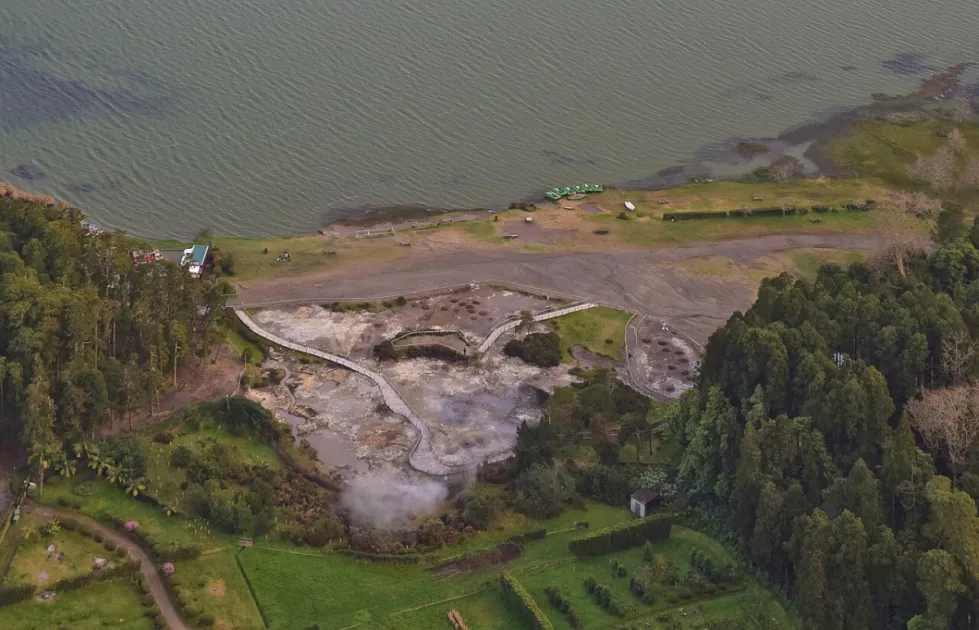
Beside the lake, the fumarole and caldeiras area shows boiling pools and vents of sulphurous steam. The area is set up for visitors, with wooden walkways that let you move between the pools safely. Stay on the walkways: the water here is boiling.
It is a popular spot, so one guide advises arriving early to avoid the crowds. The same guide mentions a paid car park at the fumaroles, quoted at 3 euros; prices change, so confirm on site. This is also where the cozido cooks in the heat of the earth, which we cover in the food section and in our article on the cozido das Furnas.
Gardens and thermal waters
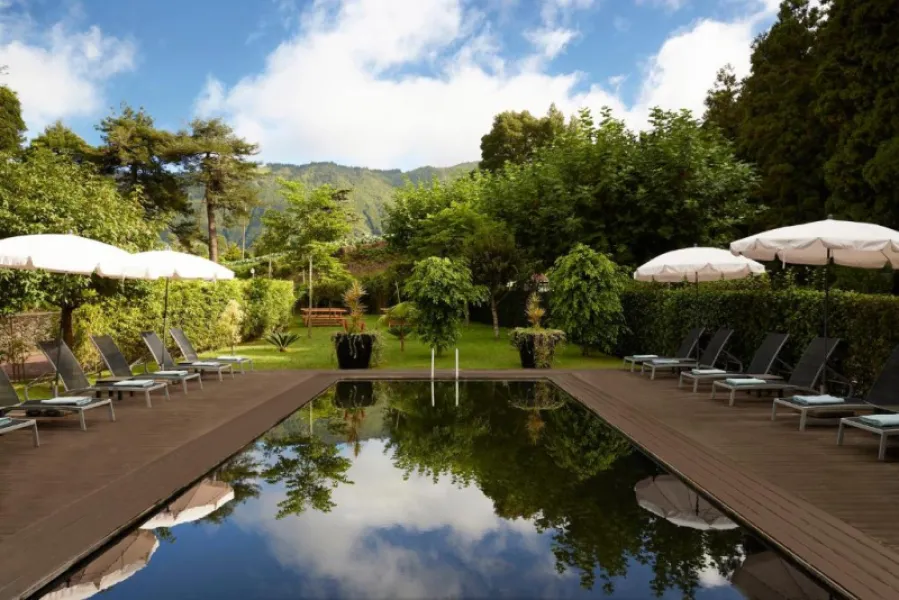
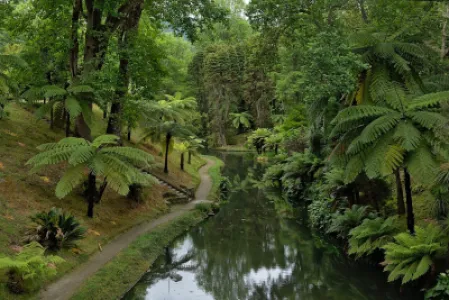
Terra Nostra Park combines a botanical garden of about 12 hectares with a thermal pool. Azores Airlines highlights one of the largest camellia collections in existence. The water is brown because it comes from an iron-rich spring, and one guide reports a temperature of 35 to 40 degrees.
Poça da Dona Beija is a set of natural thermal pools at about 39 degrees. A local guide says it stays open until 11 pm, which makes an evening soak possible; confirm the current hours before you go. Poça da Tia Silvina, at about 38 degrees, is described as a quieter, free option beside a cold river, better for dipping your feet than for full immersion.
Bring a swimsuit you do not mind staining: one guide warns that the iron-rich water can discolour fabric permanently. For the full picture of São Miguel's thermal options, read our guide to hot springs and thermal pools and check opening hours and entry fees on each venue's official page, because we cannot guarantee them here.
The village and viewpoints
According to one guide, the village of Furnas is easy to cover on foot. Places the guides list include the Jardim da Alameda, the Jardim das Quenturas, the Casa Invertida and the churches of Nossa Senhora da Alegria and Santa Ana. Treat these as suggestions to confirm on the day, not guaranteed stops.
The viewpoints that guides associate with the valley are Pico do Ferro, Lombo dos Milhos, Vista do Vale, Castelo Branco and Salto do Cavalo. What you see depends on the weather. See also our guide to the best Azores viewpoints and the viewpoints page.
What to eat
The dish of the valley is the cozido das Furnas, cooked in a pot buried in the ground near the caldeiras. Azores Airlines mentions around 5 hours of cooking. Because many restaurants make it to order, one guide recommends booking ahead. That guide names Tony's and Caldeiras & Vulcões as places to try it; confirm they are open and how to book.
Other specialities the guides mention are the bolo lêvedo, said to originate in Furnas, and Furnas cheese. For tea, the north coast has two plantations; see our tea plantation guide. If you plan to stay overnight, browse accommodation on São Miguel.
Planning your day
A practical day: start early at the fumaroles, walk around the lake, have the cozido for lunch (booked in advance), spend the afternoon in a thermal garden or pool, and keep the evening for Dona Beija if the hours allow. Several guides say one day is the minimum; staying a night lets you see the valley without rushing.
What to check before you go: opening hours and prices at Terra Nostra and Dona Beija, the parking fee at the fumaroles, the cozido booking, trail conditions and bus timetables. The official starting point is the valley page on Visit Azores.
FAQ
Can I swim in the Furnas lake?
One local guide says the water is not suitable for bathing. Always follow the signs on site.
How long does it take to drive from Ponta Delgada to Furnas?
One guide says around 40 to 45 minutes by car, on winding roads. By bus it can take more than an hour and a half.
Do I need to book the cozido das Furnas?
Many restaurants make it to order, so book ahead and confirm the conditions with the restaurant.
Can I visit the thermal pools in the evening?
Poça da Dona Beija is reported to stay open until 11 pm. Confirm the current hours before you go.
Final thoughts
Furnas rewards people who are not in a hurry: a lake, steam rising from the ground, a garden with brown thermal water and a lunch cooked by the volcano can fit into one day, but they work better with a night. Prepare your visit with the São Miguel island page and always confirm hours and prices at the source.