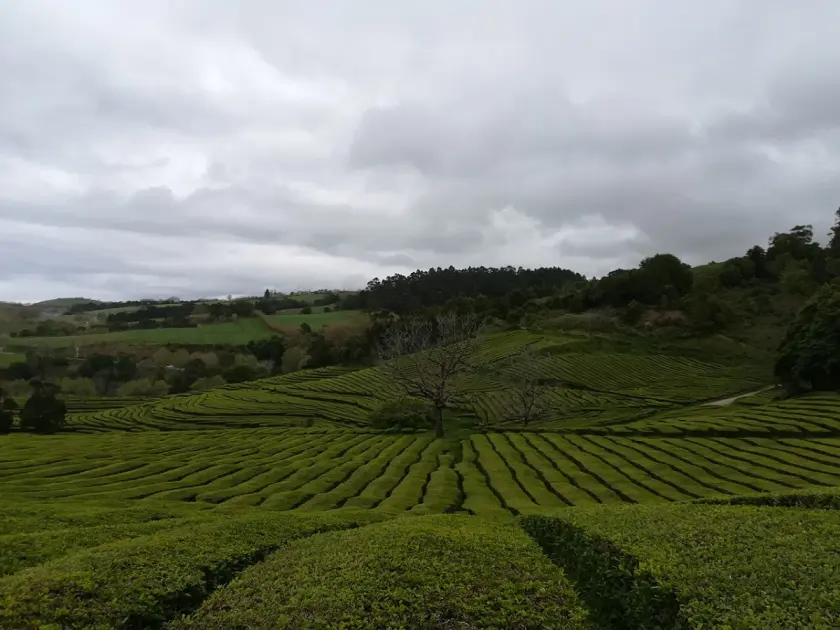
Hidden among the emerald hills of northeastern São Miguel, two tea plantations quietly hold a distinction found nowhere else on the European continent: Gorreana and Porto Formoso are Europe's only active tea plantations. Founded in the 19th century against the backdrop of the Azores' extraordinary volcanic landscape, these two working farms produce organic tea using methods largely unchanged for over 140 years. Whether you're a tea enthusiast, a history buff, or simply a traveller looking for something genuinely unique, visiting these plantations is one of the most memorable experiences São Miguel has to offer — and best of all, admission is completely free.
Why Does Europe's Only Tea Grow in the Azores?
Tea cultivation in the Azores began in 1848, when seeds brought from Brazil were planted on several properties across São Miguel. The initiative was led by José do Canto, a visionary agricultural entrepreneur and one of the most influential figures in 19th-century Azorean history. To ensure the project's success, Canto recruited two Chinese experts — master Lau-a-Pan and interpreter Lau-a-Teng — who taught traditional Eastern cultivation and processing techniques directly to local Azorean workers. This extraordinary cultural exchange, across continents and centuries, laid the foundation for what is today one of Europe's most unusual agricultural traditions.
The Azores proved to be a near-perfect environment for Camellia sinensis. São Miguel's climate delivers an annual average temperature of around 17°C, abundant rainfall distributed throughout the year (approximately 1,500mm annually), mineral-rich volcanic soils, and a complete absence of frost. These conditions produce a tea with a distinctively light, slightly acidic, and aromatic character — quite different from teas produced in the major Asian growing regions. Of the many producers that emerged during the 19th-century boom, only two have survived to the present day: Gorreana and Porto Formoso.
Gorreana: Europe's Oldest Tea Factory
Founded in 1883 by Ermelinda Pacheco Gago da Câmara, Gorreana is the oldest continuously operating tea factory in Europe. Five generations of the same family have maintained unbroken production across nearly 150 years, making this plantation a living monument to agricultural continuity. Mechanisation arrived with Jaime Hintze, who married the founder's daughter Angelina Gago da Câmara and introduced the original machinery that still processes tea in the factory today.
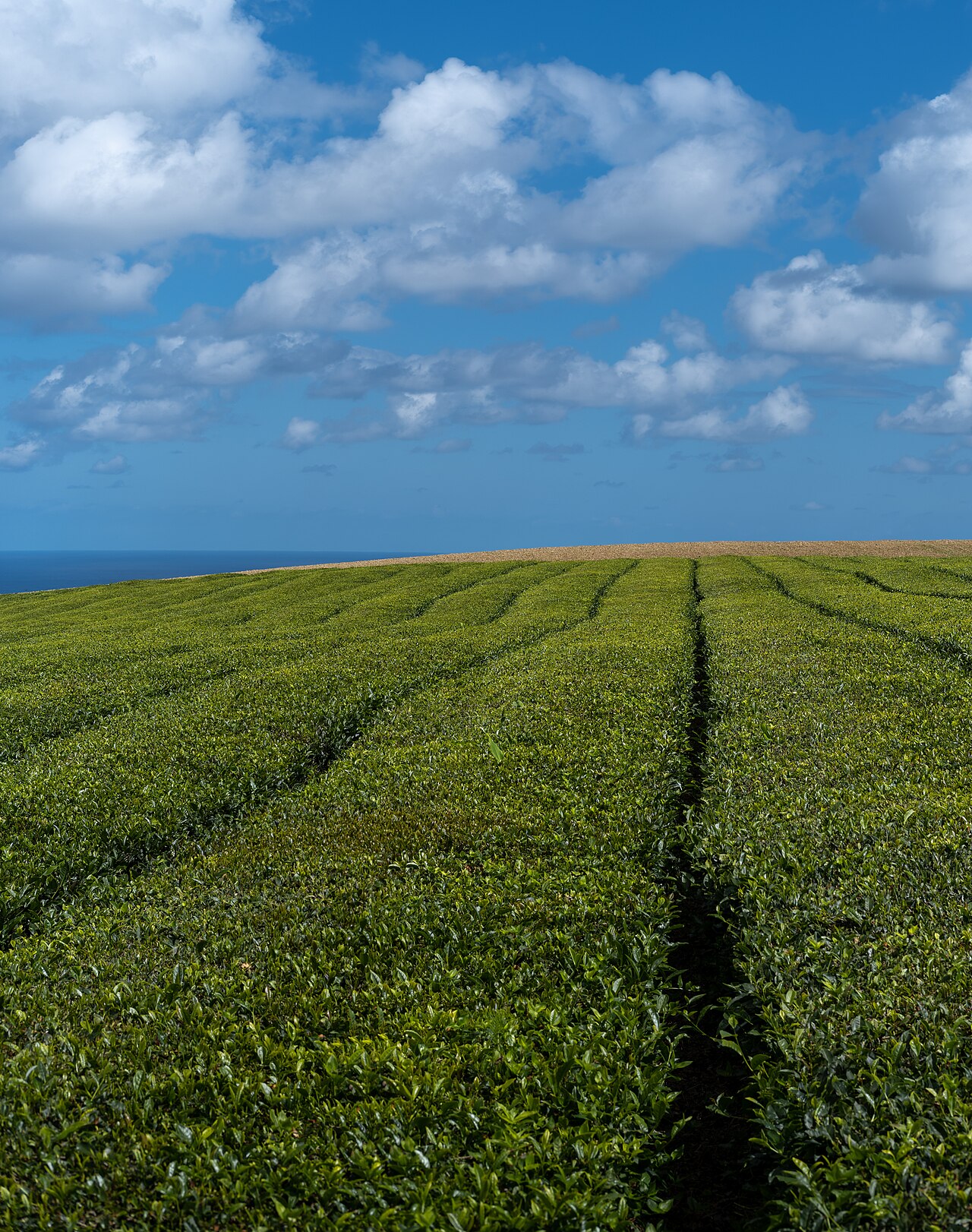
Currently, Gorreana cultivates approximately 32 to 37 hectares of tea bushes and produces around 40 tonnes of organic tea annually, distributed to markets across Europe and beyond. The rows of tea bushes cascade down the hillsides of the Maia region in São Miguel's northeast, creating a carpet of deep green that is an attraction in its own right. The plantation's altitude and the orientation of its slopes contribute to a slow, natural maturation of the leaves — a key factor in the distinctive depth of the tea's flavour.
What to See and Do at Gorreana
- Factory tour: Entry is completely free. Visitors can walk through the factory and observe the original 19th-century machinery still in operation — rolling drums, sorting fans, and drying ovens — particularly during the harvest season (April through September).
- Walk through the plantation rows: A well-marked path winds between the tea bushes, letting you touch and smell the leaves at close range. Views extend over the Atlantic and the surrounding hills.
- Tea tasting and shop: The factory shop offers free tastings of multiple tea varieties and a range available to purchase, including black tea, green tea, and blends with local Azorean herbs such as peppermint, hibiscus, and lemongrass. Prices are very reasonable.
- Photography: The golden hour — roughly 40 minutes before sunset — bathes the tea rows in warm, raking light that reveals the plantation's texture and depth. Morning mist, common on São Miguel, creates an ethereal atmosphere over the rows that rivals the most photogenic tea estates in Asia.
Types of Tea Produced at Gorreana
Gorreana produces two main families of tea: black tea and green tea. Black tea varieties include Broken Leaf (a bold, full-bodied cup from smaller leaf pieces) and Orange Pekoe (whole leaf, more delicate and aromatic). Green tea is produced without oxidation, preserving the natural antioxidants and delivering a fresher, more vegetal flavour. The plantation has more recently developed blends incorporating local Azorean ingredients — hibiscus, peppermint, lemongrass — that give the teas a distinctly island character. All products are certified 100% organic, grown without pesticides or chemical additives on the volcanic soils of São Miguel.
Porto Formoso: The Coastal Rival
Located approximately 10 km southwest of Gorreana along the same northern coastal road, Porto Formoso is São Miguel's second active tea plantation. Less internationally known than Gorreana, Porto Formoso offers something equally compelling: an even more dramatic setting, with tea rows descending almost to sea level and direct views over the Atlantic that create a visual contrast unlike anything in the tea-producing world.
Porto Formoso shares the same 19th-century origins as Gorreana, rooted in the same agricultural movement launched by José do Canto in the 1840s. The plantation's scale is more intimate, and the visitor experience here tends to be quieter and less crowded — ideal for travellers who prefer a more immersive, unhurried encounter with the tea landscape. The on-site shop sells locally produced teas, including limited-edition seasonal varieties.
Practical Information for Visitors
Getting There
Gorreana is located in Maia, northeastern São Miguel (postcode 9625-304). The drive from Ponta Delgada takes approximately 45 to 55 minutes via the EN1-1A coastal road heading northeast — a scenic route passing lagoons, cliffs, and pastures. There is no direct public transport; a hire car or organised day tour is the practical choice. Porto Formoso lies roughly 10 km west along the same coastal road, making it easy to visit both plantations in a single half-day outing.
Opening Hours and Admission
Gorreana is open daily, typically from 9:00 to 18:00 (verify opening hours during off-season). Admission is free for both the factory and the plantation walks. Porto Formoso keeps similar hours. It is advisable to visit between April and September when active production is underway and the full factory process can be observed.
Best Time to Visit
Tea in the Azores is harvested in multiple cycles through spring and summer. The first flush — the most prized harvest — takes place in April and May, when the youngest, most tender leaves are collected. The second and third flushes follow in June-July and August-September respectively. Visiting during any of these periods allows you to witness the complete process, from hand-picking the leaves to the factory machinery processing them into finished tea. Outside harvest season, the factory machinery may not be running, but the plantation walks and shop remain open year-round.
A Full Tea Route Day Trip from Ponta Delgada
The northern coast of São Miguel offers far more than just tea. Combining both plantations with other attractions makes for a richly rewarding full-day excursion:
- Morning: Depart Ponta Delgada northeast; stop at the Caldeiras da Ribeira Grande — natural hot spring pools beside the sea.
- Mid-morning: Visit Porto Formoso for tea tasting and a walk through the coastal plantation rows.
- Noon: Lunch in Nordeste village, one of São Miguel's most charming communities.
- Early afternoon: Visit Gorreana for the full factory tour and plantation walk.
- Late afternoon: Return via the interior EN2 road with a stop at a hilltop miradouro for panoramic views.
Azores Tea in a Global Context
The world consumes over 6.5 billion kilograms of tea per year (FAO, 2023), with China and India dominating global production. Against this scale, the Azores' annual output of roughly 40 tonnes is artisanal in the truest sense — but its cultural and historical significance far exceeds its volume. Gorreana's teas have won international awards and are stocked in gourmet food stores across Europe. For the food-minded traveller, purchasing a box of Gorreana tea is one of the most authentic and genuinely unique souvenirs available anywhere in Europe.
Tea is also woven into Azorean daily life. The tradition of an afternoon chá das cinco (five o'clock tea) is deeply embedded in São Miguel's culture, and Gorreana tea features on virtually every table across the island. Bringing a box home means carrying a piece of a living, 140-year-old tradition.
Tips for Photographers
The tea plantations of São Miguel are among the most photogenic locations in the entire Azores archipelago. A few practical tips to make the most of your visit:
- Golden hour: The light between 7:00-8:30 and 18:00-19:30 creates long shadows between the rows, revealing the plantation's undulating texture.
- Morning mist: Frequent on São Miguel, especially in the Maia area. Early arrivals are rewarded with ethereal mist drifting over the tea rows.
- Aerial view: Drone users will find that Gorreana's rows form near-perfect geometric patterns on the hillside, particularly striking from above.
- Colour: The tea bushes have an unusually saturated, vivid green — no filters needed for compelling smartphone photography.
FAQ: Azores Tea Plantations
Are the Azores tea plantations really the only ones in Europe?
Yes. Gorreana and Porto Formoso on São Miguel are the only tea plantations with continuous commercial production in Europe. While some small experimental projects exist in other European countries, the Azores remain the sole location with an unbroken tradition of tea cultivation dating back to 1848. Gorreana, founded in 1883, is the oldest tea factory still operating on the continent.
Is visiting the tea plantations free?
Yes. Both Gorreana and Porto Formoso are free to visit. There is no admission charge for the factory tours or plantation walks. The only cost is whatever you choose to purchase in the on-site shops, where prices are very reasonable.
What is the difference between Gorreana and Porto Formoso?
Gorreana is larger, older (est. 1883), and has wider international distribution. Porto Formoso is smaller and more intimate, with a more dramatic coastal setting. Both produce quality black and green teas. Visiting both on the same day is highly recommended as they are only about 10 km apart.
Can I buy Azores tea directly at the plantations?
Yes. Both plantations have on-site shops selling their teas at factory prices. Gorreana also sells online at gorreana.pt and through gourmet retailers across Europe. The teas make excellent, genuinely unique souvenirs.
When is the best time to visit the Azores tea plantations?
April to September is the ideal window, when production is active and factory machinery can be observed in operation. The first harvest in April-May is the most exciting period. Visits are possible year-round, but outside harvest season the factory processing will not be running.
Further Reading
The tea plantations are just one facet of São Miguel's remarkable food and cultural heritage. Explore the island's complete Azorean gastronomy guide for the full picture, or discover the geothermal cooking tradition of the Cozido das Furnas — another uniquely Azorean experience born from the same volcanic landscape that makes the tea taste the way it does. Planning your itinerary? Our 5-day São Miguel guide includes the tea route as a recommended half-day excursion.