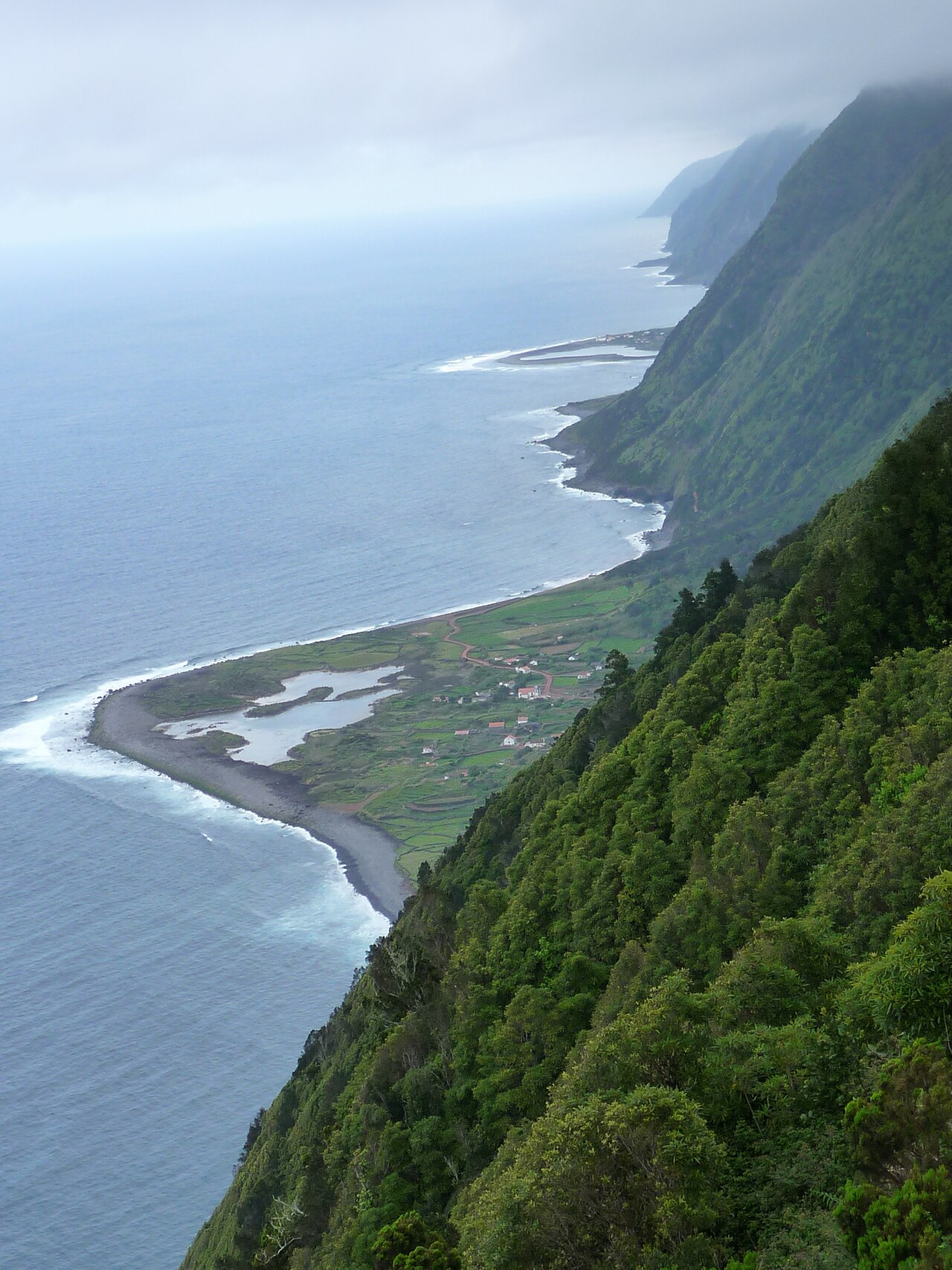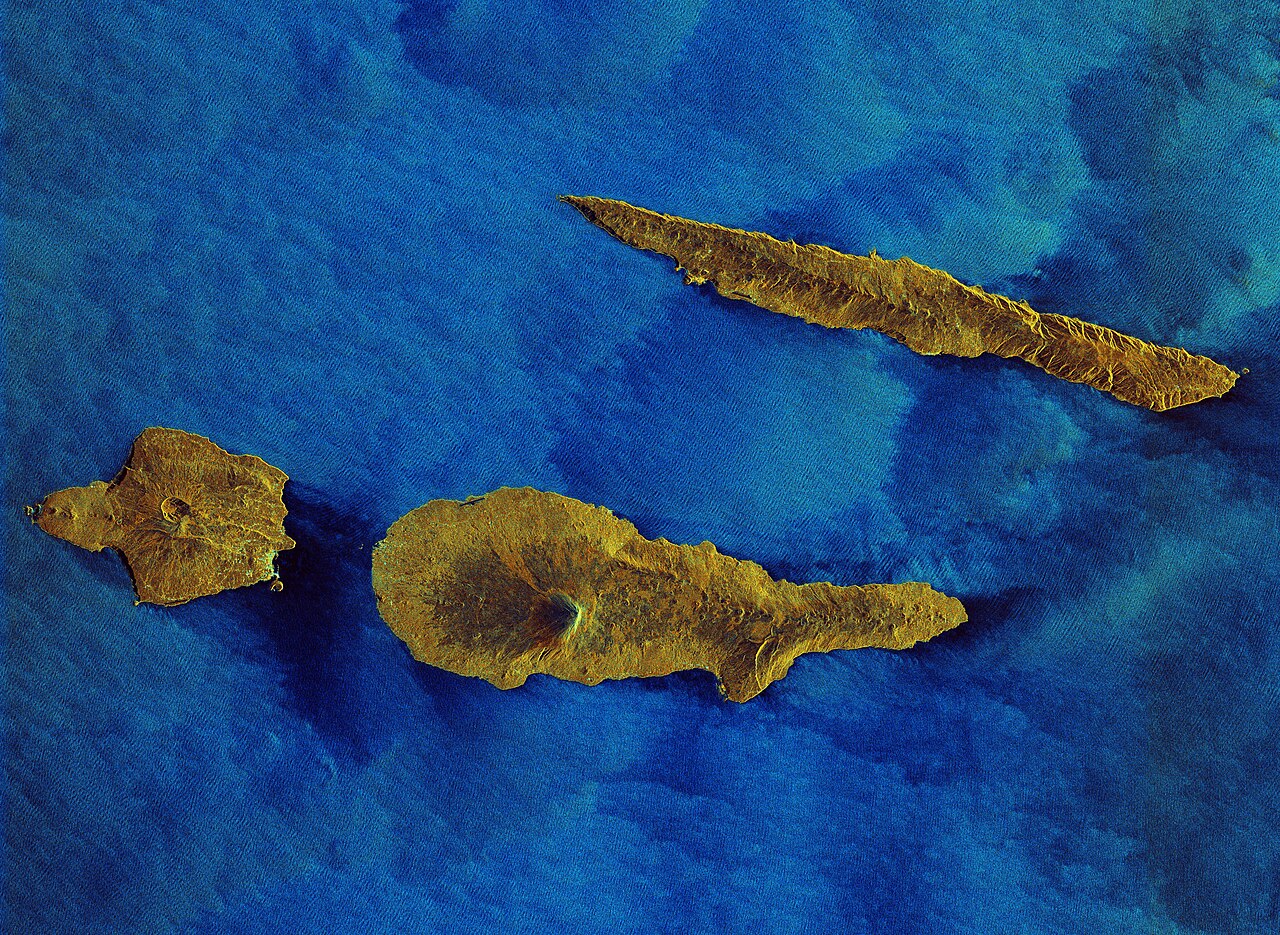
São Jorge is the narrowest and most dramatic island in the Azores — 55 km long and just 8 km wide — dominated by a central ridge exceeding 1,000 metres altitude, from which waterfalls and streams cascade down near-vertical cliffs to the sea. It is the island's extraordinary fajãs — flat coastal platforms formed by landslides and lava flows — that make São Jorge truly unique: each one a world of its own, a micro-ecosystem emerging from the cliffs like an island within an island.
What Are Fajãs?
Fajãs are flat coastal platforms created by two geological processes: landslides collapsing steep volcanic cliffs, and lava flows advancing over the sea. São Jorge has over 40 registered fajãs. Each is unique — its own microclimate, flora, fauna, and often a tiny fishing community unchanged for centuries.
Fajã da Caldeira de Santo Cristo: The Most Famous
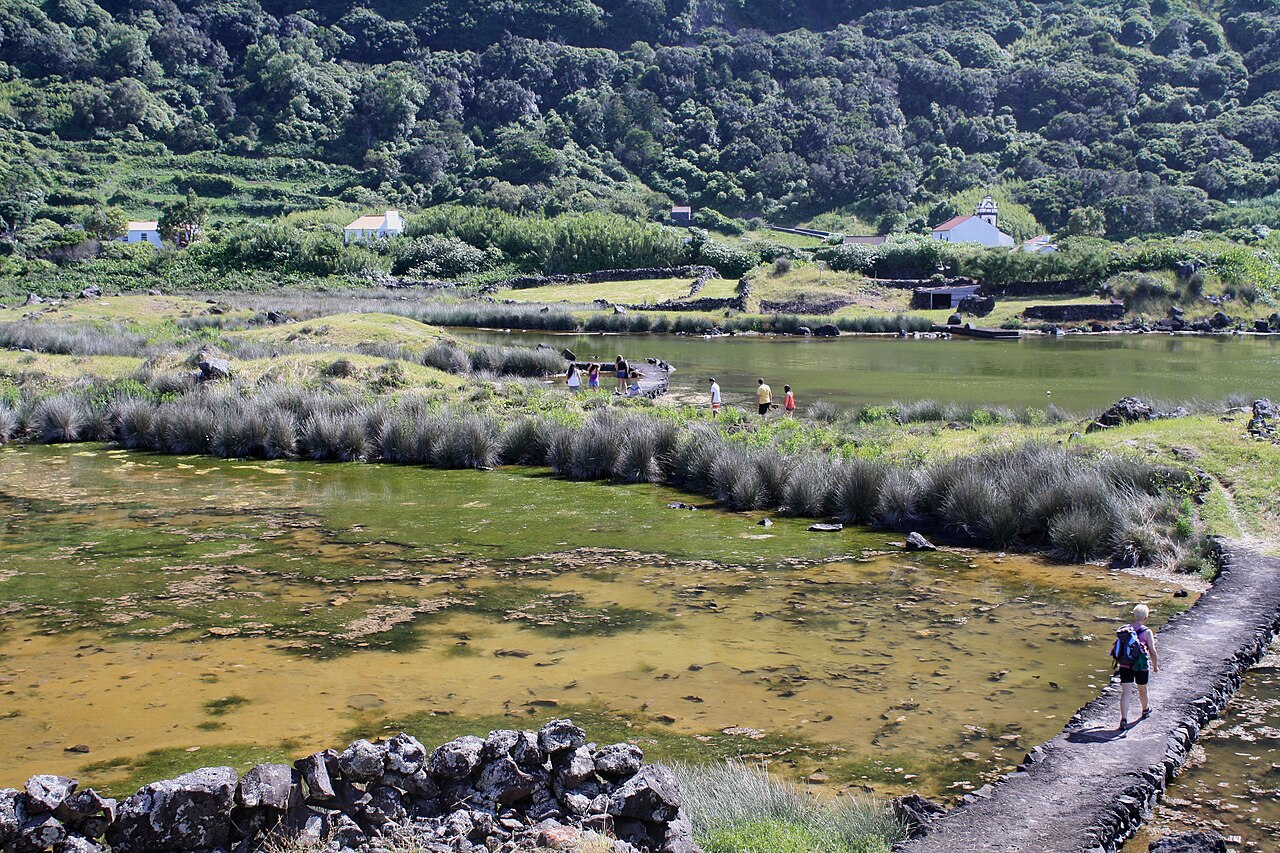
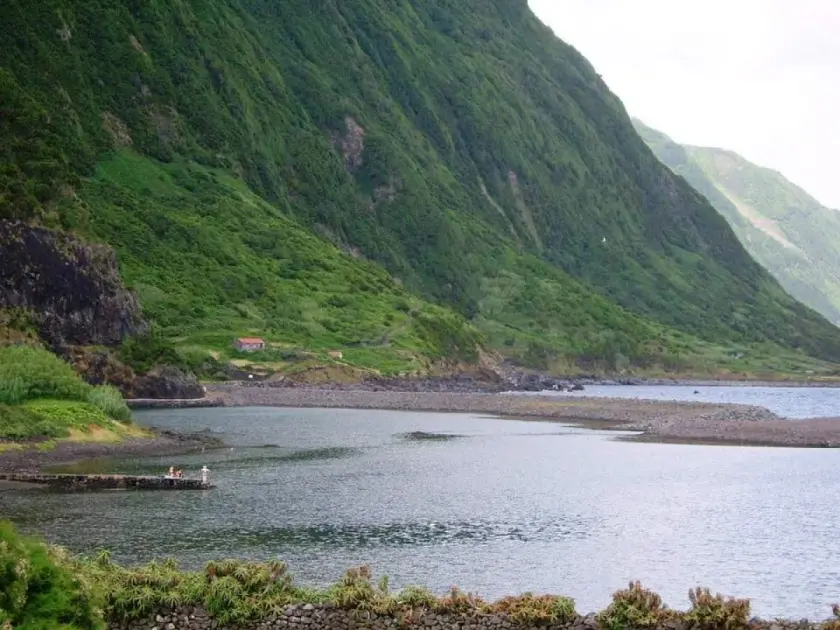
The Fajã da Caldeira de Santo Cristo is the most celebrated fajã in São Jorge and one of the most singular experiences in the Azores. Located on the north coast, it contains a brackish inner lagoon — unique in Europe — famous for clam farming. The clams of Fajã de Santo Cristo are a local delicacy, grilled with garlic and lemon in the fajã's simple restaurant. Access is via a mountain trail (approximately 2 hours descent, 2.5 hours ascent) or by boat in calm sea conditions. The fajã has a bar, simple restaurant, and basic accommodation. It is also considered one of the world's finest body surf and longboard waves.
Fajã dos Cubres: The Brackish Lagoon
Fajã dos Cubres, also on the north coast, has a rare tectonic brackish lagoon protected as a Nature Reserve and hosting several species of waterfowl. It is one of the most accessible fajãs on São Jorge, reachable by road.
Fajã do Ouvidor and Fajã de São João
Two neighbouring fajãs on the north coast with an almost unchanged atmosphere. Old fishing houses, colourful boats, and the sound of waves create an atmosphere of rare authenticity. Rural tourism guesthouses offer simple but memorable stays.
São Jorge Cheese: Portugal's Finest
Queijo de São Jorge DOP, produced on the island for over 500 years, is a semi-hard cured cheese with an intense, slightly spicy, complex flavour. The Uniqueijo cooperative processes over 2 million kg of milk per year. Local dairies offer visits and tastings. Direct purchase on the island costs from €8/kg — significantly cheaper than on the mainland.
Hiking: The Island of Walkers
São Jorge is considered the best Azores island for long-distance hiking. The Altos de São Jorge Trail traverses the central ridge east to west with views of both coasts and the neighbouring islands. Trail descents to the fajãs are the main attraction. All trails are free; guides are recommended for the most technical descents.
Getting There
São Jorge Airport has SATA flights from São Miguel, Terceira, Pico, and Faial. The daily ferry connecting the Central Group triangle (Faial–Pico–São Jorge) is a spectacular and affordable option: approximately 45 minutes from Pico.
FAQ: São Jorge Island
How do you get to Fajã de Santo Cristo?
Primarily via mountain trail (2h descent, 2.5h ascent). Some local boats operate in calm conditions. Book accommodation in advance for June–September.
Can you sleep in the fajãs?
Yes. Fajã de Santo Cristo and some others have limited basic accommodation (private houses and rural tourism). Book well in advance for peak summer.
Which fajãs should I prioritise?
Fajã da Caldeira de Santo Cristo (unmissable), Fajã dos Cubres (most accessible), Fajã do Ouvidor (authenticity and tranquility), Fajã de São João (landscape and fishing).
Is São Jorge good for surfing?
Yes. Fajã de Santo Cristo has one of the Atlantic's finest body surf and longboard waves. Difficult access keeps the lineup almost empty — a unique experience for adventure surfers.
Where to buy São Jorge cheese?
Direct from island cooperatives and shops. From €8/kg for 3-month aged — far cheaper and fresher than on the mainland or in other islands.