The Azores are Portugal's largest dairy producer, responsible for over 30% of national milk output. But this dominance goes far beyond numbers: the archipelago harbors a five-century cheese-making tradition, with permanent green pastures, cattle breeds adapted to the Atlantic climate, and artisan methods passed down through generations. This guide takes you along the Azores Cheese & Dairy Trail, from São Jorge's PDO cheese factories to the dairy farms of Flores, and the rich butters and creams of São Miguel.
Why Is Azores Dairy So Special?
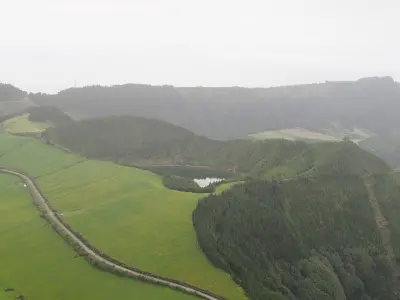
The answer lies in the soil and climate. The Azorean islands benefit from year-round rainfall, mild temperatures (14°C in winter, 25°C in summer), and extraordinarily fertile volcanic soils. Cows graze outdoors virtually year-round — a rarity in Europe — resulting in milk with higher levels of omega-3 fatty acids, beta-carotene, and fat-soluble vitamins. This exceptionally high-quality milk is the raw material for all Azorean cheeses.
São Jorge PDO Cheese — The Crown Jewel
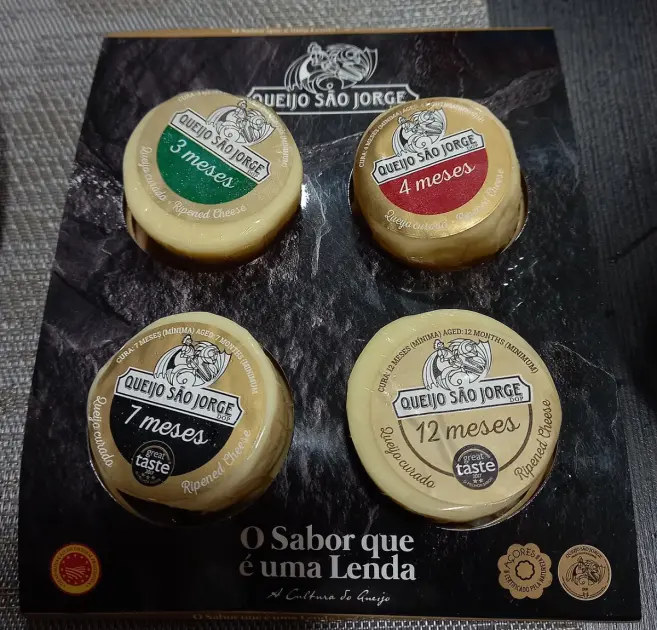
São Jorge Cheese is the most famous cheese in the Azores and one of the most recognized in Portugal. It has held Protected Designation of Origin (PDO) status since 1996 and is produced exclusively on São Jorge Island from raw cow's milk. Its characteristics are unmistakable:
- Texture: semi-hard to hard, with small irregular eyes throughout the paste
- Flavor: intense, slightly spicy, with notes of butter and fresh grass; deepens with aging
- Aging: minimum 3 months; available at 3, 6, 12, and 24 months
- Form: cylindrical, weighing 8 to 12 kg per wheel
The São Jorge Cheese Trail
São Jorge Island has an official Rota do Queijo (Cheese Trail) running along both the north and south coasts, from artisan cheese factories to family farming estates. Essential stops include:
- Uniqueijo (Velas): the island's largest cheese factory, with guided tours of the full production process and tastings at each aging stage — 3, 6, 12, and 24 months
- Fábricas Finisterra (Ponta dos Rosais): artisan production at the island's westernmost tip, with stunning sea views
- Queijaria Lourais: one of São Jorge's oldest factories, maintaining traditional hand-curding methods
- União de Cooperativas Agrícolas (Beira, near Velas): offers free public tastings of fresh and aged cheese varieties
Other Azorean Cheeses Worth Knowing
Pico Island Cheese
Produced on Pico Island, this semi-soft white cheese is very different from São Jorge. Made from pasteurized cow's milk, it has a delicate, slightly acidic flavor and is best enjoyed fresh or lightly aged. It pairs magnificently with Verdelho do Pico, the local white wine.
São Miguel Fresh Cheese (Queijo da Terra)
São Miguel produces several fresh and semi-fresh cheeses with their own character. The so-called queijo da terra is a soft, white-paste cheese with a clean lactic flavor. Easily found at Ponta Delgada's markets, it is a classic Azorean breakfast staple with local butter.
Azorean Butter: A World-Class Product
Azorean butter is considered by international chefs to be among the world's finest. Its intensely yellow color — a direct result of beta-carotene from the pastures — and fresh cream flavor distinguish it from any industrial European butter. Try it on a slice of Azorean corn bread for a true gastronomic revelation.
Yogurts, Requeijão, and Other Dairy Products
Beyond cheeses, the Azores produce natural yogurts of unique creaminess and acidity, velvety requeijão (Azorean ricotta), and queijadas — small requeijão pastries typical of Faial and São Miguel. The Queijadas da Vila Franca do Campo (São Miguel) hold protected geographical indication status and are a must-try sweet.
Where to Buy and Taste Cheese in the Azores
Mercado da Graça (Ponta Delgada, São Miguel)
São Miguel's main municipal market has stalls with local cheeses, artisan butters, and fresh requeijão. Best visited on Saturday mornings.
Velas Market (São Jorge)
Small but authentic, this market has São Jorge cheese from local producers at prices lower than tourist-oriented cheese shops.
Pairing: Cheese and Azorean Wine
Aged São Jorge cheese (12 months) pairs perfectly with Verdelho do Pico — the wine's acidity cuts through the fat and enhances the spicy flavors. For fresh Pico cheese, choose a young Arinto dos Açores. Milder São Miguel cheeses pair well with light white wines or even the broad-leaf teas from Gorreana, Europe's only tea plantation.
Frequently Asked Questions
Can I take São Jorge Cheese on a plane?
Yes. Vacuum-packed aged cheese can be transported in hand luggage or checked baggage within the European Union without restrictions. For intercontinental flights, check your destination country's import rules. Many cheese factories offer special travel packaging.
What is the difference between 3-month and 24-month São Jorge Cheese?
The 3-month cheese is milder, creamier, and has a fresh lactic flavor. As it ages, it develops tyrosine crystals, a grainier texture, and an intensely spicy and complex flavor. The 24-month version is for lovers of very aged cheeses — comparable in intensity to a Parmigiano Reggiano.
When is the best time to visit São Jorge for the cheese trail?
Production is year-round, but spring (April–May) is the most special: the pastures are at their peak, with intensely green meadows, and spring milk produces the most aromatic cheeses of the year.
Conclusion
The Azores dairy trail is far more than a gastronomic experience — it is a window into the cultural identity of the archipelago, deeply tied to the land, livestock, and the work of Azorean families over centuries. Pair this trail with a visit to Pico's UNESCO vineyards and explore the unique culinary traditions of São Miguel for a full immersion in Azorean culture.