The history of the Azores spans nearly six centuries of Atlantic exploration, colonisation, agricultural prosperity, a remarkable whaling tradition, and a hard-won struggle for political autonomy. This nine-island archipelago, rising from the mid-Atlantic Ridge more than 1,500 kilometres west of mainland Portugal, has played a disproportionately large role in the story of European expansion — and in the formation of a cultural identity unlike any other in the Portuguese-speaking world.
Discovery: Diogo de Silves and the Year 1427
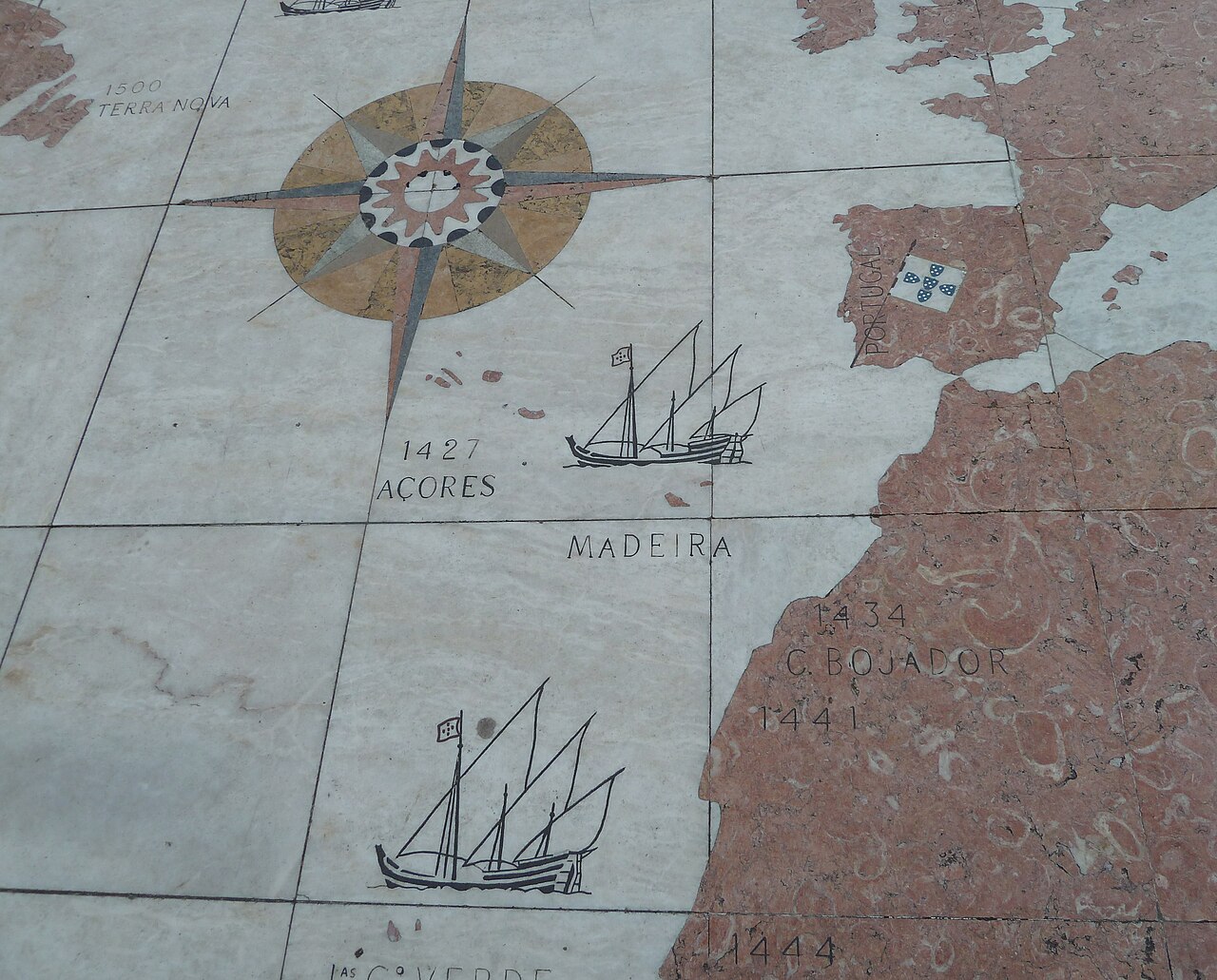
The official date of the Azores' discovery is 1427. The Portuguese navigator Diogo de Silves is credited as the first European to sight the islands — specifically Santa Maria and São Miguel — based on a reference inscribed on a portolan chart drawn by Catalan cartographer Gabriel de Vallseca of Mallorca in 1439, the oldest surviving cartographic document to mention the archipelago. Diogo de Silves remains one of the most obscure figures of the Age of Discovery: no contemporary chronicles, logbooks, or royal correspondence corroborate his voyage beyond this single cartographic citation.
Historical debate persists over whether Diogo de Silves truly preceded all others. Many scholars credit Gonçalo Velho Cabral, dispatched by Prince Henry the Navigator, as the first to systematically chart and document the islands, arriving in 1431. Both figures are central to the archipelago's foundational narrative. The name "Azores" itself originates in a mistaken ornithological identification: early navigators believed they observed goshawks (açores in Portuguese), when in fact they were sighting red kites. The name endured regardless.
The final two islands — Flores and Corvo — were discovered around 1452 by the navigator Diogo de Teive and his son João de Teive, completing the archipelago as it is known today.
Colonisation: The 15th and 16th Centuries
Settlement began in 1439 by order of Prince Henry the Navigator, with the first colonists arriving on Santa Maria. The settlement of all nine islands unfolded over several decades and drew population from northern mainland Portugal — Minho, Trás-os-Montes, Alentejo — but also from remarkably diverse European origins. Historical records show that alongside the Portuguese, early settlers included Flemish, Genoese, English, French, Jewish, and Moorish communities, as well as enslaved Africans brought as labour.
Around 1450, the island of Terceira was formally incorporated into the colonisation effort when Prince Henry granted its captaincy to the Flemish nobleman Jácome de Bruges. This Flemish connection explains the strong Central European cultural imprint on the archipelago, particularly on Faial — once known as the "Flemish Island" — and on Graciosa and São Jorge. Flemish surnames, architectural details, and the distinctive enamel azulejo tile traditions all bear witness to this heritage.
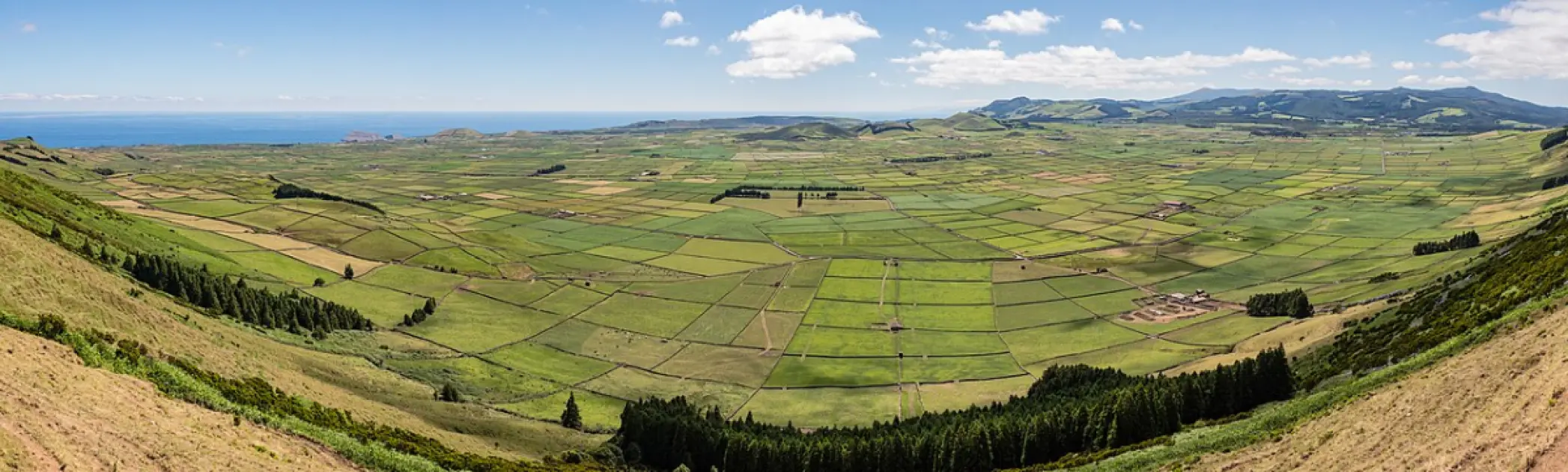
The early colonial economy centred on wheat production, exported to North African Portuguese garrisons and to the Iberian Peninsula. Successive centuries brought diversification: sugarcane, pastel (woad, a plant used in European textile dyeing), and eventually oranges — exported in enormous quantities to English markets from the 17th century onward — formed the backbone of Azorean agricultural trade. The islands' central Atlantic position made them an indispensable waypoint for fleets returning from the Americas, Africa, and Asia.
In 1493, Christopher Columbus stopped at Santa Maria on his return from the first transatlantic voyage, celebrated a thanksgiving mass at the chapel of Nossa Senhora dos Anjos, and encountered resistance from local authorities suspicious of his extraordinary claims — a small but telling episode in the wider story of the Atlantic Age of Exploration.
Angra do Heroísmo: Capital of the Atlantic
By the 16th century, the city of Angra on Terceira had become one of the most strategically important ports in the world. Every fleet returning from Brazil, India, and the African coast stopped here for repairs, provisioning, and rest. The wealth accumulated in Angra funded some of the finest Baroque and Manueline architecture in the Portuguese-speaking world — churches, convents, and fortifications that earned the city UNESCO World Heritage status in 1983.
Terceira's geopolitical centrality was never more dramatically demonstrated than during the Iberian Union crisis of 1580, when King Philip II of Spain sought to absorb Portugal. Terceira held out as the last stronghold of Portuguese legitimism, temporarily serving as the de facto capital of Portugal under the pretender António, Prior of Crato. Later, during the Liberal Wars of 1828–1834, the island again played a decisive role: the Liberal victory at the Battle of Praia led to the town's renaming as Praia da Vitória ("Beach of Victory"), and Angra was granted the epithet "Heroísmo" — Heroism — in recognition of the island's sacrifice.
The Whaling Era: Sperm Whales and Pico Island
The Azores' relationship with whale hunting is one of the most compelling chapters in Atlantic maritime history. Azorean contact with industrial whaling came primarily through the great American whaling fleets of the 19th century, whose ships regularly stopped at the islands and recruited local crew. Many Azorean men sailed on these vessels, learning the trade at sea before returning home to establish a distinctly Azorean whaling industry.
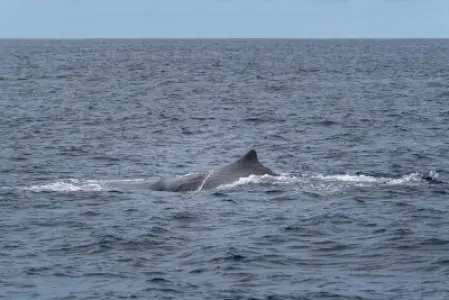
Pico Island became the undisputed centre of the archipelago's whaling activity. Sperm whales (Physeter macrocephalus) — the largest toothed whales on Earth — were abundant in the deep Atlantic waters surrounding the islands. The Azorean method of hunting was strikingly artisanal: wooden open boats powered by oars and sail, hand-thrown harpoons, and shore-based lookouts (vigias) who tracked whale movements from stone watchtowers built on coastal high points. This technique, virtually unchanged from the 17th century, stood in stark contrast to the factory ships used in other whaling nations.
At its peak, the whaling industry employed thousands across the archipelago. Spermaceti oil — extracted from the enormous cavity in the sperm whale's head — was prized for its purity as a lamp fuel and industrial lubricant. The village of Lajes do Pico became synonymous with the industry, earning the name a vila baleeira — the whaling village. The industry also supported cooperage, rope-making, and boat-building trades across multiple islands.
Decline began with the advent of petroleum as an alternative fuel in the late 19th century and accelerated throughout the 20th century under mounting conservation pressure. In 1982, the International Whaling Commission (IWC) imposed a moratorium on commercial whaling; Portugal acceded to it. The last Azorean whale-processing factory closed in 1984. The final sperm whales were taken in 1987, ending centuries of whaling in the archipelago. The transformation that followed was remarkable: former whale hunters became whale watching guides, and the Azores evolved into one of the world's premier cetacean watching destinations, with sighting rates above 95% and over 28 recorded species. The Museu dos Baleeiros (Whalers' Museum) in Lajes do Pico preserves this history with extraordinary fidelity.
The 20th Century: War, Emigration, and the Lajes Air Base
The 20th century brought structural transformation to the archipelago. Emigration — a constant throughout Azorean history — intensified, with hundreds of thousands departing for the United States (particularly New England and California), Canada, and Brazil. It is estimated that today more people of Azorean descent live outside the archipelago than within it.
During World War II, the Azores' strategic position in the mid-Atlantic was recognised by all the major Allied powers. In 1943, Portugal — maintaining formal neutrality — granted the Allies access to facilities in the islands. Lajes Air Base on Terceira became a critical transit and anti-submarine patrol hub for the Allied Atlantic campaign. The base remains operational today under NATO auspices, a continuing symbol of the archipelago's enduring geopolitical significance.
The 1974 Revolution and the Achievement of Autonomy
The Carnation Revolution of 25 April 1974 fundamentally altered the political trajectory of the Azores. The collapse of the Estado Novo dictatorship opened a space for the archipelago — historically remote from the centralised power in Lisbon — to claim its own governance. The transition was not without turbulence: the Azores Liberation Front (FLA) briefly advocated full independence, taking advantage of the revolutionary power vacuum on the mainland.
The autonomist path ultimately prevailed. The Constitution of the Portuguese Republic, approved on 2 April 1976, formally enshrined political and administrative autonomy for the Azores. Decree-Law No. 318-B/76 of 30 April 1976 formalised the Political-Administrative Statute of the Autonomous Region of the Azores. The first elections to the Regional Legislative Assembly were held on 27 June 1976, and on 8 September 1976, João Bosco Soares da Mota Amaral was inaugurated as the first President of the Regional Government of the Azores — officially launching the archipelago's constitutional autonomy.
Autonomy granted the Azores its own legislative and executive powers over matters including regional economy, environment, land use planning, and culture, while foreign policy, defence, and sovereignty remain with the Republic. The model has evolved through successive statutory revisions over the ensuing decades.
The Azores Today
In the 21st century, the Azores have emerged as one of Europe's fastest-growing sustainable tourism destinations. Repeated recognition as World's Leading Sustainable Destination by the World Travel Awards (a distinction held consecutively since 2015) has brought international attention and a new generation of environmentally conscious visitors. Passenger numbers at Ponta Delgada airport have broken records year after year in the past decade.
The contemporary Azorean economy rests on three pillars: tourism, agriculture and dairy (the Azores produce approximately 30% of all milk consumed in mainland Portugal), and services. The historical heritage — from volcanic geology and the whaling legacy to Baroque architecture and mountain trails — is a central asset of the regional tourism offering.
Environmentally, the archipelago has made significant investments in renewable energy. Flores Island generates over 80% of its electricity from renewable sources, and the regional government has committed to carbon neutrality by 2050.
Frequently Asked Questions About Azores History
Who discovered the Azores and when?
The Azores were officially discovered in 1427, attributed to Portuguese navigator Diogo de Silves, based on a reference in a 1439 Catalan portolan chart. Gonçalo Velho Cabral is also a key figure, arriving in 1431 under orders from Prince Henry the Navigator to systematically document the islands.
When were the Azores colonised?
Colonisation began in 1439, with the first settlers arriving on Santa Maria. The full settlement of all nine islands extended through the 15th and into the 16th century, drawing colonists from mainland Portugal, Flanders, and other parts of Europe.
When did whaling end in the Azores?
The last whale-processing factory in the Azores closed in 1984. The final sperm whales were taken in 1987, following Portugal's adherence to the 1982 International Whaling Commission moratorium on commercial whaling.
When did the Azores gain autonomy?
Political and administrative autonomy was enshrined in the Portuguese Constitution of 1976, approved on 2 April 1976. The first regional elections were held on 27 June 1976 and the first regional government was inaugurated on 8 September 1976.
Why is Terceira historically significant?
Terceira served twice as the effective capital of Portugal — during the 1580 succession crisis and the Liberal Wars of 1828–1834. Its city of Angra do Heroísmo has been a UNESCO World Heritage Site since 1983, recognised for its outstanding Baroque architecture and pivotal role in the Age of Discovery and Portuguese liberal history.