Fishing Charters in the Azores: Planning by Island and Month
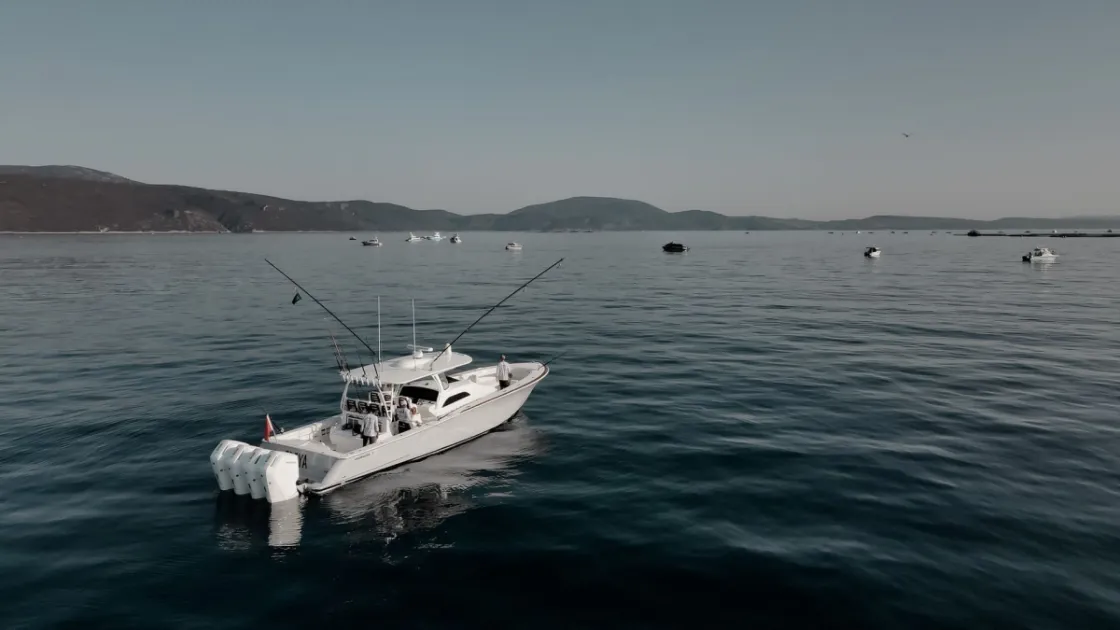
Few places in the North Atlantic put you over deep water so quickly. In the Azores, the seabed drops away steeply close to shore, and offshore banks and seamounts are within reach of the main ports. That is why the archipelago has built a reputation for big-game fishing, and why blue marlin is the species most visitors have in mind when they search for a charter.
This article is a planning guide, not a general overview. If you want the full picture of big-game, shore and traditional fishing, start with our Azores fishing guide. Here we focus on a narrower question: how to choose the right island and month for a charter, what a day on the boat involves, how catch-and-release works, and what visitors should know about licensing before they cast a line. Conditions, operators and rules change, so treat everything below as a starting point and confirm details locally before you book.
Why Charter Fishing Works Here
The Azores sit in the middle of the Atlantic, on a volcanic ridge with very deep water on all sides. Boats can leave the harbour and be over productive offshore ground within a relatively short run, rather than spending half the day just getting there. Warm-water pelagic species follow the Gulf Stream influence through the summer, and the same waters that attract whales and dolphins also hold tuna, billfish and sharks.
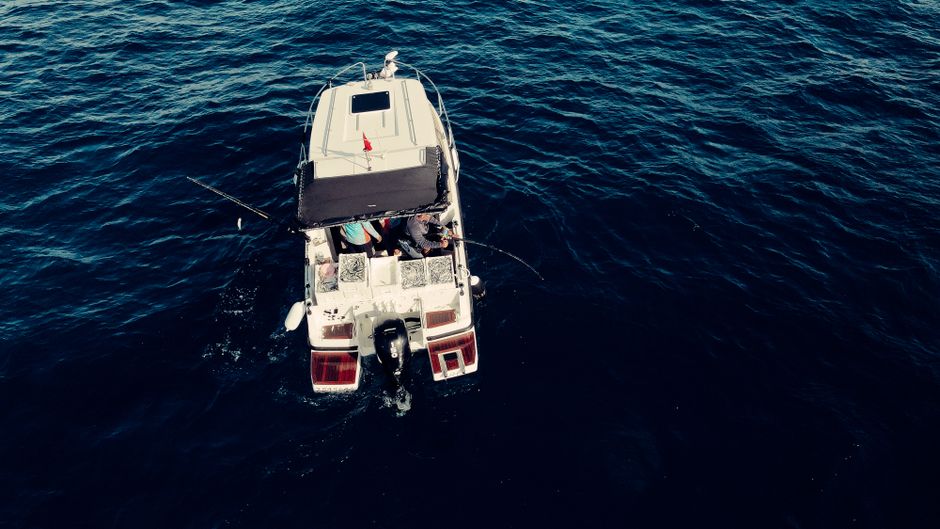
Charter fishing here is mostly trolling: the boat moves at a steady pace towing lures or baits, covering ground while the crew watches the water and the electronics. It suits anglers of all experience levels, because the captain and mate do the technical work, and some operators also offer bottom fishing or lighter trips for other species.
Blue Marlin Season: Which Months
Sources describe the blue marlin season somewhat differently, which is normal for a migratory fish tied to water temperature. Broadly, the season runs from early summer into autumn, with the most consistent action usually reported from July to September, sometimes extending into October or even November. Individual years vary, and the first fish of a season are often reported around early summer.
A practical way to think about the calendar:
- June: the season is starting; possible, but less predictable.
- July to September: the core window and the busiest period for bookings.
- October and November: still possible, with cooler water and less settled weather; ask operators what they are seeing.
- Winter and spring: big-game marlin fishing is not the focus; other fishing and sightseeing are better bets.
Marlin are never guaranteed. Even in the best weeks, a day can pass without a bite. Tuna and other species can make a trip worthwhile, and good operators will be honest about recent results. If marlin is your priority, book more than one day if you can.
Which Islands and Ports to Consider
Big-game charters are concentrated where there is a marina, a fleet and nearby deep water. Two names come up most often.
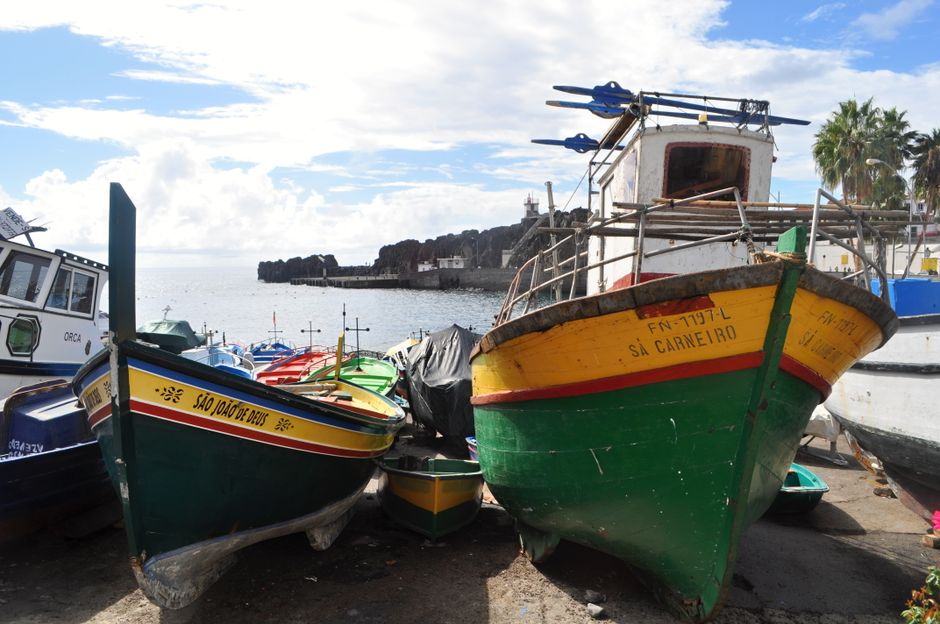
- Faial (Horta): the marina at Horta is the best-known base in the archipelago, and fishing grounds off Faial's north coast and nearby banks are within a short run of the harbour. Faial is also an easy island to combine with Pico, which you can see across the channel.
- São Miguel (Ponta Delgada): the largest island has the biggest tourist infrastructure, direct flights and several charter operators working from the south coast. It suits visitors who want fishing as one part of a broader trip.
Other islands, including those in the Central Group, also have boats and local fishing traditions, but the choice of dedicated sport-fishing charters can be smaller and the season shorter. Ask directly what is available when you plan. For ferry and flight logistics between islands, see our island hopping guide.
What a Day on a Charter Involves
Details differ between operators, but most full-day trips follow a similar rhythm. Always check what is included when you book.
- Early start: departures are typically in the morning, and the crew will brief you at the dock.
- The run out: depending on the day's plan, this can be short or take a while. Bring something to do and watch the horizon.
- Trolling: lines are set and the boat works along a chosen area. There can be long quiet stretches, then sudden action.
- The fight: if a marlin takes a bait, the crew will guide who sits in the chair, how to hold the rod and when to reel. Fights can be physically demanding.
- Release and return: fish are usually released boatside, then the boat heads home. Ask in advance about lunch, drinks and whether you need to bring your own.
Sea state matters. Atlantic swell can be noticeable even on sunny days, so if you are prone to seasickness, take precautions and tell the crew. Pack sun protection, layers and non-marking shoes. Check what tackle, bait and insurance are covered by the charter, and whether children are allowed on board.
Catch-and-Release and Fishing Responsibly
Catch-and-release is widely practised for billfish in the Azores, and many charters release marlin as standard. Practices vary by operator and by the rules applying to a species, so ask before you book what the boat's policy is, whether photographs are taken with the fish in the water, and what happens to other catches such as tuna.
Good practice includes using appropriate tackle, keeping the fish in the water, handling it as little as possible and releasing quickly. If you plan to keep fish for the table, discuss that with the captain beforehand. Remember that marine wildlife around the islands is also a draw in its own right; our guides to Azores marine wildlife and whale watching explain what you may see, and how to behave around animals.
Licences and Rules: What to Check
This is the part of planning where details matter, and where we cannot give a definitive answer for every situation. The Azores are an autonomous region of Portugal, and recreational fishing is regulated through the regional authorities, not only through national rules. Pages issued for mainland Portugal do not necessarily apply in the Azores.
As far as we could verify, the regional government publishes separate licence services for recreational sea fishing (including fishing from a boat and from shore, and spearfishing) and for freshwater sport fishing in lakes and streams. Fees, durations, who needs a licence and how to apply have changed over time, so we are not quoting them here.
- On a charter: licensing for a guided boat trip is normally handled between you and the operator. Ask whether the operator's licence covers you or whether you need your own, and what documents to bring.
- Fishing independently: if you plan to fish from shore or from a hired or private boat, check the current requirements with the regional authority before you travel.
- Freshwater: lakes and streams are covered by a separate system with its own seasons and rules.
- Protected areas: marine parks and reserves can restrict or ban fishing. Ask locally before fishing near a protected zone.
The reliable route is to check the regional government's official fisheries and licensing pages, or contact the Regional Directorate for Fisheries, and confirm the current rules for your dates.
Shore and Rod Fishing for Visitors
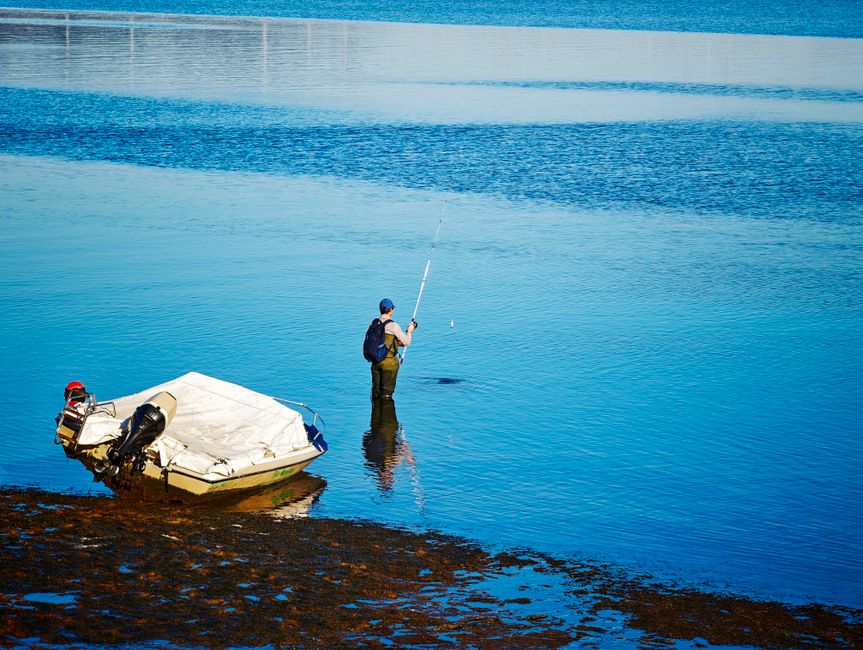
Fishing from rocks, piers and harbour walls is a long-standing local pastime. Species vary by island and season, and conditions can be hazardous: Atlantic swells can wash over low rocks without warning, and many coastal spots are exposed and slippery.
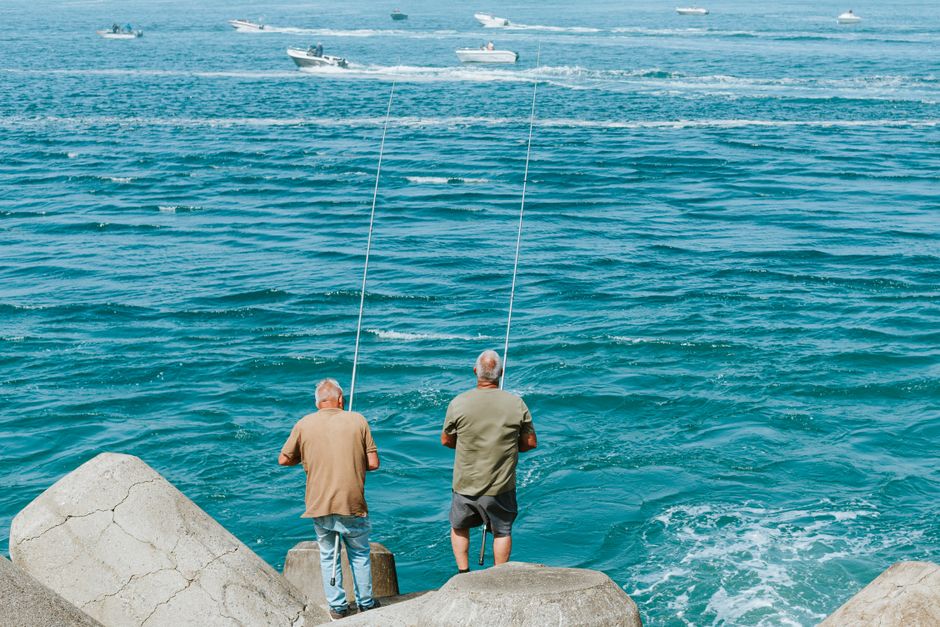
Practical points for visitors:
- Confirm whether a recreational sea-fishing licence applies to you before you fish from shore, and carry it if so.
- Ask locals or your accommodation about safe spots, tide and swell conditions, and any local restrictions.
- Respect marine protected areas, bag and size rules where they apply, and local signage.
- Avoid fishing alone on exposed rocks, and never turn your back on the sea.
- Take litter and line away with you.
Planning Tips: Booking, Weather, Combining Islands
Treat the charter as a weather-dependent activity. Build in a spare day, choose flexible bookings if offered, and avoid scheduling it on the day you have a flight or ferry. If you are visiting more than one island, consider placing your fishing days early in the stay, so there is room to reschedule.
Book ahead for July to September, when demand is highest. Compare what is on offer in terms of boat size, group size, trip length, equipment and whether a trip is private or shared. Bookings may be made through operators directly or through generic booking platforms; whichever route you use, read the cancellation terms, which usually depend on weather. Operators and rules change, so check current information before you travel. If you would rather see the ocean without fishing, our sailing and boat tours guide covers other options at sea.
Frequently Asked Questions
When is blue marlin season in the Azores?
Broadly early summer to autumn, with July to September the core period and some reports extending into October or November. Check with operators for the current year.
Which island is best for a fishing charter?
Faial (Horta) and São Miguel (Ponta Delgada) are the usual starting points because of their marinas and charter fleets. Other islands may offer fewer options.
Do I need a licence to fish on a charter?
It depends on the operator and the arrangement. Ask before booking whether you are covered, and check the regional authority for current rules.
Are fish released?
Billfish such as marlin are commonly released, but policies differ. Ask the operator beforehand.
Can I fish from shore as a visitor?
Often yes, but recreational fishing is regulated regionally. Confirm licensing and any local restrictions first, and take care on exposed rocks.
Will I definitely catch a marlin?
No. Fishing is unpredictable; consider more than one day.
Final Thoughts
Planning a fishing charter in the Azores comes down to three decisions: when (July to September is the usual core, with shoulders on either side), where (Faial and São Miguel are the best-known bases) and how (a responsible, well-briefed operator, with clear catch-and-release practice and licensing handled properly). Allow flexibility for weather, accept that no outcome is guaranteed, and verify licensing and rules with the regional authority before you go. Done that way, even a day without a marlin on the Atlantic is a good day.