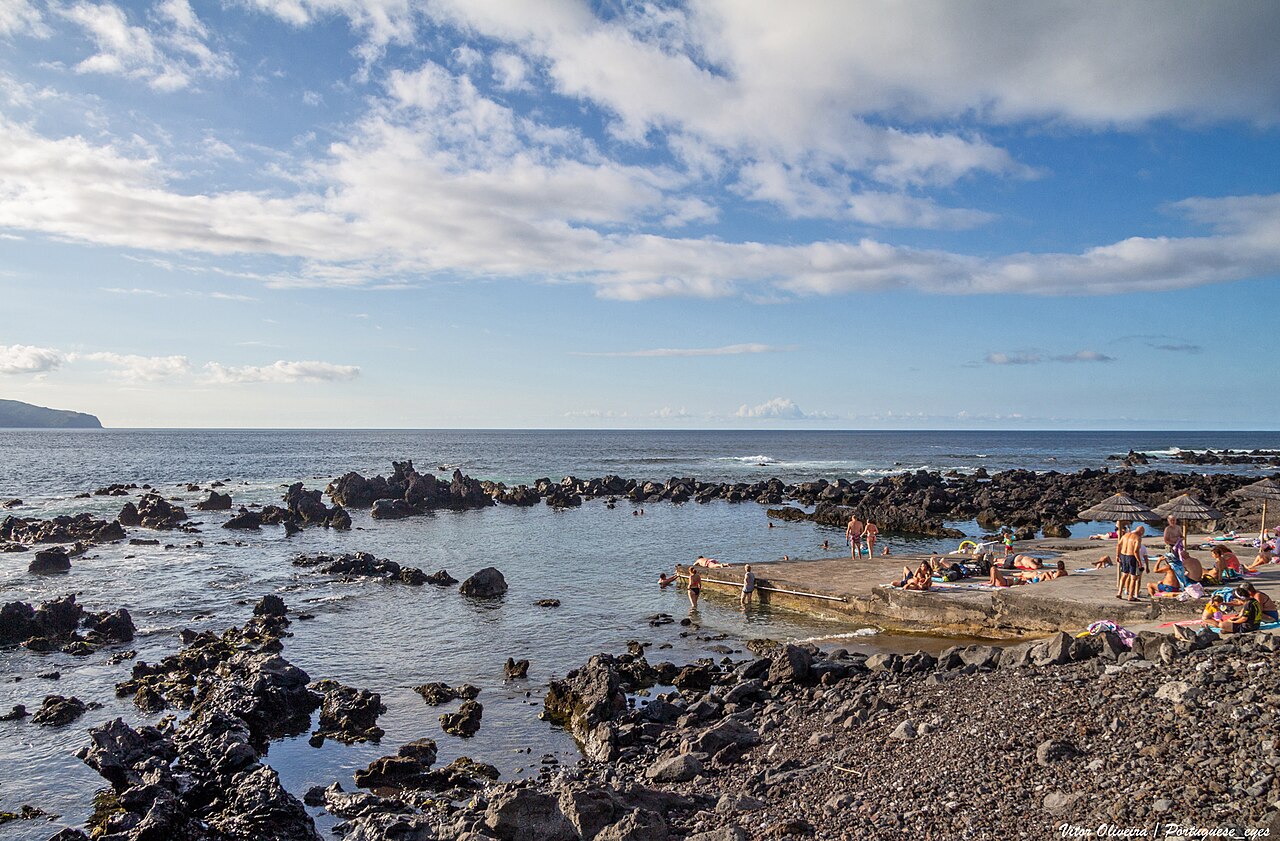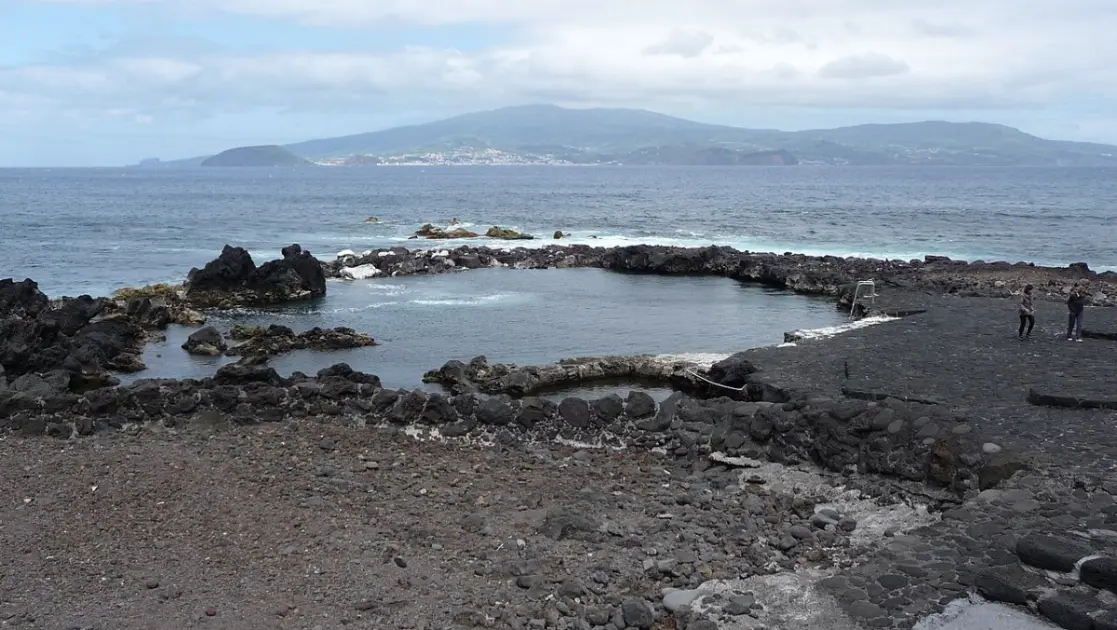
The natural swimming pools of the Azores are one of the archipelago's most distinctive and sought-after experiences. Sculpted from volcanic basalt over millennia, these lava rock pools filled with crystal-clear Atlantic water are found on all nine islands. Some are free and wild; others feature full facilities with changing rooms, restaurants, and swimming instructors. This comprehensive guide covers the best natural pools on every island — with practical information on location, entry fees, and the ideal season to visit.
What Are Azores Natural Swimming Pools?
Azores natural swimming pools — known locally as poças naturais or piscinas naturais — are basins and channels formed by lava flows along the coastline. When molten rock reaches the sea, it cools into irregular formations that create natural depressions where ocean water enters and remains sheltered from wave action. The result is saltwater pools with mild temperatures, exceptional clarity, and surprisingly rich marine life.
The Atlantic around the Azores, tempered by the Gulf Stream, ranges from 17°C in winter to 24°C in summer — pleasant for swimming from June to October and year-round for the bold.
São Miguel: Geothermal and Volcanic Pools
Ferraria Natural Pools
The most extraordinary natural pools in the entire Azores. Located at the western tip of São Miguel near the Mosteiros volcano, the Ferraria pools are heated by submarine hydrothermal springs. Water temperature ranges from 20°C to 40°C depending on the tide and proximity to thermal vents. At low tide, volcanic gas bubbles rise from the sandy bottom — a truly surreal experience. Admission: €5 adults. Parking fee applies. Bar and changing facilities available.
Mosteiros Natural Pools
Adjacent to Ferraria, the Mosteiros complex offers calmer, shallower pools ideal for children and those preferring a cooler swim. The setting is dramatic, with dramatic black basalt columns rising from the sea behind the pools. Free entry.
Milícias Natural Pools
On São Miguel's south coast near Ponta Delgada, Milícias is among the island's best-equipped natural pool complexes, with an adults' pool, children's pool, modern changing rooms, and a restaurant. Excellent water quality. Admission: €3. Ideal for families.
Terceira: The Famous Biscoitos Pools
The Biscoitos natural pools on Terceira's north coast are arguably the most famous in the Azores. An extensive network of interconnected lava basins of varying depths — from shallow paddling areas for children to 3–4 metre diving pools for adults — the complex includes changing rooms, a bar-restaurant, sunbathing terraces, and summer swimming monitors. Water is clear and constantly renewed by the tides. Admission: €2 adults, €1 children. Open May–October.
Underwater visibility at Biscoitos is exceptional — up to 15–20 metres on calm days. Octopus, moray eels, sea bream, and rays are commonly spotted by freediving enthusiasts.
Faial: Varadouro and Porto Pim
Varadouro Natural Pools
The Varadouro pools are Faial's most surprising highlight for many visitors. Located on the west coast, they are fed by a natural thermal spring that raises water temperature to 35–38°C near the source and 22–24°C in the outer pools. The combination of thermal bathing and Atlantic dipping, set against dramatic black lava formations, is genuinely unique in Europe. Admission: €3. Changing facilities available.
Porto Pim Beach
The horseshoe bay of Porto Pim near Horta is not technically a lava pool, but its exceptionally sheltered, calm waters make it the best family swimming spot on Faial. Sea temperature 22–23°C in summer. Free entry. Lifeguards in summer.
Pico: Cachorro and Arcos
Cachorro Natural Pools
On Pico's north coast, the Cachorro pools are celebrated for extraordinary water clarity and marine biodiversity. Black basalt formations create a labyrinth of pools of different sizes. Underwater visibility regularly exceeds 30 metres — among the finest in the North Atlantic. Free entry. Basic changing facilities available.
Arcos Natural Pools
Less known than Cachorro, the Arcos pools offer a wilder, quieter atmosphere with striking basalt formations. Access via coastal trail. Free entry.
São Jorge: The Fajã Pools
São Jorge's finest natural pools are tucked inside the island's fajãs — remote coastal platforms accessible only on foot via steep mountain trails (2–3 hours descent) or by boat. The pools at Fajã dos Cubres and Fajã de Santo Cristo reward the effort with cold but utterly pristine water and an atmosphere of genuine remoteness. Free entry.
Graciosa: Carapacho Thermal Pools
The Carapacho pools on Graciosa's south coast are fed by a natural thermal spring maintaining a constant temperature of 22–25°C even in winter. The complex includes an outdoor stone pool and covered thermal bath facilities. Admission: €2. One of the most accessible thermal tourism experiences in the Azores.
Flores: Wild Beauty
Flores natural pools offer relatively few facilities but extraordinary wild scenery. The Fajã Grande pools sit between towering cliffs with a nearby waterfall providing a dramatic backdrop. Easy road access. Free entry.
Comparison Table: Best Natural Pools in the Azores
| Pool | Island | Temperature | Entry | Best For |
|---|---|---|---|---|
| Ferraria | São Miguel | 20–40°C | €5 | Unique thermal experience |
| Biscoitos | Terceira | 18–23°C | €2 | Families, freediving |
| Varadouro | Faial | 22–38°C | €3 | Atlantic thermal bathing |
| Cachorro | Pico | 18–22°C | Free | Diving, snorkelling |
| Carapacho | Graciosa | 22–25°C | €2 | Thermal tourism, couples |
| Fajã Grande | Flores | 17–21°C | Free | Adventure, nature |
FAQ: Natural Swimming Pools in the Azores
When is the best time to visit Azores natural pools?
July to September offers the warmest conditions, with air temperatures of 22–26°C and sea temperatures of 22–24°C. Thermal pools (Ferraria, Varadouro, Carapacho) can be visited year-round, and are particularly pleasant in cooler months.
Are the natural pools safe for children?
Yes, particularly well-equipped complexes like Biscoitos (Terceira) and Milícias (São Miguel), which have designated shallow areas and seasonal lifeguards. Avoid taking young children to unguarded pools when the sea is rough.
Can I snorkel in the natural pools?
Absolutely. Azores natural pools offer exceptional snorkelling with 10–30 metres visibility on calm days. The best spots are Cachorro (Pico), Biscoitos (Terceira), and the pools around Santa Maria island.
Are any natural pools free to enter?
Many are free, including Cachorro on Pico and Fajã Grande on Flores. Pools with full facilities (changing rooms, bar, parking) generally charge €2–5 per adult.
Do I need a car to reach the natural pools?
In most cases, yes. Some are in remote locations accessible only by car or on foot. Biscoitos (Terceira) and Porto Pim (Faial) have reasonable bus connections in high season.