The nativity scene is one of the most visible forms of Christmas in the Azores: at home, in church, on the street and, in Furnas, among the steam of a volcanic field. This article explains the tradition and says where there are nativity scenes we could confirm in public sources. It is a short, honest list, not a catalogue.
One rule for the whole text: we give 2026 dates and times only when they have been officially announced. Where we found no announcement, we say whom to ask. For the wider context of the festivities, read our article on Christmas and New Year in the Azores and the calendar of festivals and traditions.
Where does the nativity tradition come from?
According to the encyclopaedia, the first living nativity is attributed to St Francis of Assisi, at Greccio, in 1223. From there the tradition of depicting Jesus's birth with sculpted figures spread through Christian countries, with materials such as terracotta, paper, wood, wax and ivory by the late 19th century. The usual figures are Jesus, Mary, Joseph, the manger, animals, angels, shepherds, the star and the Three Kings.
In the Azores the practice lives on three scales: the domestic nativity, the church nativity and the large public nativity. A tour operator also mentions "lapinha" nativities, small scenes in glass cases that originate in São Miguel's Franciscan convents; this comes from a single commercial source, so treat it with caution.
What is the Caldeiras das Furnas nativity like?
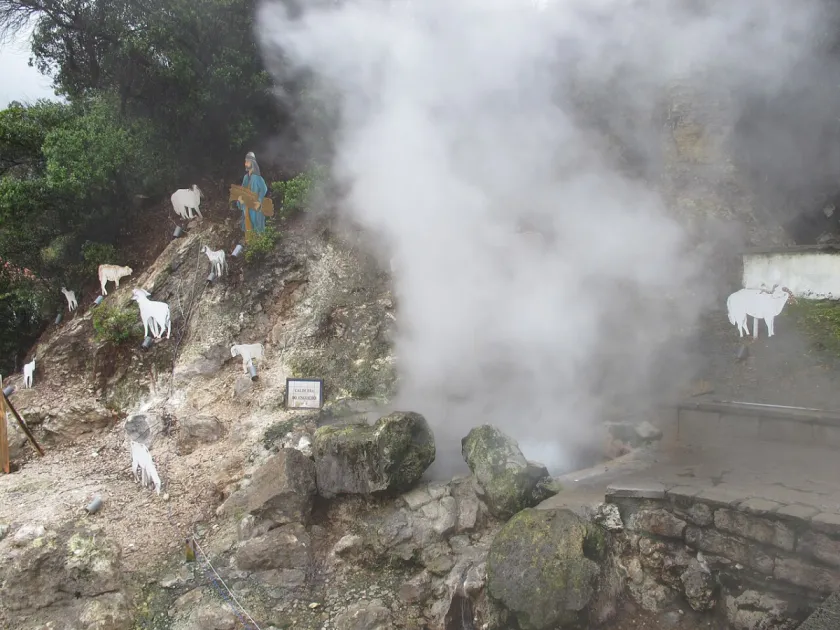
It is the public nativity about which there is most information. It is set among the fumaroles of the caldeiras in the parish of Furnas (Povoação, São Miguel), and has been held at this site since 1976, organised by the Câmara Municipal da Povoação and the Junta de Freguesia das Furnas, with staff from Terra Nostra Park.
According to a report of 2 December 2024, that year's edition had 250 lamps and about 200 biblical figures and structures. The laminated-wood pieces are kept away from the hottest spots because the heat would damage them, and the steam shifts with the wind, so the picture changes too. That year the nativity grotto was moved and the number of figures increased: the layout changes every year. Assembly took about a month, entry was free, the lights came on daily from 18:00 to 01:00 (and stayed on all day on Christmas Day), and it could be visited until mid-January.
That describes the 2024 edition. For 2026 we found no dates on the Câmara Municipal da Povoação's home page, so confirm opening, hours and access with the council (telephone 296 550 200, according to its website). It is on geothermal ground: stay on the marked routes. For the rest of the visit, see the article on the Furnas valley.
What other nativities are there on São Miguel?
A tour operator described, for the 2025 season, several nativities on São Miguel, which we have not independently verified and which you should confirm for 2026:
- Povoação: several downtown streets with scenes that mix biblical themes with the island's rural life.
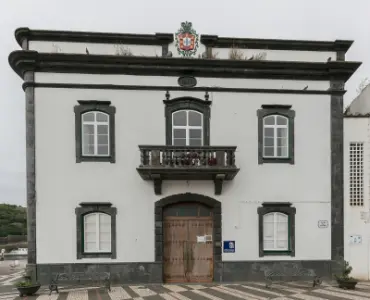
- Ribeira Grande: displays at the Casa do Arcano and the Prior Evaristo Gouveia nativity.
- Lapinha nativities: small scenes in display cases, linked to the Franciscan convents.
- Homes and churches: families build nativities at home, and parish churches keep theirs lit for visitors.
In the municipality of Lagoa, the council's website listed, for 2026, "Estátuas Vivas no Natal" on 11 and 12 December and a Christmas jazz concert on the 12th; we found no nativity exhibition there, so we do not list one. In Ponta Delgada the historic centre is a good place to see lights and churches: see the article on the city.
What about the other islands?
We found no reliable 2026 information about nativities on the other eight islands, and we will not invent any. Angra do Heroísmo's council has already published “Natal em Angra 2026” (20 November 2026 to 10 January 2027, subject to change), with a Christmas village in Praça Velha, concerts, cinema and street entertainment, and Midnight Mass on 24 December at 23:00 in the Sé (official programme). For Terceira, our Angra do Heroísmo itinerary gives context for visiting the city.
The safest approach is to ask the municipal council, parish council or parish of the island where you will be. Church and home nativities depend on each community and rarely have a national calendar.
How should you organise the visit?
- Go in the late afternoon or evening, when the lights are on, but confirm the hours first.
- Bring a waterproof: in December Ponta Delgada averages around 17 °C for highs and about 20 rainy days. See the month-by-month climate guide.
- Expect few hours of daylight: the sun sets close to 17:30.
- Combine with other stops nearby; the monuments list helps you find churches.
- On 24 and 25 December a lot is closed; confirm everything beforehand.
What care should you take?
Many nativities are in churches or community spaces that are also places of prayer. Speak quietly, avoid visiting during Mass and ask before photographing people. Do not touch the pieces or enter fenced areas, especially on hot volcanic ground.
Frequently asked questions
What is the best-known nativity in the Azores?
The one in the Caldeiras das Furnas, on São Miguel, is the one we found most information about: it has been held on site since 1976, with free entry in the 2024 edition.
When does the Furnas nativity open in 2026?
We found no announced dates. Confirm with the Câmara Municipal da Povoação.
Are there nativities on the other islands?
There certainly are church and home nativities, but we found no verifiable information for 2026. Ask the local council or parish.
Do I pay to see them?
In 2024 entry to the Furnas nativity was free. For the others, confirm.
What is the best time of day?
Late afternoon and evening, when the lights are on. Confirm the hours and bring rain clothing.