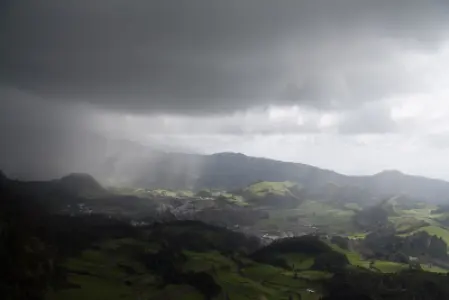
Angra do Heroísmo in 2 Days: A Terceira Itinerary with Praia da Vitória and Biscoitos
Terceira is the Azores island where history is easiest to read in the streets. Its capital, Angra do Heroísmo, is the only UNESCO-listed town centre in the archipelago, and a short drive away you find a volcanic chimney you can descend into, natural lava swimming pools and one of the oldest wine-growing areas in the Azores. Two days is enough to see the essentials if you plan well. This itinerary puts the old town and Monte Brasil on the first day, then spends the second on Algar do Carvão, Biscoitos and Praia da Vitória, with notes on what to eat along the way.
How to Plan Two Days on Terceira
Terceira is a compact island in the Central Group of the Azores, and its two main towns sit on the south coast: Angra do Heroísmo to the west and Praia da Vitória to the east. The airport is near Praia da Vitória, so many visitors land on the east side and drive to Angra. Distances are short, but island roads can be slow, so avoid packing the days too tightly. For a longer stay, our complete guide to Terceira covers the interior and more.
- Day 1: Angra's historic centre, viewpoints, Monte Brasil and a harbour sunset. Mostly on foot.
- Day 2: Algar do Carvão, Biscoitos, then Praia da Vitória for the evening. A rental car helps a lot.
Day 1 Morning: Angra's UNESCO Old Town
Angra do Heroísmo was for centuries a key Atlantic port on the sailing routes between Europe, Africa and the Americas, and it was heavily fortified to defend the Azores. UNESCO inscribed its historic centre as a World Heritage Site in 1983. The grid of streets, painted houses with stone window frames, churches and manor houses reflects that long history, and the town was rebuilt with great care after the 1980 earthquake that damaged much of it.
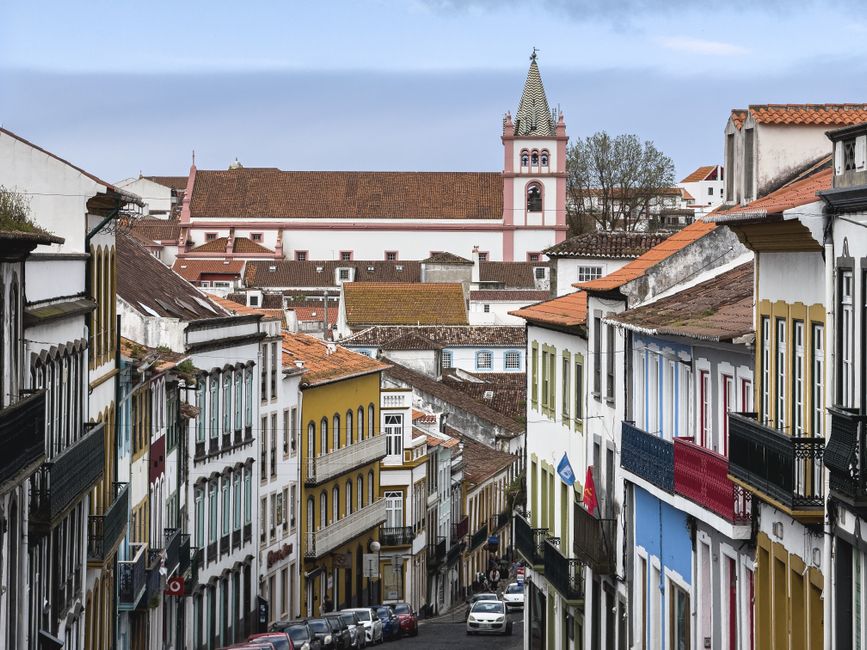
Start around the main square and the town hall, then wander downhill towards the harbour. Useful stops include:
- The Sé Cathedral: the town's principal church, worth a short visit.
- Rua da Sé and Rua Direita: the main streets for small shops, bakeries and cafés.
- Jardim Duque da Terceira: a pleasant public garden in the centre, good for a quiet break.
- Alto da Memória: a monument on a hill above the bay with views over the roofs and the harbour, a short climb or drive from the centre.
If architecture interests you, read more in our article on Terceira's churches, manor houses and UNESCO heritage. Look out too for the small brightly painted chapels called impérios, linked to the Holy Spirit festivals and typical of Terceira. Opening hours for churches and museums vary by season, so check locally on arrival.
Day 1 Afternoon: Monte Brasil
The green peninsula that closes the bay of Angra is Monte Brasil, an old volcanic cone fortified over the centuries. Its large fortress, the Fortaleza de São João Baptista, is a military site, so parts of it are restricted and you should follow the signs. The rest of the hill is a public park.
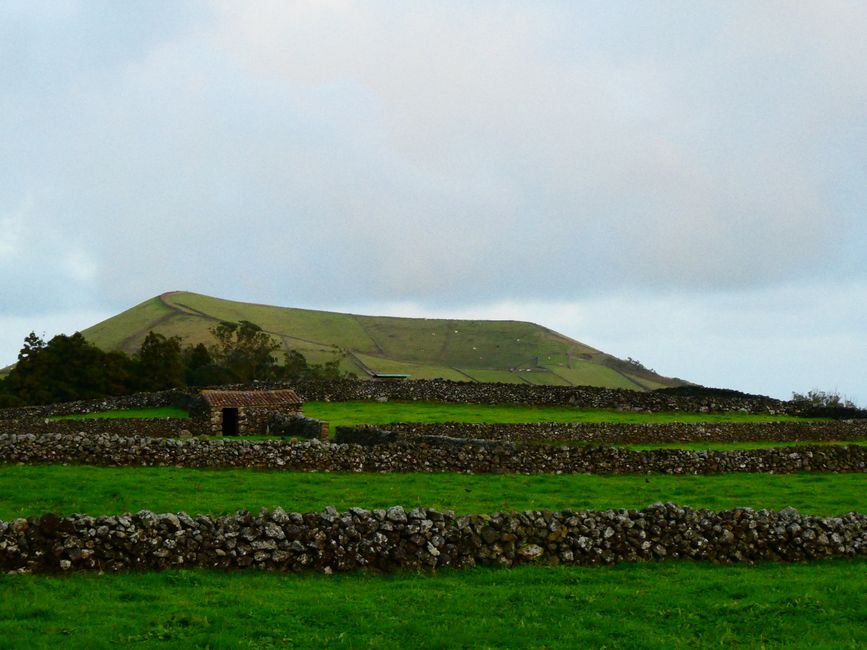
You can reach the upper area by car or on foot, and there are paths, picnic spots and lookouts over the town and the sea. From the viewpoints you will see why the position mattered: the bay is easy to defend and sits in the middle of the Atlantic sailing routes. Return to town in the late afternoon, walk along the harbour front and the marina for the evening light, then choose a restaurant in the centre for dinner.
Day 2: The Island Loop
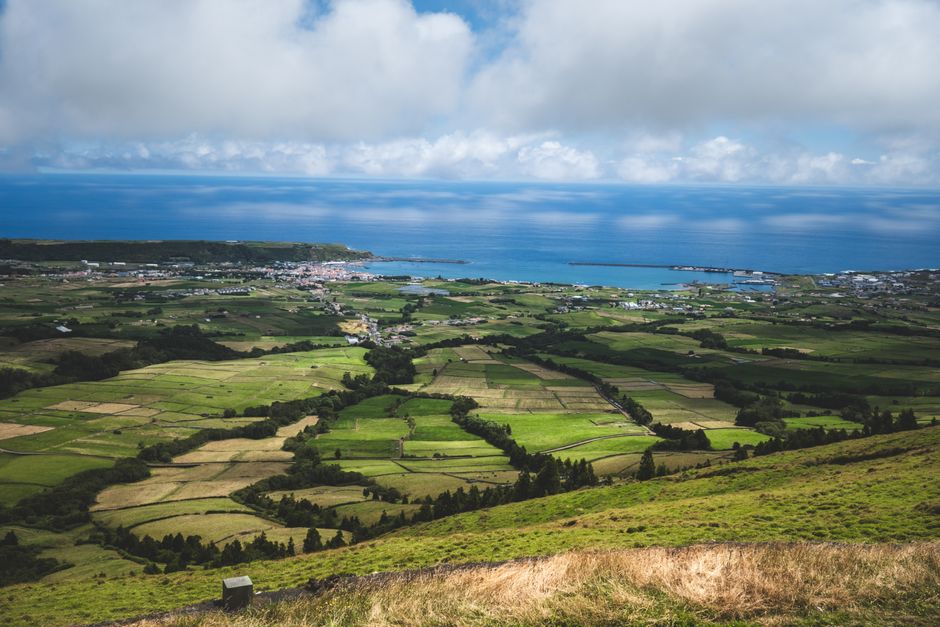
Day 2 is a drive through the centre and north of the island and back to the east. A sensible order is Algar do Carvão in the morning, Biscoitos for lunch and a swim, then Praia da Vitória in the late afternoon. Fuel up in Angra before leaving and bring a light jacket: the interior can be cooler and wetter than the coast.
Algar do Carvão: Into the Volcano
Algar do Carvão is a lava tube and volcanic chimney in the middle of Terceira, inland from Angra. Visitors enter through a tunnel and then walk down stairs into a vast cavity inside the old volcano. Inside you see stalactites and stalagmites formed from silica and, depending on the season, a small pond at the bottom. It is one of the few places in the world where you can go down inside a volcanic vent.
It is cool inside, the steps can be damp and the visit follows a set route, so wear shoes with grip and bring a layer. Entry arrangements, opening times and prices change, and access can be limited in bad weather, so check current information before you travel. For more about the island's caves, see our guide to the Azores volcanic caves.
Biscoitos: Lava Pools and Wine
On the north coast, the village of Biscoitos is known for two things. The first is its natural swimming pools, carved into black lava rock and filled by the sea, with steps, platforms and changing facilities added over the years. The water is clear and the setting is dramatic. As with all Atlantic swimming, conditions depend on the swell, so check the sea state and follow any signs or flags.
The second is wine. Vines here grow in small stone-walled enclosures called currais, built from lava rock to protect plants from wind and salt spray. The area has its own protected designation of origin, and a local wine museum explains the history of viticulture on the island. Look for Verdelho in particular. If wine interests you, also read about the UNESCO vineyards of Pico, which grow in a similar landscape. Tasting options and visiting hours differ between producers, so confirm locally. Small restaurants nearby serve fresh fish and local dishes, which makes Biscoitos a good lunch stop.
Praia da Vitória: Beach and Bay
Praia da Vitória is the island's second town and has one of the largest sandy beaches in the Azores, Praia Grande, in a sheltered bay with a marina. Many Azorean beaches are dark pebble coves, so a long sandy beach is a welcome change. It suits an easy end to the day: a walk along the promenade, a swim if the weather is warm, and dinner by the seafront.
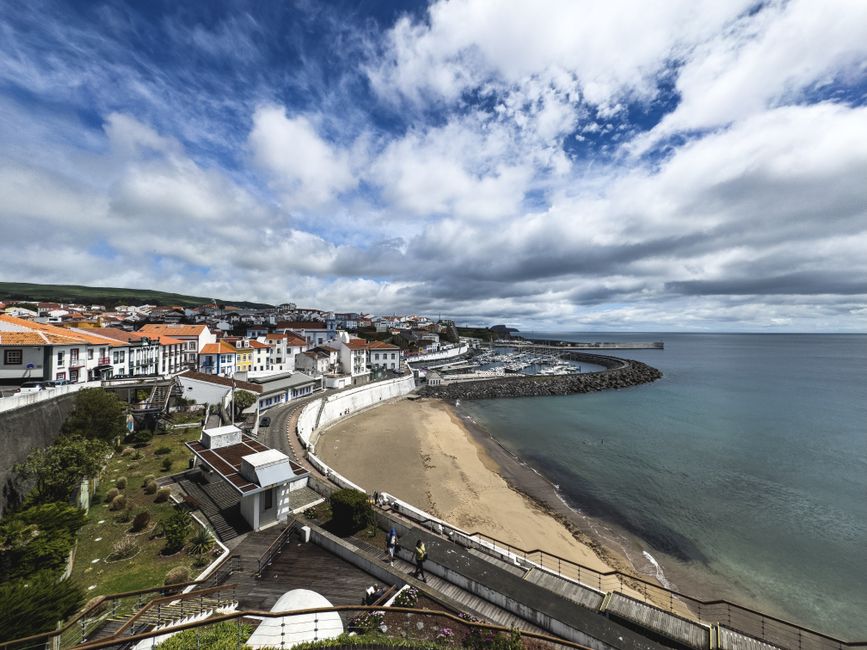
The name recalls a local battle in 1829, when liberal forces repelled an attempted landing. The airport and a large air base are also in this part of the island, which gives the area a different feel from Angra. For more beaches across the archipelago, see our guide to the best beaches in the Azores.
What to Eat in Terceira
Terceira's cooking is hearty and based on meat, fish and good dairy. Look for these:
- Alcatra: beef slow-cooked in a clay pot with wine and spices, the best known dish of the island. Many restaurants prepare it to order, so ask in advance.
- Linguiça and morcela: local sausages, often served as a starter.
- Fresh fish and seafood: limpets (lapas) and the grilled fish of the day, depending on the catch.
- Cheese: Azorean cheeses are an important local product. See our cheese and dairy trail.
- Sweets: traditional pastries and queijadas from local bakeries, ideal with an afternoon coffee.
For a taste of daily life, visit a local market if you have time. Our guide to Azores food markets and local products explains what to look for.
Practical Tips
- Car: rent a car for day 2 and book early in high season.
- Weather: it changes quickly. Bring a waterproof layer even in summer.
- Swimming: the lava pools and beaches are most pleasant in summer. Check conditions on the day.
- Timing: opening hours and prices change. Check before travelling, especially for Algar do Carvão, museums and fortress areas.
- Where to stay: Angra suits a first visit best because you can walk everywhere in the evening. Praia da Vitória suits beach lovers and early flights.
Frequently Asked Questions
Is two days enough for Terceira?
It is enough for the main highlights: Angra, Monte Brasil, Algar do Carvão, Biscoitos and Praia da Vitória. A third day lets you add the interior and more viewpoints.
Do I need a car?
Not for day 1, since Angra's centre is walkable. For day 2 a car makes things much easier, because public transport to Algar do Carvão and Biscoitos is limited.
Why is Angra do Heroísmo a World Heritage Site?
UNESCO inscribed the historic centre in 1983 because of its role as a fortified Atlantic port and its well-preserved urban fabric.
Where should I stay, Angra or Praia da Vitória?
Angra is better for history, restaurants and evening walks. Praia da Vitória is better for the beach and for being close to the airport.
Final Thoughts
Two days on Terceira give you a balanced picture of the island: a UNESCO town with an Atlantic past, a fortified hill with wide views, a descent into a volcano, black lava pools beside vineyards, and a long sandy bay to finish. Leave time at each stop rather than hurrying, check the practical details before you travel, and add a day if you can. To go further, read our complete Terceira guide.