São Jorge is the long, narrow island of the Central Group: about 53 km from end to end, under 7 km wide, with more than seventy fajãs tucked against the sea at the foot of green cliffs. One of the most thorough guides to the island recommends at least three days to see it without rushing, and that is the scale of this itinerary.
You will not find prices or opening hours here, because we have not been able to confirm them. Wherever a detail changes with the season, we say where to check it before you leave home. What follows is a sequence of days, stops and trails mentioned in travel guides and official sources, with room to adapt when cloud hides the ridge.
The island at a glance
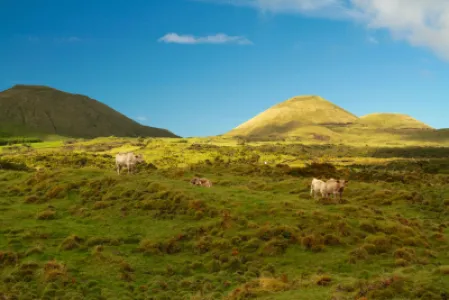
São Jorge sits in the Central Group, in the so-called Azores Triangle with Pico and Faial, and is nicknamed the sleeping dragon island for the long ridge that runs along its spine. The highest point is Pico da Esperança at 1,053 metres, and fewer than ten thousand people live here, which explains the slow rhythm of the villages.
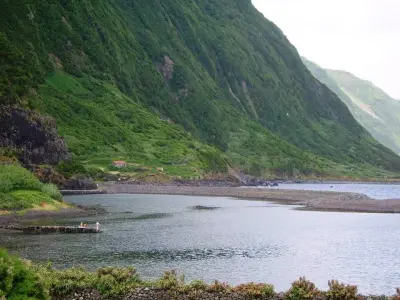
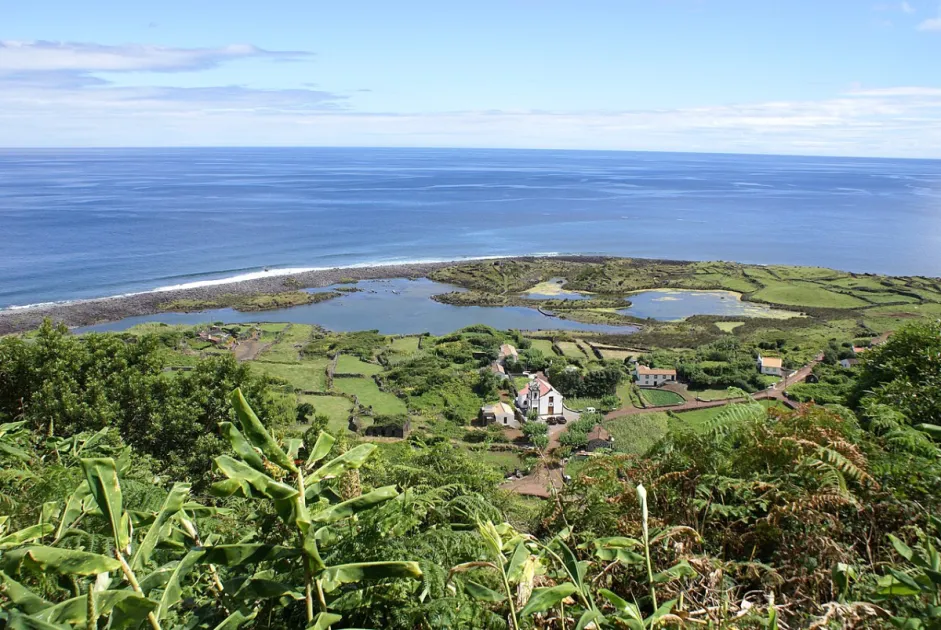
The fajãs are what make the island special. These are flat stretches of land beside the sea, formed mostly by collapsed cliffs and, in a few cases, by lava flows that reached the water. Some can be reached by car, others only on foot. The island has three towns, Velas, Calheta and Topo, and our complete guide to the fajãs explains how they formed and which deserve the most time.
Planning the trip
How many days? One detailed guide to the island recommends a minimum of three days and ideally a week. Three days is enough for the main viewpoints, one trail down to a fajã and a cheese tasting, but you will have to choose: this itinerary assumes you prefer a few stops done well to an endless list.
How do you get there? From outside the archipelago you first reach an island with international connections and continue to São Jorge by plane or boat. One traveller describes the crossing by boat from Faial, with a short stop at Pico. Schedules and operators change with the season, so confirm everything with the operators and on visitazores.com; our page on public transport in the Azores gives the general picture.
When to go? One guide names spring and summer as the best time, noting that July and August bring more visitors. In any month, expect Pico da Esperança to be hidden by cloud quite often: keep day 3 flexible so you can swap days if the weather turns.
Day 1: Velas, Rosais and Fajã do Ouvidor
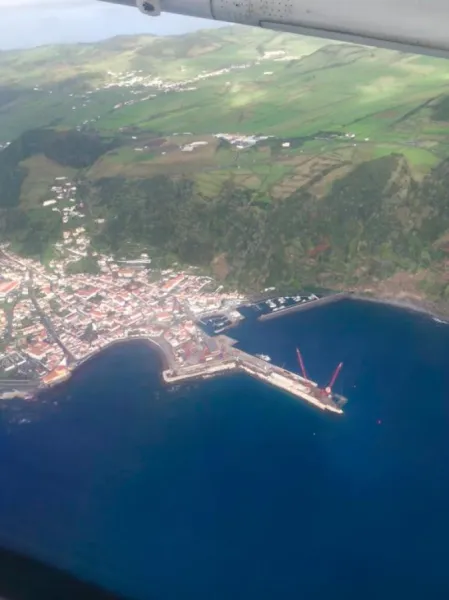
Start in Velas, the town where the boat arrives. The Velas viewpoint gives a panorama over the town and, when the horizon is clear, over Faial and Pico. It is the best way to understand the shape of the island before you move around it, and worth a few photographs first thing.
Rosais and Sete Fontes
Head on to the parish of Rosais. The Sete Fontes Forest Park began to be built in 1962 and is now a leisure area with picnic spots, a playground, ponds and streams. Further along is Ponta dos Rosais, with its abandoned lighthouse, which cannot be entered, and a viewpoint with an old whale lookout post from which you can see the neighbouring islands. If you are short of time, this is the stop you can cut without regret.
Fajã do Ouvidor
In the afternoon, go to the Fajã do Ouvidor viewpoint and then down to the fajã itself, one of the largest on the island, of lava origin, with a fishing harbour and natural pools among the volcanic rocks; Poça de Simão Dias is the best known. Swim only if the sea is calm and check conditions on the spot. Close the day in Velas with a cheese tasting: our São Jorge cheese guide covers the history, the PDO and the ageing.
Day 2: the trail day
The second day is for the fajã that almost every guide singles out: Fajã da Caldeira de Santo Cristo, reachable only on foot. There are two ways to get there and the figures vary by source.
The short option: Fajã dos Cubres to Santo Cristo
By car you reach Fajã dos Cubres, where you can park near the start of the path. The trail is linear, about 4 km one way, rated medium, and takes roughly an hour each way according to one travel guide. Fajã dos Cubres has a lagoon and takes its name from a small yellow flower. Only around ten people live at Santo Cristo year-round, it is a protected natural reserve, and the lagoon has clams said to be unique in the Azores. In 2013 a precautionary ban on bathing and on gathering shellfish was decreed because of microalgae; check the current situation before you go.
The long option: Serra do Topo to Cubres
Those with more energy can walk between Serra do Topo, the fajã and Cubres. One source gives about 9 km one way and 2h30; another speaks of under 10 km and around 4 hours, stretching to 5 or 6 with stops for picnics and photographs. Plan for the more cautious figure. Because the trail is linear, arrange transport for the end. The official trails portal has an up-to-date sheet, and our article on the São Jorge fajã trails covers both routes in detail. Carry water, wear shoes with good grip and tell someone your plan.
Day 3: Pico da Esperança, Manadas and Calheta
The last day gathers what is left and depends on the weather. Pico da Esperança, the island's highest point, is said to offer a fabulous view over the line of volcanic cones, but it often hides in cloud. If it is clear, make the most of it; if not, the island has better alternatives around every bend.
The village of Manadas has the Church of Santa Bárbara, with an 18th-century façade and, according to guides, a Baroque interior of gilded woodwork, tiles and paintings. One traveller arrived after visiting hours, so check opening times with the parish or the town hall. In the Calheta area, guides highlight the coffee plantations of Fajã dos Vimes.
If your flight or boat is in the afternoon, leave a margin: distances on the island are deceptive because of the bends. Keep the end of the morning for buying cheese to take home and finish the trip without hurrying.
Where to stay and eat
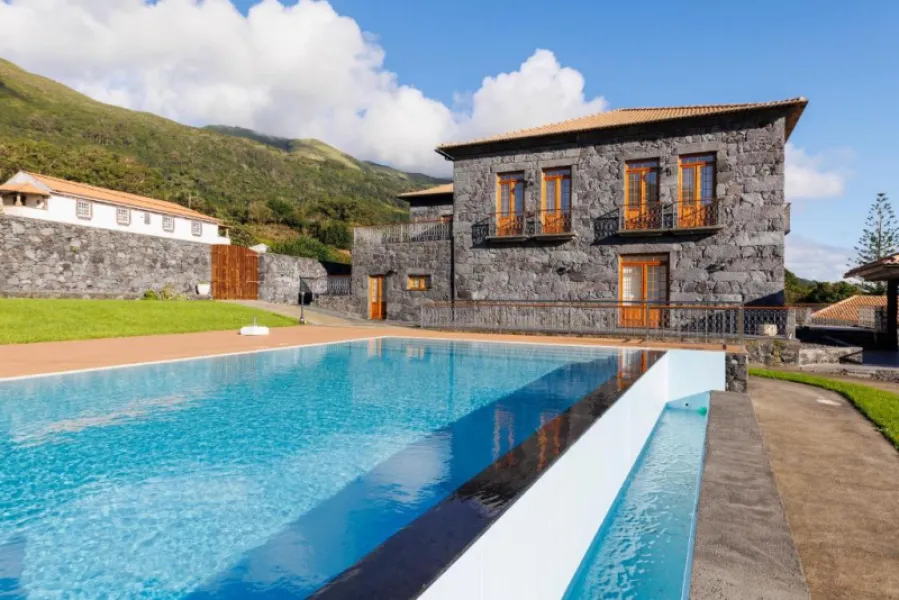
The guides we consulted suggest staying in Velas, Urzelina (between Velas and Calheta) or Calheta, for their central position, closeness to the airport and easy access. Any of the three works as a base for three days. For something different you can sleep in a house at Fajã da Caldeira de Santo Cristo, but remember that access is on foot and supply is limited. See what is listed on our São Jorge island page and confirm prices and availability on the booking platforms.
For food, two places mentioned in one travel blog: Amílcar, at Fajã do Ouvidor, for grilled fish and Santo Cristo clams, and Calhetense, in Calheta, for daily dishes and home-made burgers. This comes from a single account, so check they are open. At any table, ask for São Jorge cheese.
Getting around
One of the guides we consulted names a rented car as the best option. Not every fajã is reachable by car, but most viewpoints and villages are, and a car saves a great deal of time. Book ahead in high season and read our Azores car rental guide for driving tips.
Some fajãs can only be reached on foot, and linear trails need planning for the return. If you are travelling without a car, ask your accommodation about taxis or local guides before you arrive. In any case, keep a plan B for foggy days.
FAQ
Are three days enough for São Jorge?
They cover the essentials: viewpoints, one fajã on foot and a cheese tasting. One guide recommends a minimum of three days and ideally a week.
Do I need a car?
One guide names a rented car as the best option: it gives freedom for viewpoints and villages, and linear trails need transport at the end.
Can I swim at Fajã da Caldeira de Santo Cristo?
A precautionary ban on bathing and gathering clams in the lagoon was decreed in 2013. Check the current situation with the authorities before you go.
Which trail is best if I only have one day?
The Cubres to Santo Cristo path, about 4 km one way and rated medium. Confirm the details on the official trails portal.
Where is the best place to stay?
Velas, Urzelina and Calheta are the areas suggested by guides for their central position. For something different, there are houses at Fajã da Caldeira de Santo Cristo.
Final thoughts
Three days on São Jorge are enough for the essentials: a view over Velas, one fajã on foot, an afternoon by the sea and a cheese tasting. Keep the third day flexible, follow the forecast, and remember that much of the best of the island is unplanned, like a road shared with cows or a chat on a café terrace.
If you have time to spare, add a day to read our fajã guide and choose a second walk. And before you leave, recheck schedules, sea conditions and access rules with official sources.