The volcanic caves of the Azores rank among the most extraordinary geological formations in Europe. On the island of Terceira, two remarkable natural monuments offer visitors the chance to descend into the heart of a volcano and walk through lava tubes formed thousands of years ago. Algar do Carvão — a 90-metre volcanic chimney — and Gruta do Natal — a 700-metre walkable lava tube — sit just 14 kilometres apart and together provide the most complete underground geology experience in the Azores. Both are UNESCO-recognised heritage sites within the Terceira Biosphere Reserve.
How Azores Volcanic Caves Are Formed
The volcanic caves of the Azores were created during eruptions that took place between 20,000 and 2,000 years ago. As lava flows across the surface, the outer layer cools and hardens while the molten interior continues to flow, eventually draining and leaving behind hollow lava tubes. Algar do Carvão is different: it is a volcanic chimney, a near-vertical conduit through which gases and pyroclastic material were violently expelled during an explosive eruption approximately 3,200 years ago.
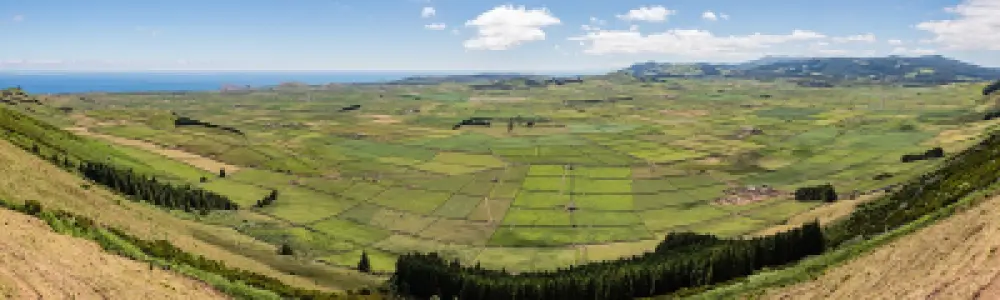
Terceira has more than 30 catalogued caves and sinkholes, making it the island with the highest density of volcanic speleology in the Azores. The warm, humid Atlantic climate promotes the growth of rare speleothems including translucent silica stalactites and rope lava formations.
Algar do Carvão: Terceira's Volcanic Chimney
Algar do Carvão is the most spectacular geological monument on Terceira and one of the most remarkable volcanic formations accessible to the public anywhere in the world. Designated a Regional Natural Reserve, it was formed around 3,200 years ago during the eruption of the Pico Alto volcano. Guided visits are managed by the Azorean Speleological Studies Group (GESPEA) and the regional tourism authority.
Geological Features
- Total depth: 90 metres below the entrance
- Opening diameter: up to 30 metres at the top
- Underground lake: approximately 15 metres deep, located at the base
- Interior temperature: constant 16°C year-round
- Relative humidity: above 90%
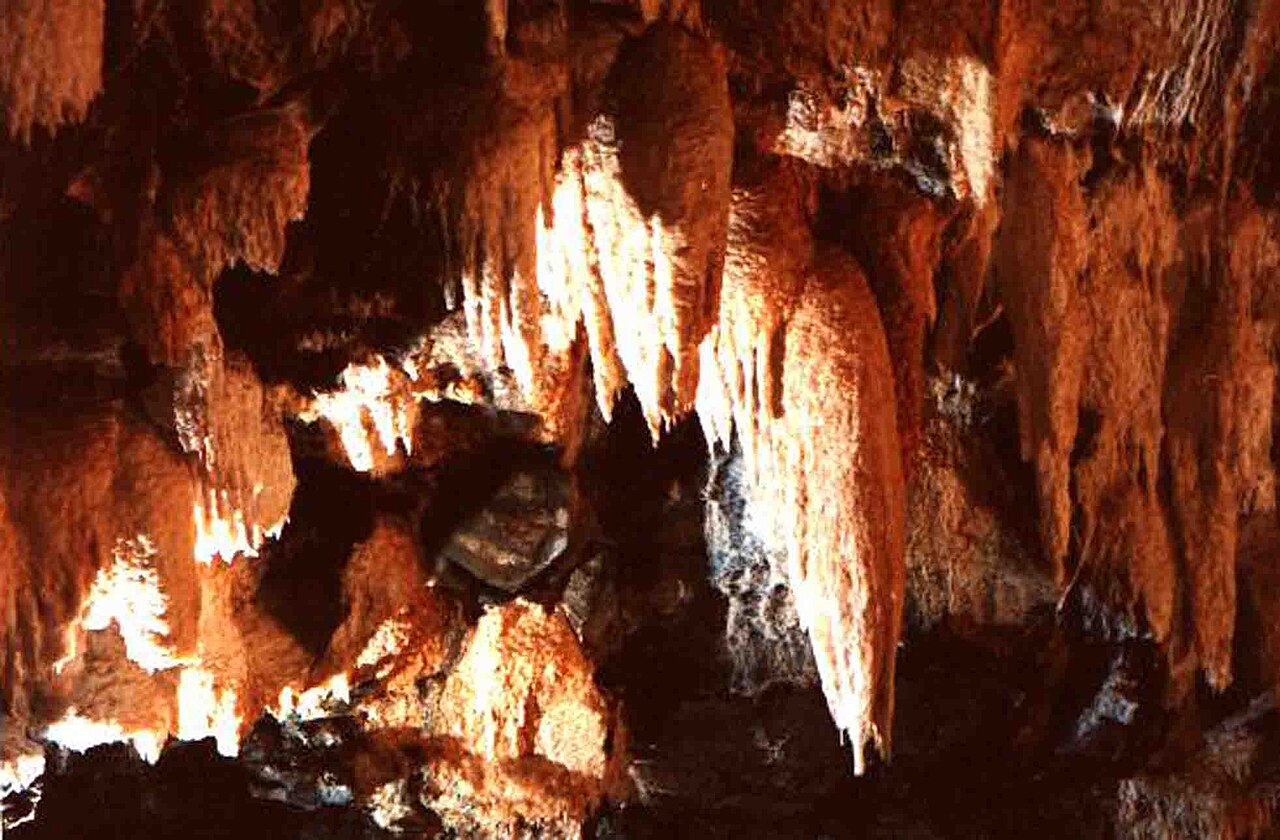
- Silica stalactites: among the rarest and longest in Europe — some exceeding 1.2 metres
The guided visit begins with a descent down a metal staircase installed along the chimney wall, passing through geological layers representing distinct eruptive episodes spanning centuries. The walls display a remarkable colour palette — blacks, ochres, russets, and greys — produced by the solidification of different lava types. At the base, the underground lake reflects the artificial lighting, creating an atmosphere of surreal, otherworldly beauty.
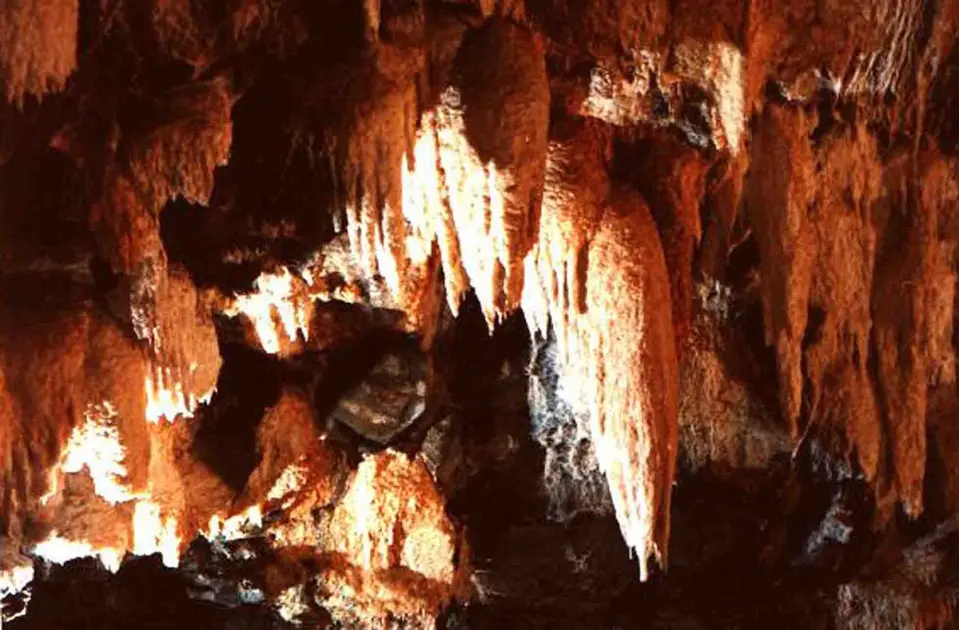
The silica (opal) stalactites coating the walls of Algar do Carvão are considered the longest and best-preserved in Europe. Amorphous quartz is deposited by percolating groundwater over thousands of years, producing transparent, glass-like structures of extraordinary fragility. Their preservation is one of the most compelling arguments for the strict protection protocols governing this site.
Practical Information — Algar do Carvão
- Location: Serra do Cume, central Terceira (GPS: 38.7156°N, 27.2156°W)
- Season: open May–October (closed in winter for conservation)
- Hours: Tuesday–Sunday, 14:30–17:30 (last entry 17:00); verify current schedule
- Admission: €6 adults, €3 children (6–17), free under 6
- Visit duration: 45–60 minutes with guide
- Recommended clothing: warm layer (16°C inside), closed non-slip footwear
- Accessibility: not wheelchair accessible; stairs with safety railings
Gruta do Natal: The Azores' Largest Accessible Lava Tube
Gruta do Natal (Christmas Cave) is the longest lava tube open to the public in the Azores, with a total mapped length of approximately 1,580 metres, of which 700 metres form the guided walking route. Formed around 15,000 years ago during an eruption of the Guilherme Moniz Caldera, the cave extends horizontally beneath the rural landscape of Terceira at a depth of between 5 and 20 metres.
What to See Inside Gruta do Natal
The interior route through Gruta do Natal is a journey through geological time. The walls display lava level marks — horizontal lines showing where the internal lava lake stabilised at different moments during the eruption. The ceiling features both rope lava (pahoehoe) and block lava (aa) formations, representing two distinct flow and cooling patterns.
- Lava stalactites: pendant formations on the ceiling created by dripping still-molten lava
- Lava stalagmites: floor protrusions formed by accumulated lava drips
- Rope lava textures: textile-like surfaces formed during slow lava flow
- Flow level marks: wall striations recording the history of interior lava movement
The cave is also a significant habitat for subterranean fauna, including cave-adapted insects, spiders, and bats endemic to the Azores. Guides use specialised lighting to illuminate the finest formations during the tour.
Practical Information — Gruta do Natal
- Location: Biscoitos, north Terceira (approximately 15 km from Angra do Heroísmo)
- Season: open May–October
- Hours: Friday–Sunday, 14:00–17:00 (verify current schedule)
- Admission: €4 adults, €2 children
- Duration: 60–90 minutes
- Equipment provided: protective helmets and torches
- Recommended clothing: jacket, closed footwear you don't mind getting dirty
How to Visit Both Caves in One Day
The two caves are approximately 14 km apart, making a combined visit in a single day entirely feasible. The recommended itinerary is:
- Morning (10:00–12:00): Explore the Furnas do Enxofre fumarole field (free, adjacent to Algar do Carvão)
- Lunch (12:00–14:00): Restaurant in Angra do Heroísmo or picnic on Serra do Cume
- 14:30–15:30: Guided visit to Algar do Carvão
- 16:00–17:30: Drive to and explore Gruta do Natal in Biscoitos
- After visit: Swim at Biscoitos natural rock pools (5 minutes away)
Other Caves and Lava Tubes on Terceira
Beyond the two main monuments, Terceira has over 30 catalogued speleological formations. Most are not open to the general public, but organised groups with GESPEA-certified guides can access some of them by prior arrangement. The Furnas do Enxofre, located immediately adjacent to Algar do Carvão, are freely accessible and display active fumarolic activity across a dramatic landscape of volcanic fissures and sulphur deposits.
Visitor Tips
- Book ahead: In July and August, guided slots fill quickly. Contact at least 2 days in advance by phone or email.
- Clothing: Both caves are permanently cool and damp. Bring a jacket even on hot summer days.
- Photography: Permitted. A camera with good low-light performance is recommended. A tripod is helpful but not essential.
- Children: Gruta do Natal suits children from age 5–6 (mostly flat walking). Algar do Carvão involves steep stairs and is recommended for children over 8 without vertigo.
- Combine with Angra: Pair your cave visit with Angra do Heroísmo's UNESCO World Heritage historic centre — one of the finest in the Atlantic.
FAQ: Volcanic Caves on Terceira Island
Is Algar do Carvão the deepest cave in the Azores?
Algar do Carvão is the deepest volcanic chimney accessible to the public in the Azores at 90 metres. Deeper formations have been catalogued by GESPEA but are not open to visitors.
Are the caves open year-round?
No. Both Algar do Carvão and Gruta do Natal are open only from May to October. Winter closure protects geological formations and endemic cave fauna from visitor disturbance.
Are the caves suitable for young children?
Gruta do Natal, with its mostly flat walking route, is suitable for children from age 5–6. Algar do Carvão involves descending and ascending stairs — recommended for children over 8 who do not suffer from vertigo.
Do I need to bring my own equipment?
No. Safety helmets and torches are provided at both sites. Wear closed shoes and bring a warm layer — that is all that is required.
Can I visit without a guide?
No. For safety and conservation reasons, visits are compulsorily guided at both sites. Guides are certified technicians trained in volcanic geology and confined-space safety protocols.