The Carnival of Terceira Island in the Azores is unlike any other carnival in the world. Far more than street parades and glittery costumes, it is one of the greatest expressions of popular theatre in the Portuguese-speaking world — a five-day marathon of satirical dance, original music, and community identity that transforms the entire island into an open-air stage. Known locally as the Entrudo, Terceira's Carnival has been officially recognized as Intangible Cultural Heritage by Portugal's General Directorate of Cultural Heritage. Every February, more than 50 amateur groups perform across over 30 festival halls scattered across the island, bringing Bailinhos, Pandeiro Dances, and Sword Dances to thousands of devoted spectators.
What is the Entrudo of Terceira?
The word Entrudo comes from the Latin introitus, meaning "entrance" — specifically, the entrance into Lent. On Terceira, Entrudo is both the formal name for the period before Ash Wednesday and the affectionate term locals use for their unique carnival tradition. Unlike the street-based carnivals of Lisbon or the elaborate floats of Rio, Terceira's Entrudo is fundamentally an itinerant popular theatre phenomenon: performance groups travel from hall to hall across the island throughout the night, presenting their shows at each stage in a cultural marathon that continues until dawn.
The tradition has documented roots stretching back to the earliest centuries of Azorean colonization. Medieval Portuguese cultural influences — particularly the cantigas de escárnio e maldizer (scorn verses), satirical texts that criticized public figures and institutions — merged with local festive practices to produce a theatrical genre unique in the world. Today, Terceira's Carnival is recognized as the largest gathering of popular theatre in the Portuguese language anywhere on the planet.
The Three Genres of Terceira's Carnival Dances
Terceira's Entrudo artistic traditions are divided into three distinct performance genres, each with its own history, aesthetic, and performance conventions:
1. Bailinhos — The Heart of Terceira's Carnival
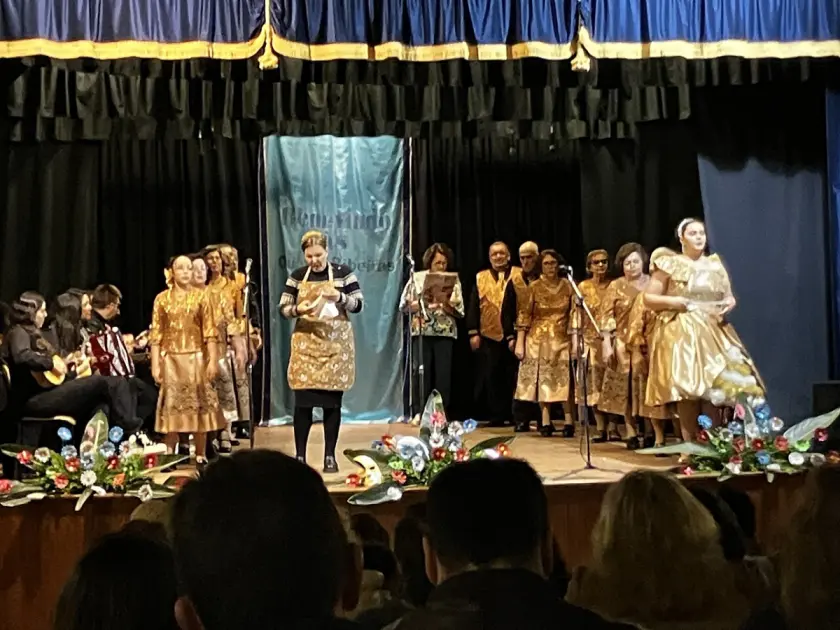
Bailinhos are the most characteristic genre and the beating heart of the Entrudo. Composed primarily of amateur performers, Bailinho groups create entirely original shows from scratch for each Carnival edition: new scenery, specially composed music, original choreographic arrangements, and hand-sewn costumes in every color of the rainbow. After months of evening rehearsals, these groups travel the island from hall to hall over four days, commenting on contemporary social and political reality from the stage with humor, irony, and infectious musicality.
Each Bailinho has a mestre (lead soloist) who conducts the songs, often in two-part harmony. Lyrics are written fresh each year, making every Bailinho a living cultural document of its time. The Fadoalado group, founded in 2016, won the Got Talent Portugal competition on RTP in 2021 and subsequently performed internationally across the USA, Canada, and mainland Portugal — a testament to the quality these amateur troupes achieve.
2. Pandeiro (Tambourine) Dances
Pandeiro Dances are performances in which the group leader executes a complex choreography with a tambourine — an instrument that marks the rhythm and simultaneously serves as a stage prop. These dances have a more musical and rhythmic character than Bailinhos, with compositions blending Azorean folk music traditions with contemporary arrangements. Themes are generally humorous, with a lighter social critique than Sword Dances.
3. Sword Dances
Sword Dances are the oldest genre and the one that addresses more serious themes. Inspired by medieval European sword dances, these performances feature elaborate choreography with sword props (often crafted from painted wood or cardboard) and address historical, epic, or pointed social criticism themes. The aesthetic is generally more dramatic and formal than Bailinhos.
The Senior Carnival: Weeks Before the Main Event
One of the unique features of Terceira's Entrudo is the Senior Carnival, a warm-up season that precedes the main Carnival by several weeks. In 2026, twelve groups performed across the island's community halls on the weekends of January 24–25, January 31–February 1, and February 7–8 — building anticipation and giving audiences a preview of the season's best performances.
The Senior Carnival embodies the intergenerational transmission that keeps this tradition alive. Veterans with decades of experience — such as Sara and Leandra Mota, who have performed for nearly three decades — share the stage with newcomers like Maria Mota Ourique, who began performing at age 11. This cultural continuity is what makes Entrudo a genuinely living tradition rather than a museum piece.
The Stages: More Than 30 Festival Halls Across the Island
One of the most fascinating aspects of Terceira's Carnival is its decentralization. Unlike a carnival concentrated in a single square or avenue, Terceira's Entrudo spreads across more than thirty festival halls distributed throughout the island — from Angra do Heroísmo to Praia da Vitória, through São Sebastião, Vila Nova, Altares, Biscoitos, Porto Judeu, and many other communities.
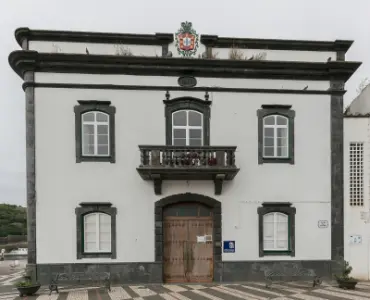
Groups follow an itinerary: they move from hall to hall through the night, performing the same show at each stage. Spectators choose their favorite hall and wait for the groups to arrive — or, for the more adventurous, follow the groups from venue to venue in a genuine cultural pilgrimage. The Teatro Angrense in Angra do Heroísmo — a historic theatre inaugurated in the 19th century and one of the most important historic theatres in the Azores — serves as the flagship stage for the dances and bailinhos during Carnival, with sessions running from February 14–17 in 2026, starting at 4 PM.
Between performances, spectators gather at the hall bars to enjoy Carnival gastronomy: bifanas (pork sandwiches) and filhós de forno (traditional fried pastries), washed down with local wine or beer. The festivities continue until the early hours of the morning, with groups performing without pause through the night.
Masquerades and Carnival Costumes
Alongside the theatrical dances, Terceira's Carnival has a strong tradition of popular masquerades. Unlike carnivals where costumes tend toward the spectacular and extravagant, Terceira's tradition favors humor, satire, and the absurd. The best costumes are those that comment on current events — politicians, local scandals, cultural trends — with creativity and irreverence. Rua de São João in Angra do Heroísmo is the epicenter of popular masquerades, filling with revelers from around 10:30 PM during Carnival days.
Costume shops in Angra sell affordable base outfits that locals customize with topical references. The tradition is inclusive: everyone participates, from children to the elderly. Families use Carnival afternoons for children's masquerade parties at schools and community centers, while adults save the nights for the hall-hopping circuit.
Terceira Carnival 2026: Calendar Overview
Carnival 2026 on Terceira followed this approximate schedule:
- January weekends (Jan 24–25, Jan 31–Feb 1, Feb 7–8): Senior Carnival — 12 groups in community halls across the island
- Friday, February 13: Opening of the main Carnival — first groups departing
- Saturday to Tuesday, February 14–17: Main Carnival — Teatro Angrense and 30+ halls across the island, sessions from 4 PM
- Fat Tuesday, February 17: Carnival peak — Rua de São João in full celebration until the early morning hours
- Ash Wednesday, February 18: Beginning of Lent — end of festivities
In 2027, Carnival will again fall in February, with Fat Tuesday on February 9. Always verify exact dates and schedules with the Angra do Heroísmo Municipality and check the Teatro Angrense ticketing portal.
Visitor's Practical Guide to Terceira's Carnival
Buying Tickets
Tickets for Teatro Angrense sessions sell out weeks in advance — purchase early through Ticketline (ticketline.sapo.pt). For festival halls across the island, admission is typically paid at the door (€5–€10 per session). Many halls have limited capacity, so arriving early is advisable. The street celebrations on Rua de São João are free and open to all.
Getting Around Between Halls
A dedicated Terceira Carnival app provides real-time information on which groups are performing where, venue GPS locations, and navigation between halls. This app is essential for anyone wanting to follow groups from stage to stage and is available on both Apple and Google app stores. Having your own rental car gives you maximum flexibility for the inter-hall circuit.
What to Wear
Costumes are strongly encouraged but not mandatory. Terceira's tradition favors humorous and satirical costumes over frightening or Gothic ones. For the most authentic experience, choose a costume that references a recent event — a politician, a TV show, a local scandal. Angra do Heroísmo's costume shops offer a solid selection of base outfits to customize.
Carnival Food to Try
Beyond bifanas and filhós at the halls, Carnival season calls for malassadas (sugar-dusted fried doughnuts without holes), coscorões (thin fried pastry), and fatias douradas (Portuguese-style French toast). Angra's bakeries and pastry shops fill their windows with these seasonal specialties throughout Entrudo.
Cultural and Heritage Significance
Terceira's Carnival is not just a party — it is a living document of Azorean identity. The Bailinho texts, written fresh each year, function as chronicles of the island's social and political life. Over decades, these texts have commented on everything from Azorean agricultural policy to local scandals and global cultural trends. Scholars study Bailinho archives as primary historical sources for contemporary Terceira history.
According to academic research published in the journal Sustainability (MDPI, 2022), Terceira's Carnival is a singular phenomenon of community identity — one of the largest expressions of popular theatre in the Portuguese language globally, annually organizing 50 to 60 amateur groups that perform across more than 30 stages over four or more consecutive days. The Intangible Cultural Heritage recognition by the Portuguese General Directorate of Cultural Heritage (DGPC) cemented its institutional status.
To make the most of your time on Terceira, pair Carnival with a visit to Angra do Heroísmo's UNESCO World Heritage historic centre. Read our Complete Guide to Terceira Island and explore the island's remarkable churches, manor houses, and UNESCO architecture.
FAQ: Terceira Island Carnival
What are the Bailinhos of Terceira's Carnival?
Bailinhos are amateur theatre and dance groups that create entirely original shows — with new music, choreography, and hand-sewn costumes — specifically for Terceira's Carnival. Each group tours more than 30 festival halls across the island over four days, commenting satirically on social and political current affairs. They are the most distinctive genre of the Entrudo and have been classified as Intangible Cultural Heritage of Portugal.
What is the difference between Bailinhos, Pandeiro Dances, and Sword Dances?
All three genres are part of Terceira's Carnival but have distinct characteristics: Bailinhos are theatrical shows with original music and social satire; Pandeiro (tambourine) Dances emphasize rhythm and musicality with a leader dancing with a tambourine; Sword Dances are the oldest form, with a more dramatic aesthetic and themes of historical or pointed social criticism.
When does Terceira's Carnival take place?
Terceira's Carnival runs in the four to five days before Ash Wednesday (the Sunday, Monday, Fat Tuesday, and sometimes also the preceding Friday and Saturday). Dates vary each year according to the liturgical calendar. In 2026, Fat Tuesday fell on February 17; in 2027, it will fall on February 9.
Do you need tickets to attend Terceira's Carnival?
For Teatro Angrense sessions, yes — tickets must be purchased in advance via Ticketline as they sell out quickly. For community festival halls across the island, admission is generally paid at the door (€5–€10). The popular masquerade celebrations on Rua de São João in Angra are free and open to all.
Is Terceira's Carnival suitable for families with children?
Yes. Carnival afternoons are especially family-friendly, with festival hall sessions starting at 4 PM. Children love the colorful costumes and catchy music of the Bailinhos. For evening hall-hopping sessions, check individual venue age restrictions. The street celebrations on Rua de São João are family-friendly in the early evening hours.
Conclusion
Terceira Island's Carnival is one of the most authentic and distinctive cultural experiences in the entire Azores archipelago. Where other destinations offer wall-to-wall Carnival, Terceira offers a deep immersion into a centuries-old tradition — a living popular theatre that is irreverent, deeply communal, and irresistibly joyful. If you are planning an Azores trip in February, building your itinerary around Terceira's Entrudo will be one of the best travel decisions you make. For year-round festival planning across the islands, explore our guide to the Azorean festivals and traditions calendar.