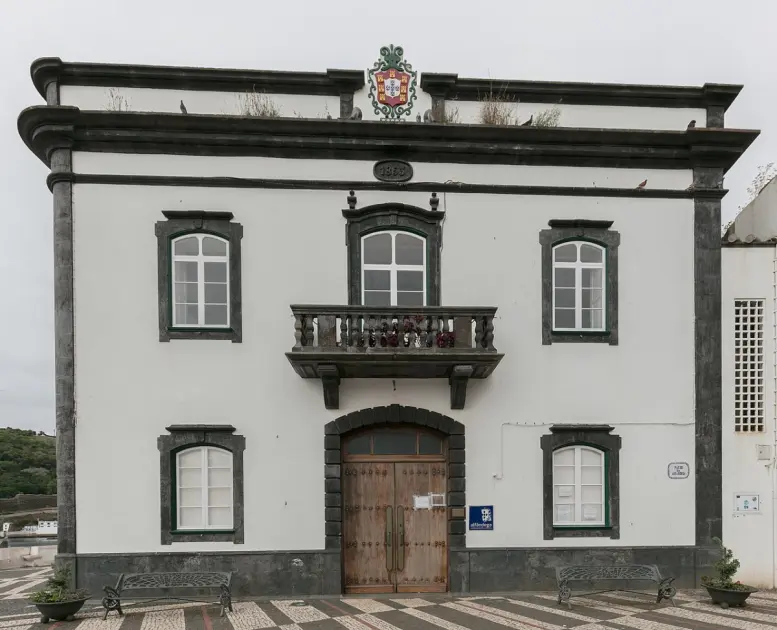
Angra do Heroísmo, the capital of Terceira Island, is the only UNESCO World Heritage city in the Azores — and one of the finest examples of Atlantic colonial urban planning anywhere in the world. Inscribed on the UNESCO World Heritage List in 1983, its historic centre is recognised as "a remarkable architectural ensemble that testifies to European expansion in the 15th to 17th centuries." Walking through Angra's streets is to step into the golden age of Atlantic maritime history, when the city was an essential stopover for fleets sailing between Europe, the Americas, and India.
Historical Context
Founded in the 15th century shortly after the colonisation of the Azores began, Angra do Heroísmo quickly became one of the most important ports in the Atlantic. Its mid-ocean position — halfway between Lisbon and the New World — made it the compulsory stopover for the India Fleets. The wealth generated by this trade financed the churches, convents, manor houses, and fortifications that still define the city's urban character today.
The title "Heroísmo" was granted by King Pedro IV in 1829, honouring the city's resistance during the Portuguese Civil War between Liberal and Absolutist forces — an episode that deepened Angra's distinct historical consciousness.
The Cathedral (Sé) of Angra do Heroísmo
The Cathedral is the most important religious building in the Azores. Originally constructed in the 16th century and extensively rebuilt after the 1980 earthquake, the Sé combines Manueline, Renaissance, and Baroque elements in a synthesis reflecting centuries of construction. The interior preserves notable works of art including historical azulejo tile panels, gilded altarpieces, and liturgical goldsmithwork of immeasurable value. Its façade dominates the Praça Velha — the historic heart of Angra.
Principal Churches
Igreja da Misericórdia
One of the most beautiful churches in the city, with an imposing Baroque façade and an interior rich in gilded woodwork. Its historic pipe organ is one of the best-preserved in the Azores. Originally constructed in the 16th century and reformed in the 18th.
Convento de São Francisco (Museum of Angra)
The most extensive conventual complex in Angra, now housing the Museum of Angra do Heroísmo. The Renaissance cloister, with its basalt stone arcades and interior gardens, is among the most beautiful in the entire archipelago.
Igreja do Colégio (former Jesuit Church)
Built by the Jesuits in the 17th century, this church has one of Angra's most elegant façades. The barrel-vaulted interior and its carved woodwork are exemplary of Counter-Reformation religious architecture in Portuguese overseas territories.
Manors and Civil Architecture
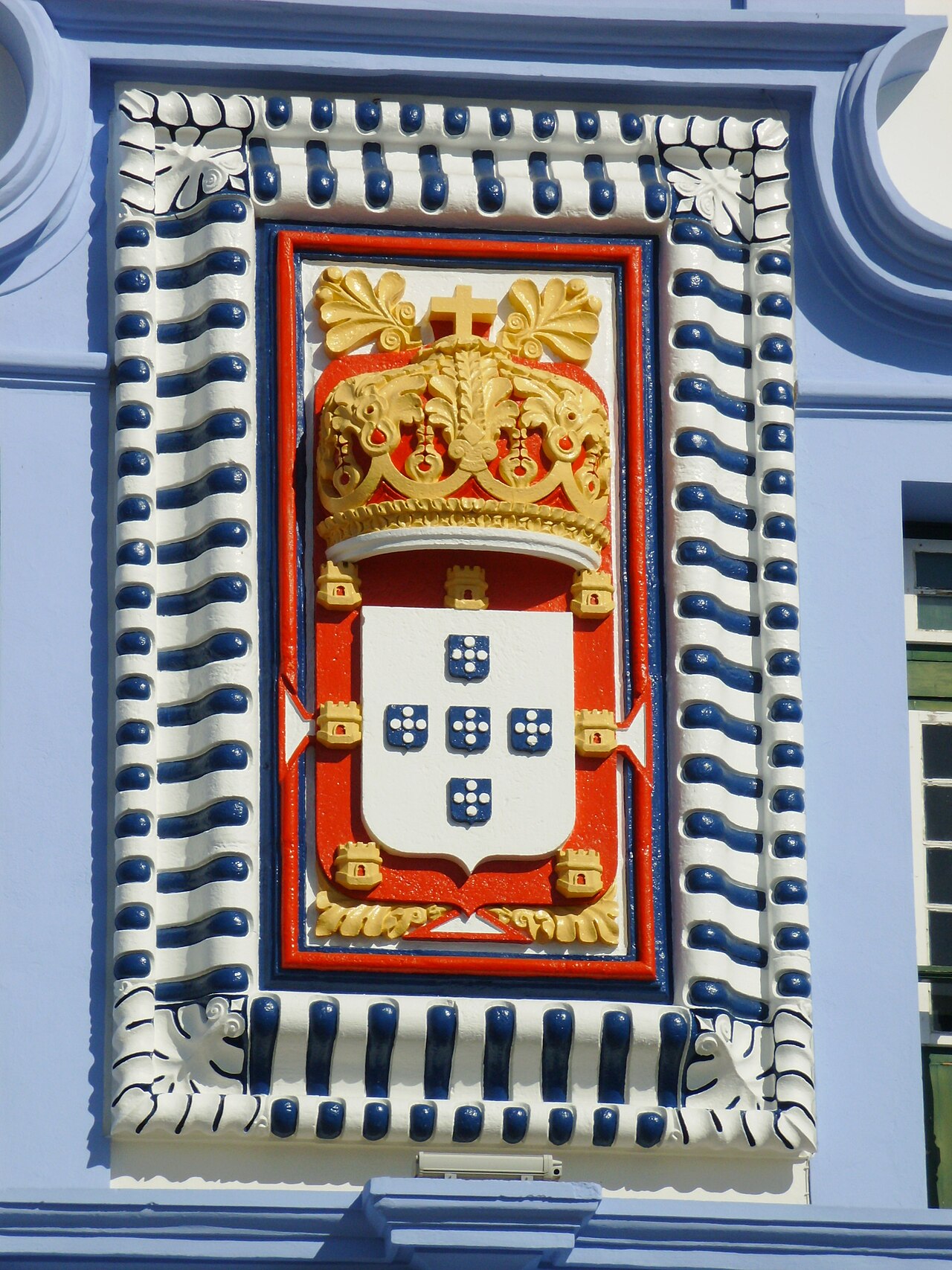
Angra has a remarkable collection of solares — colonial-era noble houses whose architectural character reflects the prosperity of the 16th to 18th centuries. Azorean solares are characterised by symmetrical façades with windows framed in dark basalt stone contrasting with whitewashed or yellow-painted walls, heraldic coats of arms above doorways, and high-walled private gardens.
Solar da Junta Geral
The most imposing civic building in Angra, housing the Junta Geral (regional assembly). Its 18th-century neoclassical façade and interior azulejo panels depicting historical and allegorical scenes are unmissable.
Military Architecture — The Fortresses
Castelo de São João Baptista (Monte Brasil)
The most important fortress in the Azores and one of the largest Portuguese military constructions of the 16th–17th centuries. Built on Monte Brasil — a volcanic promontory projecting into the sea beside Angra — the castle dominates the bay with extraordinary presence. The complex includes walls, bastions, a moat, and internal buildings that form almost a city within a city. Monte Brasil itself is a protected natural area with panoramic views over Angra, the Atlantic, and — on clear days — the distant peaks of Pico and Faial.
Forte de São Sebastião
Located at the entrance to Angra harbour, this 16th-century fort is a well-preserved example of Portuguese military architecture from the Age of Discovery, now integrated into the city's waterfront urban fabric.
The Praça Velha and the UNESCO Urban Ensemble
The Praça Velha (Praça da Restauração) is the historic heart of Angra do Heroísmo. Surrounded by buildings from the 16th to 19th centuries — including the City Hall (Paços do Concelho), the Palácio Bettencourt, and historic commercial buildings — the square has a monumental character rarely found in Atlantic cities of comparable scale. The streets radiating from it, especially the historic Rua Direita, preserve remarkable architectural continuity.
The Impérios do Espírito Santo
One of Terceira's most distinctive architectural elements is the impérios do Espírito Santo — small, vividly coloured chapels (white, blue, red, or yellow) found all across the island. Associated with the unique Azorean Holy Spirit festivals (May–September), they are an iconic element of Terceira's landscape and a UNESCO intangible cultural heritage candidate.
The 1980 Earthquake and Reconstruction
A crucial context for understanding Angra's architecture is the earthquake of 1 January 1980 (magnitude 7.2), which destroyed or severely damaged much of the historic centre. The reconstruction effort — carefully guided to preserve original historical and architectural characteristics — is itself a remarkable example of heritage preservation. The UNESCO inscription in 1983, just three years after the earthquake, recognised both the historic value and the fidelity of the reconstruction.
Visitor Tips
- The historic centre is easily walkable — allow at least a full day
- The Museum of Angra (Convento de São Francisco) is open Tuesday–Sunday
- Monte Brasil at sunset offers one of the finest views in the Azores
- Seek out the colourful impérios do Espírito Santo scattered across the island
- The Holy Spirit Festivals (May–September) bring the impérios to life with coronations and processions
FAQ: Architecture and UNESCO Heritage of Terceira
Why is Angra do Heroísmo a UNESCO World Heritage Site?
Angra do Heroísmo was inscribed on the UNESCO World Heritage List in 1983 as an "urban ensemble and fortifications constituting an exceptional testimony to European expansion in the 15th to 17th centuries." It is the only city in the Azores with this designation.
What are the "impérios do Espírito Santo" on Terceira?
The impérios are small, brightly painted chapels found across Terceira Island, associated with the Holy Spirit festivals — a uniquely Azorean religious and cultural tradition. They are one of the island's most recognisable and photogenic architectural elements.
How long does it take to visit Angra's historic centre?
A thorough visit — including the Cathedral, the Museum of Angra, the Praça Velha, and the principal churches — requires 4–6 hours. Add a separate day to walk Monte Brasil and explore the island's interior.
Is the Castelo de São João Baptista open to visitors?
Monte Brasil and the castle exterior are freely accessible. The fortress interior has specific visiting hours — check the Angra do Heroísmo municipal website for current information.
When is the best time to visit Angra do Heroísmo?
The Holy Spirit Festival season (May–September) is the most culturally rich period. June and July combine good weather, festivities, and long days. Winter is quieter but offers the charm of the city's unique Christmas illuminations in the UNESCO historic centre.