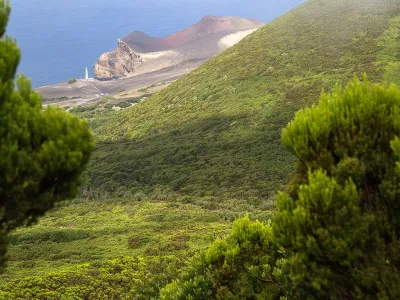
Ask most people about wine in the Azores and they will say Pico, and only Pico. In fact the archipelago has three protected designations of origin (DOP): Pico, Graciosa and Biscoitos on Terceira, plus the Azores IGP, which can come from any island.
This guide explains where Azorean wine comes from, which grapes matter, what sets each denomination apart and what you should confirm before booking a visit. The facts come from official sources, above all Portugal's Instituto da Vinha e do Vinho (IVV), and wherever something needs checking we say so and tell you who to ask.
Azores wine at a glance
The islands lie about 1,600 km from the Portuguese mainland, and the IVV describes growing conditions that are unique in the world. Azores wine is a small-scale product with a strong Atlantic identity: freshness, high natural acidity, minerality and saline notes.
According to the Vine to Wine Circle, vines are grown on three islands: Terceira, Pico and Graciosa. That is why the three DOPs carry those names, and why Verdelho is the grape most associated with the archipelago.
History: monks, Verdelho and the tsars
Vines arrived with settlement in the mid-15th century, and the IVV credits Franciscan friars with introducing the planting. It was soon noticed that conditions on the islands resembled those of Sicily, which led to the introduction of the Verdelho grape.
The wine became so famous that it was exported across northern Europe and to Russia; the IVV notes that bottles of Pico Verdelho were found in the cellars of the former tsars after the 1917 revolution. From 1852, according to the Vine to Wine Circle, American vine plagues devastated viticulture and recovery was hard.
Terroir: basalt, sea and currais
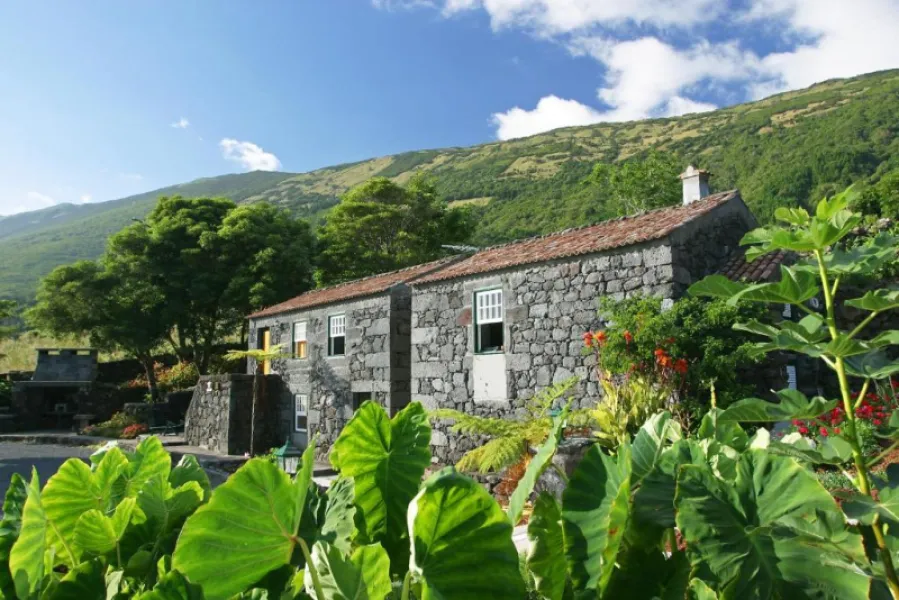
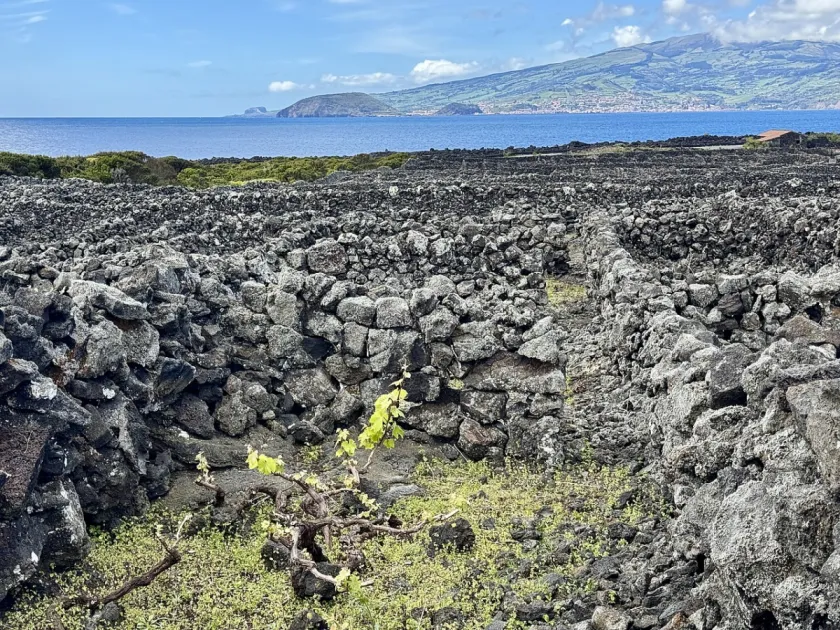
The soils are volcanic and relatively young, thin, made of basalt, trachyte and andesite. Sea wind is the vine's great enemy, so the plants grow in small plots enclosed by dry-stone walls known as currais or curraletas.
These walls protect the vines from wind erosion and, as the IVV points out for Graciosa and Biscoitos, also help store heat. The result is a landscape of black stone and low vines that still defines Azorean viticulture.
Denominations: DOP and IGP
There are two families of certification. The Azores IGP covers wines made on any island and allows more freedom in grapes and styles: whites, reds and rosés. The Pico, Graciosa and Biscoitos DOPs focus on the three historic production centres.
The DOPs and the IGP are managed by the Instituto da Vinha e do Vinho dos Açores (IVVA), which succeeded the former regional wine commission and is based in Madalena on Pico. The specification booklets for each denomination are on the Azores page of the IVV, and the IVVA website is the right place to confirm rules and contacts.
Note that a wine from one of these areas does not always carry the DOP name: a Público critic noted that Magma, from Biscoitos, was presented in the 2023 and 2024 vintages as IG Açores because the tasting panel judged it did not have the profile for the DO. Always read the label.
Pico: the UNESCO vineyard landscape
The IVV calls the Pico DOP perhaps the archipelago's most emblematic, with a vineyard landscape classified as a UNESCO World Heritage Site. The vines sit among volcanic rock, in basalt-walled currais that reach down to the sea.
Verdelho, Arinto dos Açores and Terrantez do Pico give wines of great freshness, marked minerality and cutting acidity. For the trip, our guide to Pico Island, its UNESCO vineyards and volcano covers the wider context, and the Pico island page helps you plan a stay. There is also a wine museum in Madalena on Pico, according to the Vine to Wine Circle; check opening times before you go.
Graciosa: fresh, delicate whites
The Graciosa DOP certifies still wines from the island, a territory of poor volcanic soils, a humid maritime climate and mild temperatures all year. The plots are small and sheltered by basalt walls.
The IVV lists Arinto dos Açores, Boal, Fernão Pires, Terrantez do Pico and Verdelho as the main grapes, giving fresh, aromatic whites with marked natural acidity. The official description speaks of purity, delicacy and Atlantic identity. If you are heading there, read our complete guide to Graciosa and see the Graciosa island page.
Biscoitos on Terceira: vines in black stone
On Terceira, the IVV describes the Biscoitos DOP as one of the most authentic expressions of extreme Azorean viticulture, with vines in small currais of black volcanic stone in an almost lunar setting. The grapes are Arinto dos Açores, Verdelho and Terrantez do Pico, and the fortified-style wines stand out for acidity, freshness and natural salinity.
A recent example comes from Público: Magma, a Verdelho from the Adega Cooperativa dos Biscoitos, was described as more mineral and drier than Pico Verdelhos, which are more aromatic, with aromas recalling the rock samphire that grows near the vines. That is one critic's opinion, not a rule, but it shows Terceira's terroir has its own voice. The Vine to Wine Circle lists a wine museum at Biscoitos; check with the island's official tourism office whether it is open. The Terceira island page shows the rest of the island.
Grapes and styles
Verdelho is the emblematic grape, the same as in Madeira and different from Verdejo. The IVV's list of main white grapes also includes Arinto dos Açores, Gouveio and Terrantez do Pico; among reds it names Agronómica, Aragonez, Castelão, Rufete, Saborinho and Touriga Nacional.
The IVV describes several styles: citrusy, briny whites, light to medium reds, very fresh rosés, fine-bubbled sparkling wines, amber liqueur-style wines (dry to medium-sweet) and wines from overripe grapes. What they share is acidity and salinity. The same Público critic suggests drinking Azorean wine with two or three years in the bottle.
How to plan a tasting
Do not assume opening hours or prices: many producers are small and work by appointment. Before you go, confirm on the producer's own website, with the IVVA or at each island's tourist office whether visits, tastings or a shop are available, and whether you need to book.
If you are driving, agree who stays sober or keep tastings small. To go with the wine, see our Azorean cuisine guide, the guide to food markets and local products and the site's restaurants section, where island wines are often on the list.
FAQ
How many designations of origin do the Azores have?
Three DOPs: Pico, Graciosa and Biscoitos (Terceira). The Azores IGP covers wines from any island.
Which grape is most associated with the Azores?
Verdelho. The DOPs also use Arinto dos Açores and Terrantez do Pico, and Graciosa adds Boal and Fernão Pires.
Is there red and rosé wine in the Azores?
Yes. According to the IVV, the Azores IGP allows whites, reds and rosés, and there are also sparkling and liqueur-style wines.
Which islands grow vines?
According to the Vine to Wine Circle, Terceira, Pico and Graciosa.
Who certifies Azores wines?
The Instituto da Vinha e do Vinho dos Açores (IVVA), based in Madalena on Pico.
Final thoughts
Azores wines tell a story of islands, stone and ocean. From the best-known Pico Verdelho to the delicate whites of Graciosa and the black stone of Biscoitos, each denomination has its own voice, and tasting them side by side is well worth it.
Before you travel, confirm opening times and bookings directly with producers, museums and official bodies, and read labels carefully: the DOP or IGP name tells you where the bottle comes from.