Azores vs Canary Islands: Which Should You Choose?
Two Atlantic archipelagos, both volcanic, both with a mild climate and both part of the euro zone: it is easy to see why travellers keep putting the Azores and the Canary Islands side by side. Yet they feel very different once you arrive. The Canaries are a sunny, well-oiled holiday destination with beaches, resorts and reliable weather close to Africa. The Azores are a greener, wilder, more unpredictable corner of Europe where the landscape does most of the talking.
The Two Archipelagos at a Glance
The Azores are nine islands in the middle of the North Atlantic, belonging to Portugal and lying well over a thousand kilometres west of the Portuguese mainland. They are spread across three groups, so moving between islands means short flights or ferries. The Canary Islands are an autonomous community of Spain made up of eight main islands, much closer to the African coast than to Europe, in the subtropical Atlantic.
Both are volcanic, which explains the craters, lava tubes, black rock and dramatic coastlines you see in both places. The difference lies in latitude and ocean influence. The Canaries sit further south and are drier and sunnier; the Azores sit further north, directly in the path of Atlantic weather systems, which is why they are so lush. In short: the Canaries sell reliability and sunshine, the Azores sell nature and character.
Climate and Weather
This is the single biggest difference. The Canaries are known for a mild, spring-like climate through the year, with warm winters that attract visitors escaping colder countries. Rain is limited, especially on the southern coasts of the bigger islands, while the north of each island tends to be greener, cloudier and cooler thanks to the trade winds.
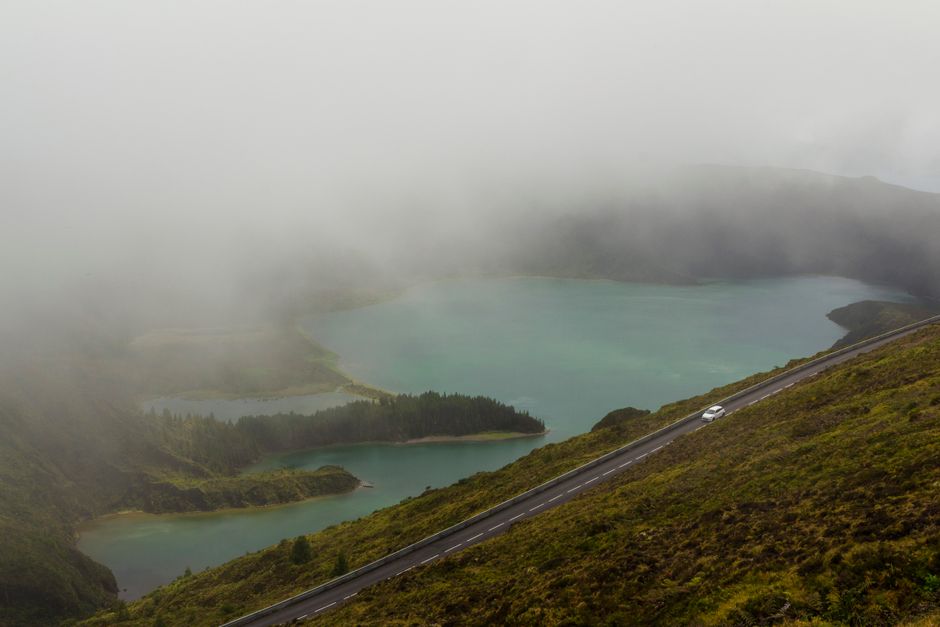
The Azores have a mild oceanic climate without extreme heat or cold, but weather changes quickly. It is common to see sun, cloud and showers in the same day, and fog can hide a viewpoint that was perfectly clear an hour earlier. Summer, roughly June to September, is the driest and most settled period; winters are wetter, windier and greener. If you want guaranteed sunbathing weather, the Canaries are the safer bet. If you can live with changeable skies in exchange for lush scenery, the Azores deliver. For a month-by-month view, see our Azores weather guide.
Landscapes and Volcanoes
Both archipelagos are spectacular, but in different ways.
In the Canaries, the scenery is often arid and sculpted. Tenerife is dominated by Mount Teide, the highest peak in Spain, rising above a lunar volcanic plateau. Lanzarote is famous for the fire mountains of Timanfaya and its black, ash-covered fields where vines grow in hollows. Gran Canaria offers dunes at Maspalomas and rugged mountain interiors, Fuerteventura has wide open desert-like plains, and La Gomera and La Palma are greener, with ancient laurel forest on La Gomera and a huge caldera on La Palma.
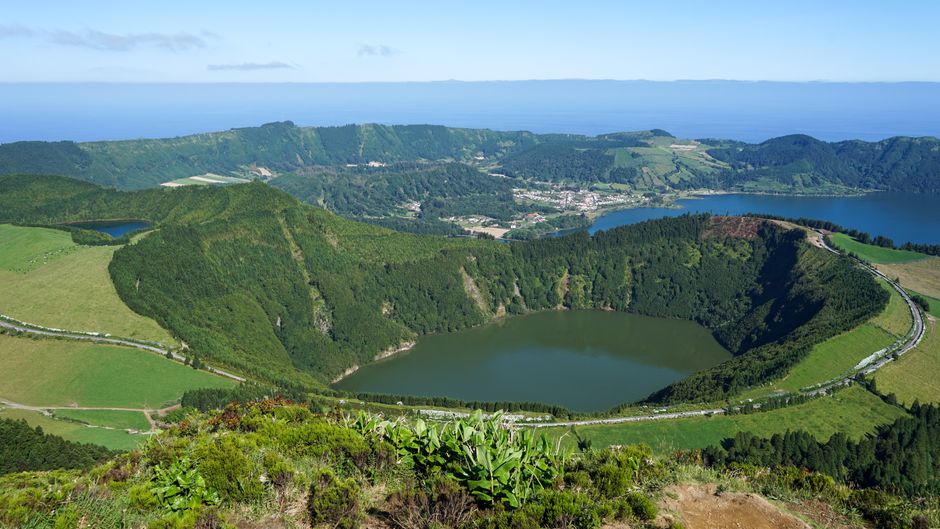
In the Azores, the landscape is green and water-filled: crater lakes, hydrangea-lined roads, pastures dotted with cows, thermal springs, waterfalls and deep calderas. São Miguel has the twin lakes of Sete Cidades and the steaming valley of Furnas; Pico has the highest mountain in Portugal; Flores is known for its waterfalls; Terceira and Graciosa have lava caves. If you picture a volcanic island, the Canaries tend to look like the rock, while the Azores tend to look like the rock wearing a thick green coat.
Beaches and Swimming
If the main goal is a beach holiday, the Canaries have a clear advantage. They offer long sandy beaches, some of them golden, some black volcanic sand, plus beach promenades, sun loungers and plenty of facilities.
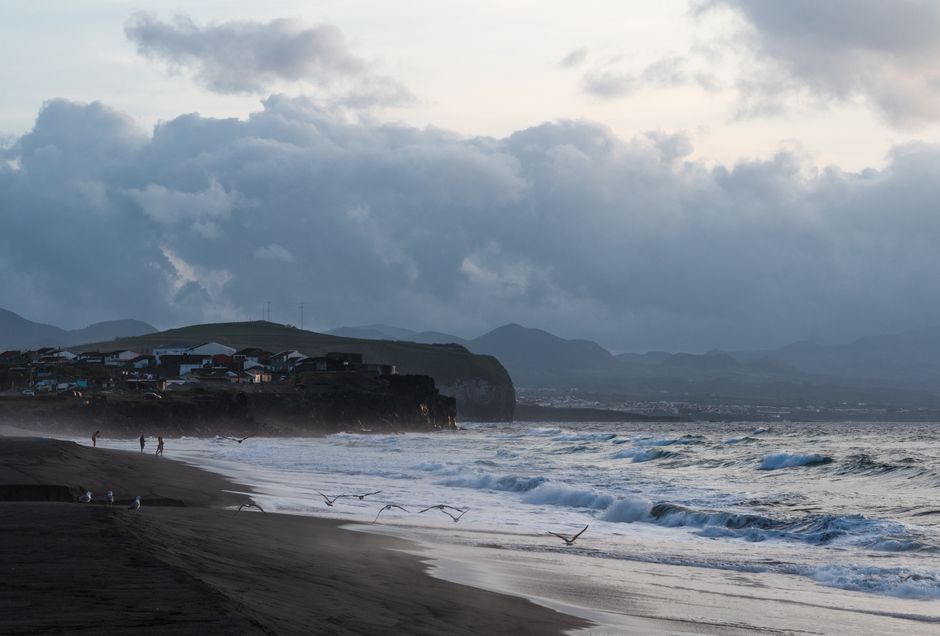
The Azores are not a classic beach destination. Most of the coastline is rocky, and many beaches are small and dark, with a few exceptions such as the golden sand of Santa Maria. What the Azores do offer is a different kind of swimming: natural rock pools, sea-water lido-style bathing areas, lagoons, crater lakes and warm thermal pools, which are among the highlights of a visit. Water temperature is cooler than most Mediterranean destinations for much of the year, and warmest in late summer. Our guide to the best beaches in the Azores shows where to find the best spots island by island.
Hiking and Outdoor Activities
Both destinations are excellent for walkers, and both have well-marked trail networks.
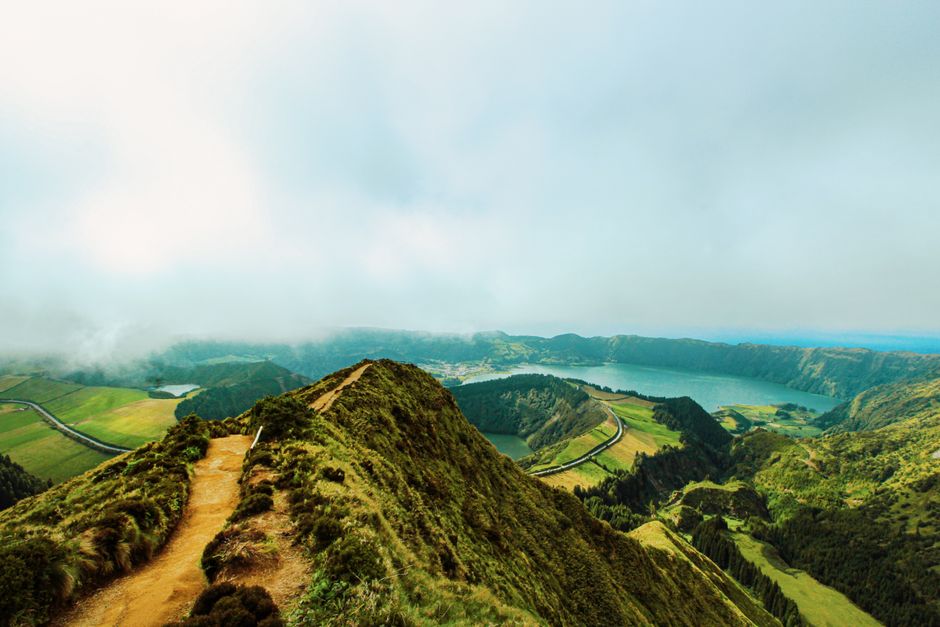
The Azores are often described as a hiker's paradise: coastal paths, crater rim walks, waterfall trails and the climb up Pico mountain, which needs good preparation and weather. Trails are frequently green and misty, with ocean views at every turn. See our selection of the best Azores hiking trails for ideas.
The Canaries offer more varied terrain and a longer walking season: high-altitude volcanic landscapes around Teide, deep ravines on Gran Canaria, the forests of La Gomera and the crater trails of La Palma, which is also known as a stargazing destination thanks to its clear skies.
The Azores add something the Canaries do less: wildlife and ocean experiences. Whale and dolphin watching, swimming with marine life, canyoning, canoeing on crater lakes and sailing are all part of the offer. Whale and dolphin trips also exist in the Canaries, especially in the south of Tenerife, but they are more central to the Azores identity. Read more in our whale watching guide.
Crowds and Atmosphere
The Canary Islands are one of Europe's major holiday destinations, with large resort areas, all-inclusive hotels and busy promenades, especially in the south of the bigger islands. That means plenty of choice, nightlife and entertainment, but also crowded places in high season.
The Azores have been growing in popularity, yet they remain far less developed for tourism. There are no large resort complexes in the style of the Canaries, accommodation is generally smaller scale, and the pace of life is slower and more rural. Atmosphere-wise, the Azores feel more local and low-key; the Canaries feel more cosmopolitan and set up for visitors.
Costs in General Terms
We will not quote exact prices because they change with the season, the island and how far ahead you book, so always compare current offers. In general terms, the Canaries have a very wide spread of options: package holidays, all-inclusive resorts and apartments are common, which can make a week there good value, particularly for families and groups.
The Azores are not typically a package-holiday destination. Travellers usually book flights, accommodation and a rental car separately, and a car is often the biggest practical expense because public transport is limited on most islands. Inter-island flights or ferries add to the budget if you hop between islands. For ideas, see our guide to travelling the Azores on a budget. Overall, neither is automatically cheaper: the Canaries tend to win on package deals, while the Azores can be economical if you travel independently and keep to one or two islands.
Flights and Getting Around
The Canaries have excellent air links, with many airlines, including low-cost carriers, flying from numerous European cities all year round, and frequent connections from mainland Spain. Because of this, last-minute and short-break trips are easy.
The Azores are well connected to mainland Portugal, with flights from Lisbon and Porto, and there are direct routes from some other European cities and from North America. Schedules can be more limited and often more seasonal, so booking in advance and checking current routes before you travel is wise. Once there, each island has its own airport or small port, and exploring several islands means planning around inter-island flights or ferries. Read our island hopping guide before you decide how many islands to include.
On both archipelagos, renting a car is the easiest way to explore the bigger islands, although the Canaries also have good bus networks and taxi services around the main resort areas.
Who Each Destination Suits
Choose the Canary Islands if you:
- want near-guaranteed sunshine and beach time, including in winter;
- prefer a package holiday or all-inclusive resort with lots of facilities;
- are travelling with young children and want easy logistics and plenty of choice;
Choose the Azores if you:
- care more about nature, hiking and scenery than about sunbathing;
- like crater lakes, waterfalls, thermal pools and green landscapes;
- want whale watching, canyoning or other active, ocean-based experiences;
- prefer small guesthouses and a quieter, more local atmosphere;
- are comfortable with changeable weather and independent planning.
Couples, hikers and nature lovers often lean towards the Azores. Families chasing sun and sand, and anyone who needs weather certainty, often lean towards the Canaries.
Frequently Asked Questions
Are the Azores or the Canary Islands better for a beach holiday?
The Canary Islands, clearly. They have more and larger sandy beaches, warmer weather and more facilities. The Azores are better for natural pools, thermal baths and scenery than for classic beach days.
Which has better weather?
The Canaries are sunnier and more predictable all year. The Azores are mild but changeable, with the driest weather generally in summer.
Which is better for hiking?
Both are very good. The Azores offer green, water-filled scenery and coastal and crater trails; the Canaries offer more varied terrain and a longer season of reliable walking weather.
Which is cheaper?
It depends on the season, how you book and what you do. The Canaries often have good package deals; the Azores can be good value for independent travellers. Compare current prices before deciding.
Which is less crowded?
The Azores are generally quieter and less developed for mass tourism, although popular spots can be busy in summer.
Can you combine the two in one trip?
It is possible in principle but rarely practical, as they are far apart and there is no simple direct connection. It is usually better to choose one per trip. Always check current flight options.
Final Thoughts
The Azores and the Canary Islands are both excellent, but they answer different questions. If the question is "where can I count on sun, sand and easy logistics?", the answer is the Canaries. If it is "where can I walk through crater lakes, watch whales and find quiet corners of Europe?", the answer is the Azores. To start sketching an Azores trip, read our weather guide, browse the best hiking trails and check current flights and conditions before you book.