The Azores stand in a category of their own when it comes to sustainable tourism. This Portuguese archipelago in the mid-Atlantic is the world's first — and still only — certified sustainable destination at the archipelago level, recognised by EarthCheck in alignment with the Global Sustainable Tourism Council (GSTC) criteria. But beyond the certifications, the Azores offer something rarer: a genuine culture of environmental stewardship that predates the "eco" marketing trend by generations. From geothermal energy powering entire islands to biologist-led whale watching with strict marine protocols, this guide covers everything you need to know to travel the Azores responsibly in 2026.
Green Certifications: Why the Azores Lead the World
In 2022, the Azores became the world's first certified sustainable archipelago under the EarthCheck Sustainable Destinations Programme, with the certification awarded at the GSTC Conference held on Terceira Island. The certification process required two years of rigorous external audit, meeting more than 40 criteria covering environmental management, cultural heritage protection, community welfare, and responsible tourism governance.
The EarthCheck framework provides a scientific methodology to measure and monitor environmental and social impact, benchmarking destination performance against the UN Sustainable Development Goals (SDGs). Crucially, the certification must be renewed annually through independent audits — it is not a one-off award, but an ongoing commitment.
Key metrics underpinning the certification include renewable energy generation (which grew from 28% of total electricity in 2010 to approximately 40% in recent years), protected natural area coverage, marine conservation programmes, and the regulation of tourism operators. The regional government has set an ambitious target of 75% renewable energy by 2030.
Geothermal Energy: Powered by the Volcano Beneath
Few places on Earth harness volcanic energy as effectively as the Azores. The geothermal power plant at Furnas, on São Miguel Island, has been operational since 1975 and today supplies approximately 40% of São Miguel's electricity — one of the highest geothermal contributions of any European region.
Geothermal energy in the Azores is complemented by wind power (installed since 1988), hydroelectric power, and increasingly by solar panels. The tiny island of Corvo — population 450 — has achieved periods of 100% renewable electricity generation, an extraordinary feat for any inhabited territory. Across the archipelago, the energy mix is shifting steadily towards zero-carbon sources, reducing dependence on imported diesel.
Experiencing Geothermal Culture as a Visitor
The geothermal heritage of the Azores is not confined to power plants. At the Furnas Valley, hot springs bubble through the lake shoreline, fumaroles hiss and steam in the village centre, and the famous Cozido das Furnas is slow-cooked for six hours underground using volcanic heat. This intersection of geology, gastronomy, and everyday life is uniquely Azorean — and visiting it with awareness of the science behind it transforms a tourist attraction into a genuinely educational experience.
- Visit the Furnas caldeiras early morning (before 9am) to avoid crowds and reduce pressure on the footpaths.
- Eat at locally certified restaurants serving Cozido das Furnas — your meal directly supports the local economy and is inherently zero-emission cooking.
- Guided visits to the Furnas geothermal plant are available on request — a remarkable opportunity to understand baseload renewable energy at human scale.
Responsible Whale Watching in the Azores
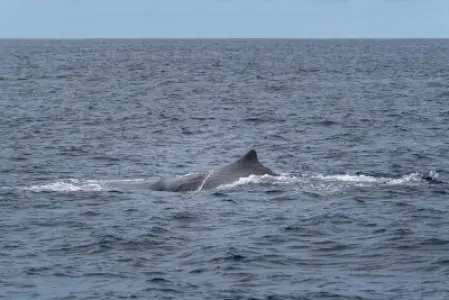
The Azores rank among the world's top three destinations for whale watching. More than 28 species of cetaceans frequent these waters throughout the year, including sperm whales, blue whales, humpback whales, fin whales, and multiple dolphin species. Over 500 individual blue whales and more than 3,000 sperm whales have been identified by researchers in Azorean waters.
Sighting probability during peak season (April to October) consistently exceeds 95%, yet it is the ethical standards that truly distinguish Azores whale watching from other destinations. The best operators are certified by the World Cetacean Alliance (WCA), which independently assesses animal welfare, conservation standards, and operational sustainability. Vessels use low-emission engines, and every trip is led by a trained marine biologist who provides scientifically accurate interpretation.
How to Choose a Responsible Whale Watching Operator
- Look for WCA certification or ORCA membership — these logos guarantee the operator adheres to minimum approach distances (typically 50 metres for large cetaceans) and animal welfare protocols.
- Avoid operators offering "swimming with whales" — this is not legally permitted in the Azores for large cetaceans and is inherently stressful for the animals.
- Choose smaller boats (zodiac-style) for flexibility and lower fuel consumption; catamarans offer stability for families but use more fuel.
- Ask about the guide's credentials — licensed marine biologists hold a specific qualification required by Azores regional law for all cetacean-watching trips.
- Book direct rather than through aggregators — this keeps more revenue with the local operator and allows you to ask sustainability questions directly.
Academic studies rate tourist satisfaction on Azores whale watching at a mean score of 8.43 out of 10 — consistently above comparable destinations globally. The elements rated highest are: responsible interaction with animals, the operator's environmental commitment, and guide expertise.
Carbon Offsetting Your Trip to the Azores
The single largest environmental impact of any Azores trip is the flight. A return flight from Lisbon to Ponta Delgada emits approximately 220 kg of CO₂ per passenger; from London, around 400 kg; from New York, over 1,200 kg. For eco-conscious travellers, offsetting these emissions is a non-negotiable step.
Recommended Carbon Offset Options
- Gold Standard — the most rigorous international certification for carbon offset projects, ensuring verified emissions reductions with co-benefits for local communities. Visit goldstandard.org to find certified projects.
- Verified Carbon Standard (VCS / Verra) — another credible certification scheme widely used for forestry and renewable energy offset projects.
- Atmosfair — a German non-profit offering flight-specific carbon calculations with full financial transparency, funding verified renewable energy projects.
- Local reforestation contribution — some Azorean tour operators offer the option of contributing directly to native forest restoration programmes (laurel forest and endemic species). This keeps the offset local and visible.
- Extend your stay — the most elegant solution: the longer you stay in the Azores, the lower your carbon cost per day. A 10-day trip has roughly half the per-day carbon footprint of a 5-day trip with the same flight.
Green Certifications to Look For When Booking
Beyond the destination-level certification, individual businesses in the Azores carry third-party sustainability seals that help travellers make informed choices:
- Green Key — international environmental certification for accommodation and restaurants, with strict criteria on energy management, water use, and waste reduction.
- Biosphere Tourism — awarded by the Responsible Tourism Institute, this certification covers the full spectrum of sustainability: environmental, social, cultural, and economic.
- World Cetacean Alliance (WCA) Whale Heritage Site — the Azores are a designated WCA Whale Heritage Site, recognising the entire archipelago's commitment to cetacean welfare.
- Azores Regional Tourism Registry — any licensed operator must be registered with the Secretaria Regional do Turismo. Always verify registration before booking adventure activities.
Sustainable Travel Tips by Island
São Miguel
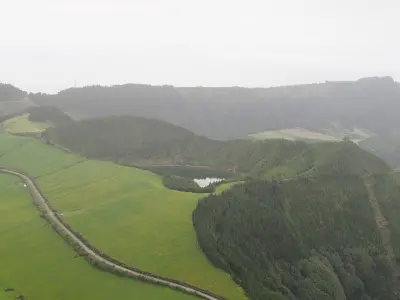
Home to the Furnas geothermal complex, the Gorreana tea plantation (Europe's only, operating since 1883), and the São Miguel Natural Park protecting 26% of the island. Use the officially signed PNSM trails, respect restricted zones around the crater lakes, and hire local guides for interior hikes.
Pico
The UNESCO World Heritage vineyard landscape (inscribed 2004) must be navigated with care — the black lava stone walls are fragile and irreplaceable. Support cooperative wineries, stay in rural tourism properties, and respect the Pico Biosphere Reserve marine protection zones, which are critical cetacean habitats.
Flores
The greenest and most remote island in the western group. Tourism here remains low-volume — keep it that way by choosing rural accommodation, hiring local guides, and avoiding single-use plastics entirely. The hydrangea-lined roads are wild — please do not pick the flowers.
Corvo
Europe's smallest and most isolated municipality requires maximum ecological sensitivity. Stick to marked trails inside the caldeira, do not remove any plant material, and support the tiny local economy by eating and sleeping in locally owned establishments.
Sustainable Mobility Within the Islands
- Electric bike rental — available in Ponta Delgada and major towns. Ideal for coastal routes and village exploration.
- Electric vehicle rental — charging infrastructure has expanded significantly across the major islands. EV rental is available at Ponta Delgada and Angra do Heroísmo airports.
- Public bus networks — serve the main routes on São Miguel, Terceira, and Faial. Slower but carbon-free per trip.
- Carpooling — hostels and guesthouses frequently organise shared transport to popular trailheads such as Sete Cidades and the Pico mountain ascent.
Eat Local as an Act of Sustainability
The Azores produce some of Portugal's finest protected-designation products: São Jorge PDO cheese (aged a minimum of three months in natural caves), Azores pineapple IGP (grown for 18 months in coal-heated greenhouses on São Miguel), Pico wine (from the UNESCO vineyard landscape), and São Miguel tea (the only tea grown commercially in Europe). Purchasing and consuming these products in local restaurants and markets directly funds the farming families and cooperatives who maintain the living landscape you came to see.
Frequently Asked Questions About Sustainable Tourism in the Azores
Are the Azores genuinely certified as a sustainable destination?
Yes. The Azores hold EarthCheck Sustainable Destination certification, aligned with GSTC criteria — the first and only archipelago in the world to achieve this. The certification is independently audited every year, making it one of the most credible sustainability endorsements in global tourism.
When is the best time to go whale watching responsibly in the Azores?
April to October offers the highest variety and abundance of cetacean species, including sperm whales and migratory baleen whales. Certified operators run daily departures during this period. Dolphins, particularly common dolphins and bottlenose dolphins, are present year-round.
How much CO₂ does a flight to the Azores produce, and how can I offset it?
A return flight from Lisbon produces around 220 kg CO₂ per passenger; from London approximately 400 kg; from the US east coast over 1,200 kg. Use Atmosfair, Gold Standard, or VCS-certified projects to offset. Extending your stay reduces the per-day emissions significantly.
What percentage of Azores electricity comes from renewable sources?
Approximately 40% of electricity across the archipelago comes from renewables, up from 28% in 2010. On São Miguel, geothermal energy alone accounts for around 40% of electricity generation. The regional target is 75% by 2030, with Corvo periodically achieving 100% renewable generation.
Which eco-certifications should I look for when booking accommodation in the Azores?
Green Key and Biosphere Tourism are the most recognised international certifications for accommodation. For tour operators, WCA certification is the gold standard for cetacean watching. Always verify registration with the Azores Regional Tourism Registry for any licensed activity.
Conclusion: Travel the Azores — Leave It Intact
The Azores represent one of the world's most compelling arguments that mass tourism and environmental preservation are not mutually exclusive — if managed with genuine commitment and verified standards. The archipelago's volcanic isolation created extraordinary biodiversity; its human community maintained it for centuries; its institutions are now certifying and protecting it for the future. As a visitor, your choices — where to stay, what to eat, which operator to hire, how to move between islands — are small acts that collectively shape what the Azores will look like in a generation. Travel thoughtfully, and the islands will still be extraordinary for those who come after you.