Diving and Snorkelling with Whale Sharks in the Azores
The whale shark is the biggest fish in the sea, and in the middle of the Atlantic, a boat ride from a quiet Portuguese island, you can sometimes slip into the water beside one. It is among the rarest wildlife experiences in Europe and also one of the least predictable. This guide explains where whale sharks are seen in the Azores, when the season runs, what an encounter is usually like, how to behave around the animals and what level of fitness and certification to expect. It also says plainly what glossy brochures often leave out: sightings are never guaranteed.
Why the Azores?
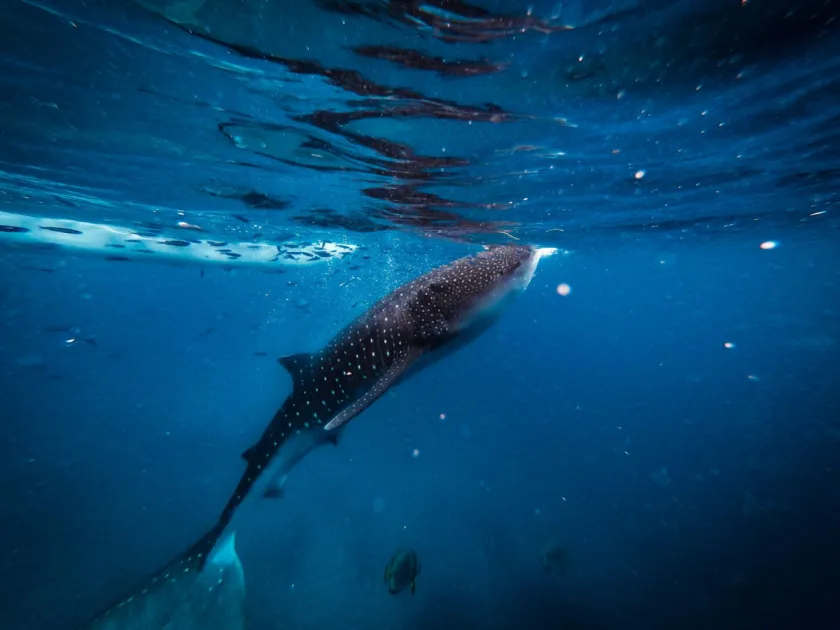
Whale sharks (Rhincodon typus) are gentle filter feeders that can grow beyond ten metres in length. They are listed as Endangered on the IUCN Red List, which is one reason an encounter should be treated as a privilege rather than a product. The animals seen around the archipelago belong to a wide-ranging Atlantic population that travels over very large distances, and the Azores are one of the few places in Europe where they turn up with some regularity.
The islands rise out of deep, clear, open ocean, so large pelagic animals pass close to land without having to be lured. That is exactly what makes the experience special, and exactly why it is uncertain: nothing is staged, and the sea decides.
This article is about whale sharks specifically. For dolphins, turtles and rays, read our Azores marine wildlife guide, and for the wider underwater picture see the diving and snorkelling guide.
Where Whale Sharks Are Seen
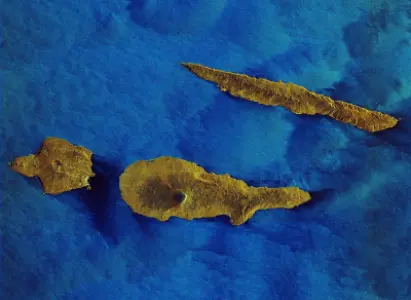
Of all the islands, Santa Maria, the southeasternmost island of the archipelago, is the one most associated with whale sharks. Dive-tourism sources describe it as the island most visited by the species, and conservation research supports this: in the photo-identification records for the Azores, the large majority of identified whale sharks were logged off the western coast of Santa Maria. The island's waters have also been recognised internationally as an Important Shark and Ray Area.
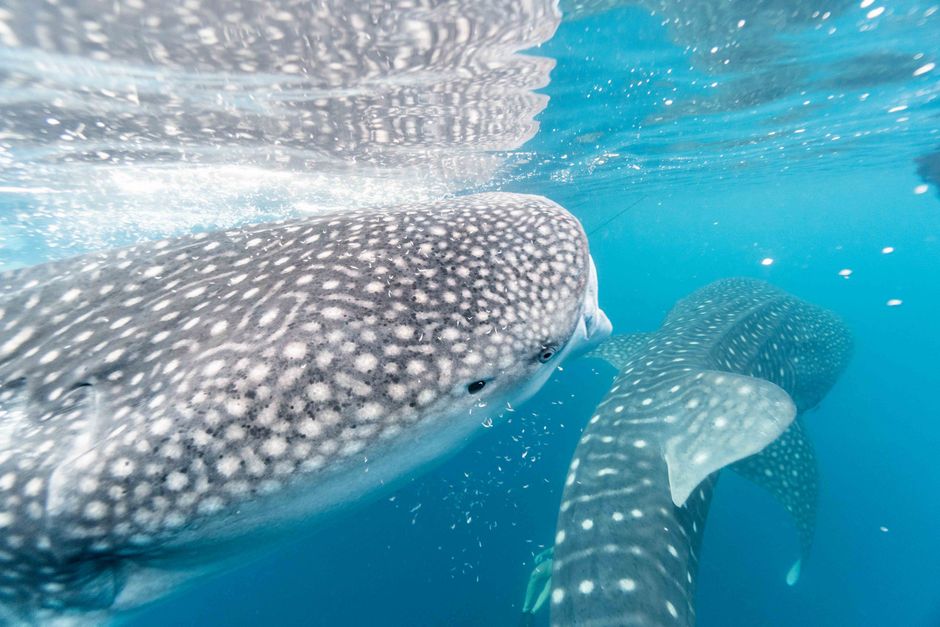
Why there? Researchers link the sightings to feeding. Whale sharks gather to eat small baitfish that schools of tuna drive into dense balls near the surface, and this feeding has been recorded many times in recent summers. They come for food, not for visitors, and they move around the island as conditions change.
Most encounters take place offshore rather than on a normal coastal dive. Boats head out to search, and a shark may be found some distance from land, often surrounded by tuna, pilot fish and other small fish. Now and then one is seen during an ordinary coastal dive, but nobody should plan around that. On the way out and back, the boat may also pass turtles and dolphins.
Other islands do record whale sharks from time to time, but their sightings are far less regular, so Santa Maria is the sensible base if the whale shark is your main goal. For more on the island itself, see the Santa Maria complete guide.
Formigas and Dollabarat
Some 20 miles off the southeastern tip of Santa Maria lie the Formigas islets and the Dollabarat reef, a protected offshore area known for the best visibility in the archipelago. These are classic big-animal dive sites in their own right, and trips there may also pass through waters where pelagic life is concentrated. Whether a whale shark appears on any given day is a matter of luck.
Season: When to Go
The whale shark season at Santa Maria is the Azorean summer and early autumn. Photo-identification records run from July to November, with most sightings in August and September. This overlaps with the season in which the local tuna fishery operates, and sightings tend to rise when the sea surface is at its warmest, roughly 22 to 24 degrees Celsius.
In practice that means:
- July: the season is starting; sightings are possible but less frequent.
- August and September: the best statistical window, and also the busiest and most expensive time to visit the islands.
- October and November: still possible, with fewer boats running and more variable weather.
- December to June: whale sharks are not the target; other species and dives take over.
These are tendencies, not promises. Individual years vary, and operators set their own schedules, so check current information before booking flights.
What the Experience Is Like
A whale shark outing is mostly a boat trip with a very exciting possible ending. Expect a briefing, a ride out to the search area and then waiting and scanning the surface while the crew looks for signs of the animal or of tuna feeding. Hours can pass without a sighting. If a shark is located, the group is usually organised into small sets of people who enter the water one after another with a guide, rather than all at once.
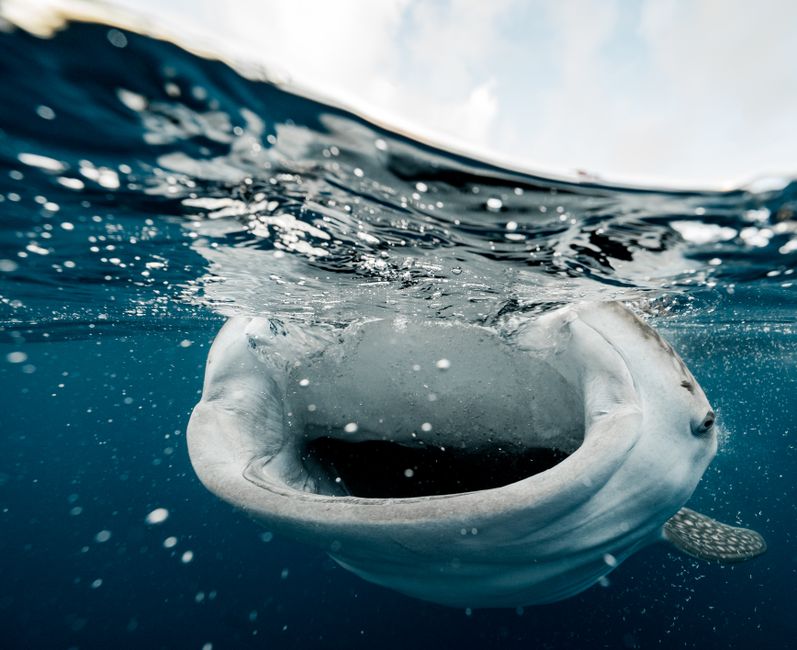
In the water, the first impression is of scale. A whale shark moves slowly, with a wide, flat head, a mouth that opens like a gate and a pattern of pale spots on dark skin that is unique to each individual. It is not dangerous to people: it feeds on plankton and small fish. Encounters are often short and the animal may simply swim on, so visibility, current and the shark's own mood decide how long you stay. Depending on the operator and the conditions, encounters are done either with a snorkel at the surface or on scuba; ask which applies when you book.
Photographs are welcome, but the experience is better if you keep your expectations modest and your eyes open rather than aiming a camera the whole time.
Responsible-Encounter Rules
Local rules and operator procedures can change, so always follow your guide's briefing first. As a general standard of good practice around whale sharks, expect the following:
- Do not touch, ride or grab the animal. Contact can harm the shark's protective skin and stress it.
- Keep a respectful distance and never block its path. Let the shark choose the direction.
- Do not chase. Swimming hard after a shark is the quickest way to end the encounter for everyone.
- Enter the water quietly and in the order the guide asks. No jumping on top of the animal.
- No flash and no baiting or feeding. The animals here feed naturally; a legitimate operator does not attract them with food.
- Respect group limits. Small groups are better for the animal and for you.
- Leave nothing behind. Use reef-safe sunscreen sparingly and bring back all litter.
A good sign when choosing an operator is a clear briefing on these points and a crew willing to call off the swim when the animal looks disturbed. We do not recommend any specific company here; compare current reviews and credentials yourself.
Certification and Fitness
Because whale shark encounters usually take place in the open ocean, they ask more of you than a calm lagoon snorkel. General expectations:
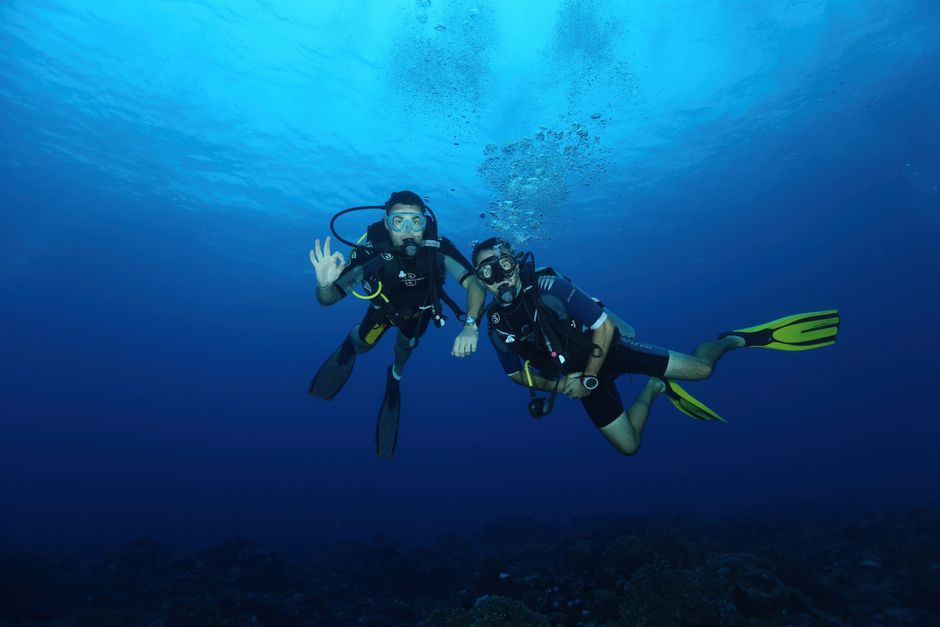
- Swimming ability: you should be a confident swimmer, comfortable in deep water with no visible bottom and in some swell.
- Snorkelling: basic mask, snorkel and fins skills are needed, and you should be able to swim steadily for short bursts to keep up with the group.
- Scuba: some offshore dives are described as advanced, so an open-water certificate may not be enough for every trip. Check the operator's minimum certification and recent dive experience.
- Health: good general fitness helps. Seasickness is common on search trips, so consider preparing for it, and speak to a doctor if you have a heart, lung or ear condition.
- Water temperature: summer water is mild by Atlantic standards, but a wetsuit is usually used for comfort and buoyancy; operators normally supply or advise on it.
Other Big-Animal Dives, Briefly
If the whale shark does not show, the Azores have other headline encounters. Manta and devil rays are associated with offshore sites such as Formigas in the warmer months, and blue sharks and mako sharks are the focus of dives from other islands, with the Princess Alice Bank seamount a well-known destination for experienced divers. These deserve their own planning: read our full article on scuba diving with sharks in the Azores rather than combining the two in a rush.
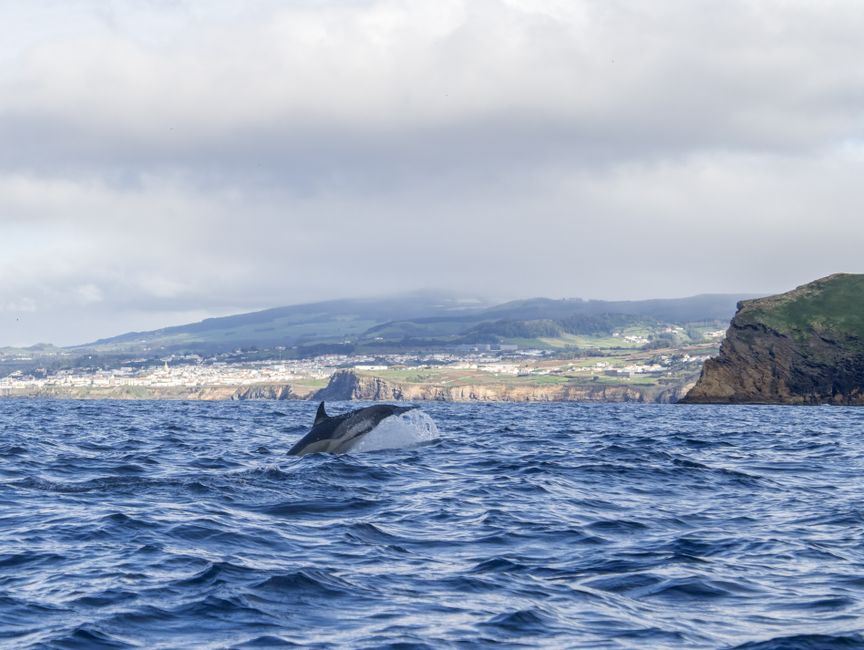
Whale and dolphin watching from the surface is the most reliable wildlife outing of all, and a great fallback; see the whale watching guide.
Planning Your Trip
- Base yourself on Santa Maria for several days in August or September, not one. A buffer of days lets you retry if weather or luck is poor.
- Book the swim early for peak weeks, but choose cancellation terms that allow rescheduling.
- Ask operators plainly about recent sightings, group size, whether the outing is snorkel or scuba, and what happens if no shark is found.
- Weather decides. Wind and swell cancel offshore trips; flexible dates are your best insurance.
- Check flight and ferry options. Santa Maria is small and connections are limited, so confirm schedules before travelling.
Prices, schedules and operators vary by season, and rules can change. Check current information locally before travelling.
Frequently Asked Questions
Can I be sure of seeing a whale shark?
No. These are wild, migratory animals, and even in the best weeks some trips return without a sighting. Treat any guarantee with suspicion.
Which island is best for whale sharks?
Santa Maria, by a wide margin, according to dive-tourism sources and photo-identification research.
When is the best month?
August and September have the most recorded sightings, within a July to November season.
Do I need to be a certified diver?
Not always. Some outings are done snorkelling at the surface, while scuba trips need a certificate set by the operator. Confirm the requirements when booking.
Is it dangerous?
Whale sharks are filter feeders and not a threat to people. The real risks are the open-ocean conditions: swell, current and seasickness.
Can I touch the shark?
No. Do not touch, ride or chase the animal.
Final Thoughts
Swimming with a whale shark in the Azores is a rare, humbling moment, but it depends on wild animals, wind and luck. Go to Santa Maria in late summer, give yourself spare days, choose a careful operator and keep a respectful distance. If the shark does not appear, the dolphins, turtles and blue water around you will still make the trip worth it.