Hydrangeas in the Azores: When and Where to See the Blue Bloom
Few images say "Azores" as quickly as a crater lake framed by walls of blue flowers. Those flowers are hydrangeas, and in summer they turn pastures, villages and mountain roads into ribbons of blue, violet, pink and white. This is a visitor's guide rather than a botany lesson: when the bloom usually happens, which islands and roads reward you most, how to plan a hike around the flowers, how to photograph them, and how to enjoy them without harming them. For the plant science behind the archipelago's native species, see our separate flora article; here the focus is on planning a trip.
When the Hydrangeas Bloom
Most visitor sources place the main hydrangea display in summer, roughly June to August, with the colour often at its fullest around July and August. Flowers can still be seen in September, though usually fewer and fading. A few guides mention an earlier peak in late spring, so the honest answer is that the timing is a window rather than a fixed date.
Why the variation? The archipelago spans about 600 km from east to west and the islands rise from sea level to high mountain terrain. Flowering shifts with altitude, with that year's weather and even with how a particular roadside hedge has been trimmed. Bushes at sea level may open before those in the cool, cloudy highlands. Because of this, treat any calendar, including this one, as a rough guide and ask your accommodation host or the local tourist office what the bloom is doing on the day you plan to go.
Summer is also the most settled season for hiking and viewpoints, which is why the hydrangea bloom and the best walking weather overlap so conveniently. For a month-by-month picture of temperatures and rain, read our Azores weather guide. Remember that Azorean weather changes quickly even in July, so a blue-flower morning can turn into a misty afternoon.
São Miguel: Sete Cidades and Furnas
São Miguel is the easiest island for a first hydrangea trip because its best-known flower scenes sit on well-signposted routes close to Ponta Delgada.
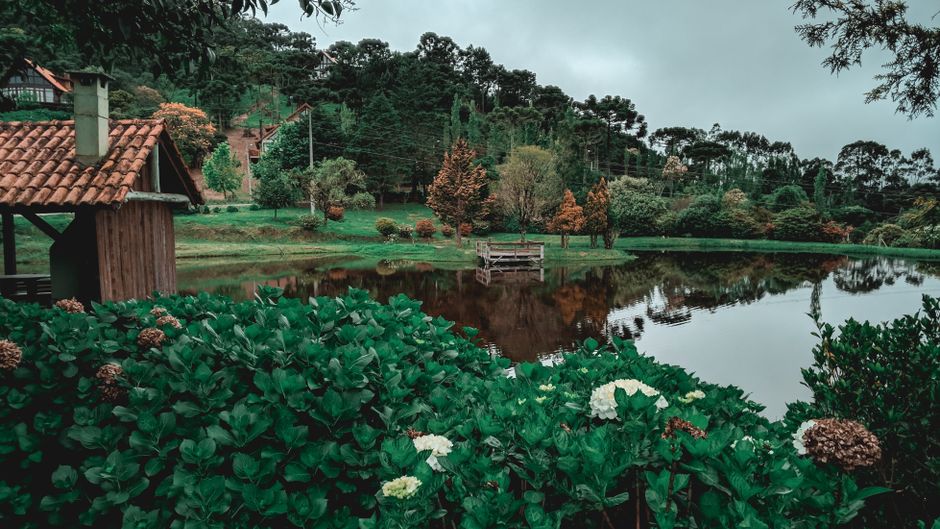
- Sete Cidades. The twin crater lakes, often described as blue and green, are the classic backdrop. Hydrangeas line the roads that climb to the rim and the lanes that drop towards the village in the crater. The miradouros on the rim give the wide view; the roads inside give the close-up.
- Furnas. The Furnas valley and the area around its lake are another well-known place to see the flowers, together with the geothermal sights and gardens of the village. Roads and lanes around the valley are bordered with bushes in summer.
Cloud often sits on the crater rims. If Sete Cidades is hidden when you arrive, wait a little or try again later in the day rather than assuming the view is lost. For a longer island plan that places these stops within a week, see the other São Miguel articles in the magazine, and for viewpoint ideas use our guide to Azores viewpoints.
Faial, the Blue Island
Faial is nicknamed the Blue Island, and the hydrangeas are the reason most people give for the name. Local and travel sources credit the writer Raul Brandão with the description, noting that the flowers were already shaping the island's landscape in the 1920s. Hydrangeas border houses, fields and roads across the island, so you do not need a special viewpoint: simply driving or cycling between Horta and the other parishes in summer shows the colour.
Combine the flowers with the island's other highlights, including the Horta waterfront, the Capelinhos volcano landscape and the Caldeira, all covered in our complete Faial guide. A relaxed loop on local roads, with stops where hedges are thickest and you can safely pull over, is often more memorable than a long list of sights.
About festivals. We could not verify a dedicated hydrangea festival on Faial, so we do not list one. Horta's best-known summer event is the Sea Week (Semana do Mar), held in early August, and many parishes hold Holy Ghost festivals through the warm months. These can fill accommodation and ferries, so check current dates and book early if your trip overlaps.
Flores, Terceira and Roadside Hedges
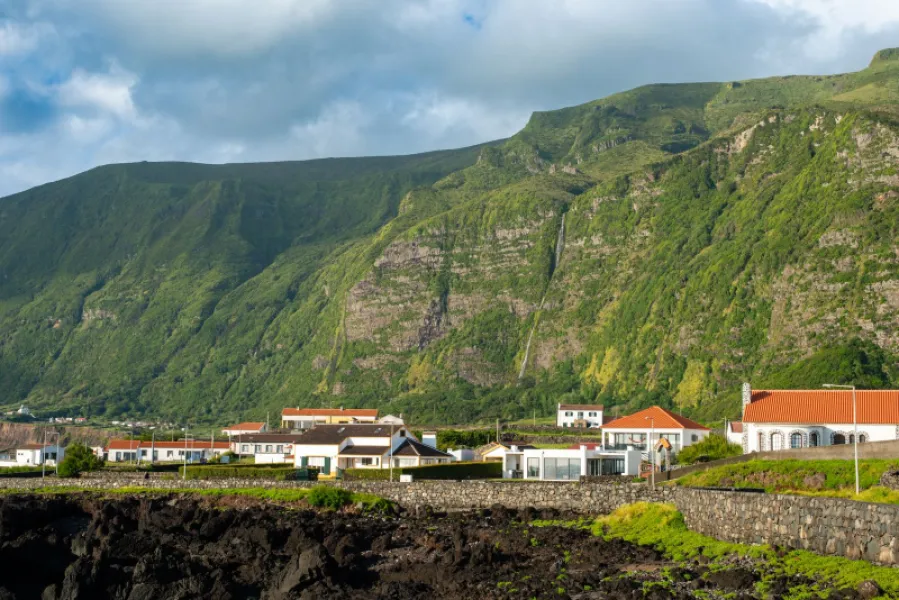
Flores is often called the island of flowers, and hydrangeas are part of its lush, green, waterfall-rich scenery. Its small size and quiet roads make it a good place for slow flower-spotting; read more in our article on Flores and Corvo. Remember that flights and ferries to the western islands are limited, so plan connections carefully.
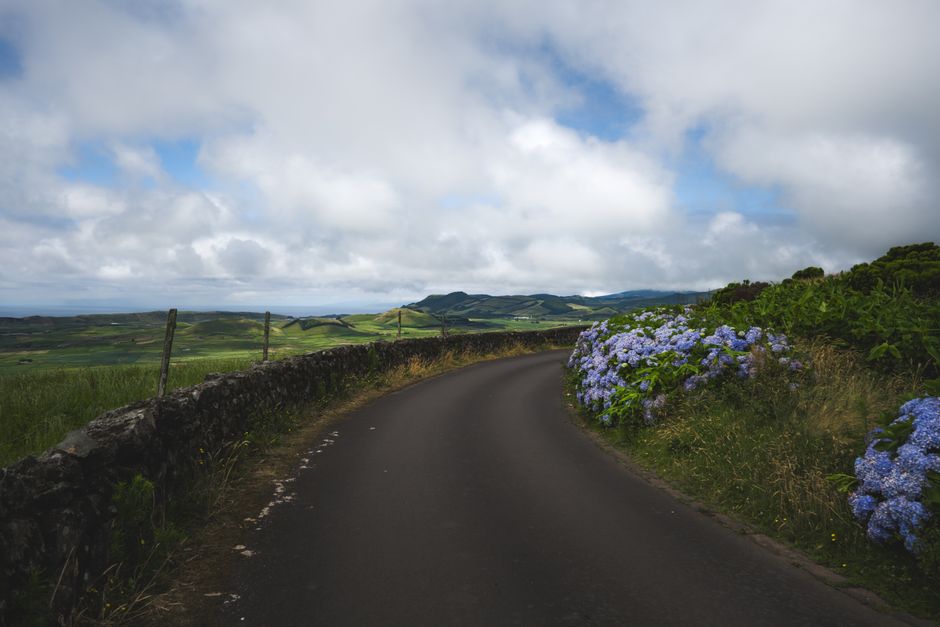
Terceira is sometimes described as a lilac island for the shade of its hydrangeas, while hedges appear on nearly every inhabited island, including Pico and São Jorge. Local tastes in colour differ from island to island and even field to field, and that variety is part of the fun.
Why hedges at all? Hydrangeas were planted as living boundaries between pastures. The shrubs are not a favourite of grazing cattle, which makes them a practical field divider as well as a beautiful one. So the best roadside scenes are working farmland, not parks. Slow down, expect tractors and cows, and treat them as part of the experience.
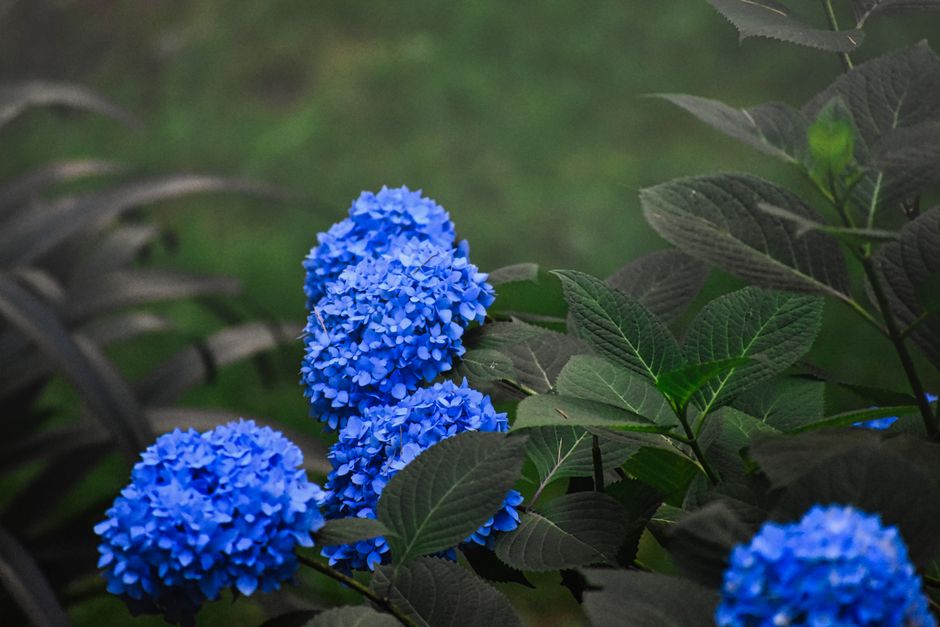
Flower colour is a matter of chemistry: in general, hydrangeas tend to turn bluer in acidic soils and pinker in less acidic ones. Volcanic ground helps explain why blue is so common on the islands, but it varies from garden to garden, so do not be surprised by a pink or white patch beside a blue one.
Combining Flowers with Hikes
Hydrangeas are a bonus on many Azorean walks rather than a reason for a separate trip. Some pairing ideas:
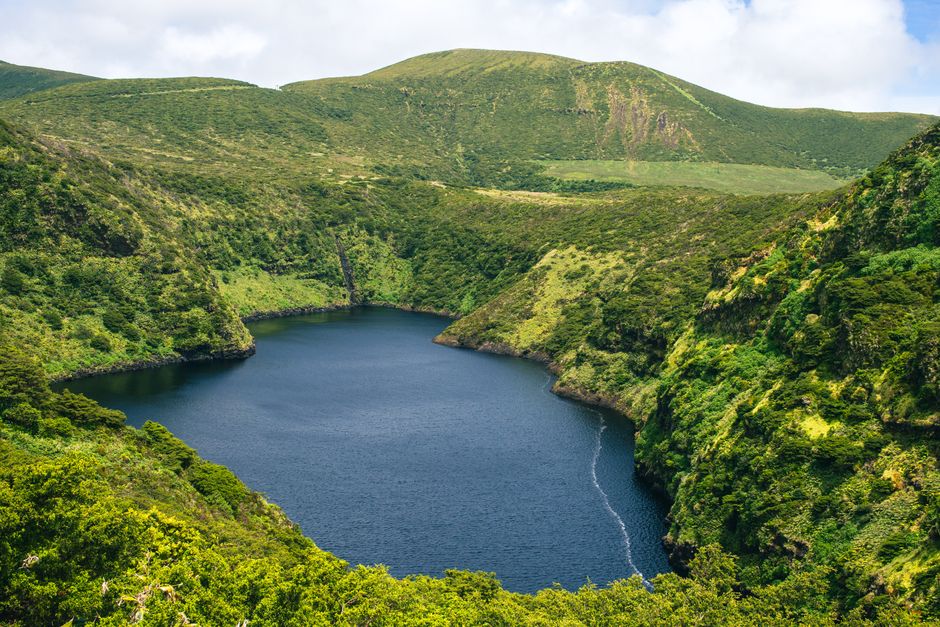
- Crater-rim walking at Sete Cidades. Rim routes combine long views with flowers along the access roads. Check current trail information and signage before you set out, since routes and conditions can change.
- Short walks near Furnas. Combine a lakeside or valley stroll with the village's thermal attractions for a flexible half-day.
- Faial countryside. Gentle road walking and cycling between parishes lets you see the hedges at your own pace; the Caldeira walk is a separate mountain outing in its own right.
- Flores trails. Lake and waterfall landscapes give a flower-rich backdrop; ask locally about conditions.
For the best-known routes, see our overview of the top Azores hiking trails in the magazine and our guide to waterfall hikes. Wear proper shoes, carry a waterproof layer, tell someone your plan, and turn back if cloud closes in. Official trail status can change, so check before travelling.
Photography Tips
- Use soft light. Early morning and the hour before sunset give richer blues and fewer harsh highlights. Overcast days are surprisingly good for saturated petals, as long as it is not raining hard.
- Layer your frame. Put flowers in the foreground and the lake, coast or village behind them. A little distance between camera and flowers helps keep both sharp.
- Watch the cloud. Crater viewpoints can switch from clear to white-out in minutes. Be patient, and keep a second location planned.
- Mind your exposure. Deep blue petals often turn purple on a camera. If your phone or camera allows it, lower the exposure slightly and check the colour on screen.
- Park safely. Use proper pull-offs and viewpoints, never the middle of a narrow road. Drones may be restricted in some areas, so check current rules first.
More location ideas and golden-hour advice by island are in our Azores photography guide.
Visiting Responsibly
The flowers feel public, but the hedges usually belong to farmers and residents, and trails cross fragile habitat.
- Do not pick the flowers. Bunches cut for a photo or souvenir spoil the view for the next visitor and may damage someone's boundary.
- Stay on marked trails. Cutting through vegetation causes erosion and can harm native plants. The islands' native flora is delicate.
- Respect private land. Do not climb fences or enter pastures. Close any gate you open.
- Drive carefully. Hedges hide bends and farm vehicles; reversing out of a narrow lane is no fun for anyone.
An important context note: hydrangeas are an introduced ornamental, and in some places they spread into native vegetation, so conservation bodies and park managers may control them in protected areas. If you see cutting or removal work in a nature reserve, it is likely deliberate management, not neglect.
Frequently Asked Questions
When is the best time to see hydrangeas in the Azores?
Generally summer, roughly June to August, with July and August often described as the fullest. Some flowers last into September. The exact timing varies by island, altitude and year, so ask locally.
Which island has the best hydrangeas?
There is no single answer. São Miguel (Sete Cidades and Furnas) is the easiest to visit, Faial is called the Blue Island, and Flores and Terceira are also known for their flowers.
Is there a hydrangea festival?
We could not verify a dedicated hydrangea festival, so check the official tourism calendar for current events. Summer in general is busy with local festivals.
Can I pick hydrangeas?
No. Leave them for others and for the farmers who rely on the hedges as boundaries.
Are hydrangeas native to the Azores?
No, they are an introduced ornamental that has become a symbol of the islands.
Final Thoughts
The Azores' hydrangeas are best enjoyed slowly: a summer drive with no strict schedule, a short walk, a pause at a lake viewpoint, and a respectful look at hedges that are still part of everyday farm life. Plan for June to August, stay flexible, and let the weather decide which viewpoint you visit first. Check current information on the bloom, trails and transport before you travel.