The Azores are an archipelago defined by water. Abundant rainfall, dense vegetation, and rugged volcanic topography combine to produce spectacular waterfalls on virtually every island. Marked trails lead to hidden falls in deep forested valleys, some accessible only after moderate hikes through landscapes that feel genuinely untouched. For hikers and nature photographers, the waterfalls of the Azores consistently exceed expectations.
Salto do Prego — São Miguel (Faial da Terra)
Salto do Prego, in the Faial da Terra area of northeast São Miguel, is widely considered the island's most beautiful waterfall. The trail accessing it — PR3 SMG, approximately 8 km return — passes through one of São Miguel's most remote and least-visited areas: isolated rural villages, ancient irrigation channels, and stands of laurel forest that appear entirely undisturbed. The waterfall itself drops several metres into a natural pool ringed with mosses and giant ferns — one of the most photogenic spots in the entire archipelago. The final descent to the falls is steep; good footwear is essential.
Cascata da Gruta — São Miguel
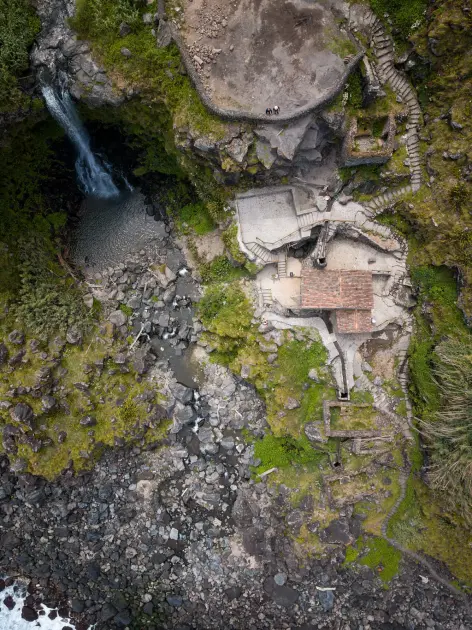
A genuine hidden gem. The Cascata da Gruta, near Lomba de São Pedro on São Miguel, is a waterfall that drops directly into a natural pool set within a basalt cave. What makes it truly unique is the ability to walk into the cave and stand behind the curtain of falling water — an experience that stays with visitors long after leaving. Access is via the Moinho do Felix trail, roughly 30 minutes on flat ground. Little known to tourists, it remains a well-kept local secret.
Ribeira dos Caldeirões Natural Park — São Miguel (Nordeste)
Ribeira dos Caldeirões Natural Park in the Nordeste is one of the archipelago's most accessible natural sites. Well-maintained flat paths wind past restored watermills and a series of small and medium waterfalls tumbling along the river. Entry is free, parking is available, and the easy terrain makes it ideal for families and less experienced hikers seeking accessible natural scenery.
Poço do Bacalhau — Flores
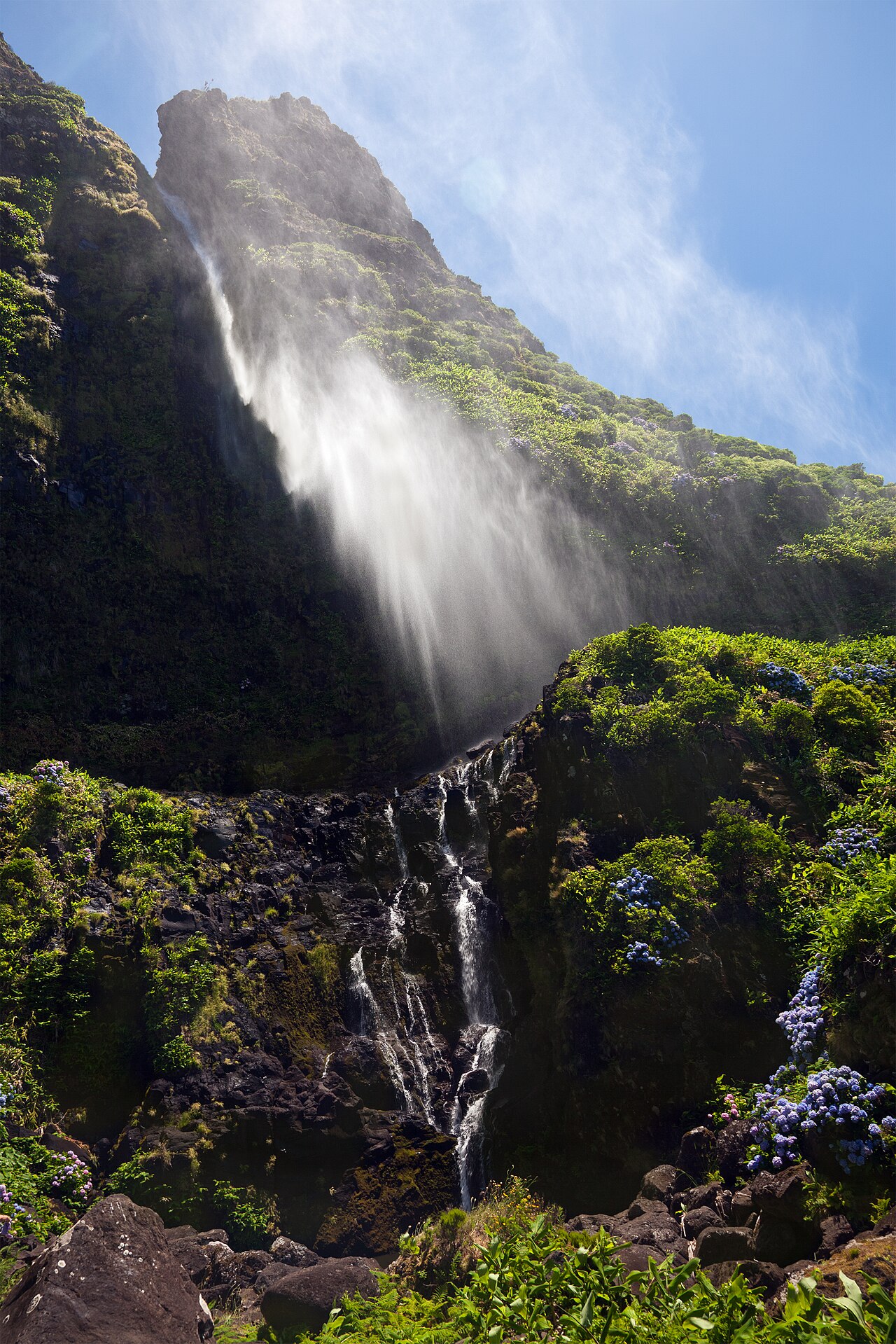
Flores island is the waterfall island by rights. Poço do Bacalhau is the most photographed waterfall in the entire Azores: a drop of approximately 100 metres cascading directly into a turquoise lagoon ringed by vertical walls of tropical vegetation. Access is via a dirt track from Fajã Grande with a short 10–15 minute final walk. The lagoon is safe for swimming — one of the most memorable experiences in the archipelago.
Salto do Rosal — São Miguel
Salto do Rosal is a mysterious waterfall hidden in dense forest within a narrow, dark-green ravine. The fall itself is approximately 30 metres, but what makes this spot remarkable is its setting — a tight canyon where sunlight barely penetrates, creating a primeval forest atmosphere of rare intensity. The access trail departs from Lomba do Botão on São Miguel's south coast, and pairs well with a same-day visit to the Furnas caldeiras.
São Jorge: Waterfall Descents to the Fajãs
São Jorge is the Azores' most vertical island. Its near-vertical basalt escarpments feed dozens of waterfalls that drop directly onto the coastal fajãs far below. Some of the most spectacular are seen during the descent trails to the fajãs themselves — particularly on the route to Fajã da Caldeira de Santo Cristo, where multiple falls cascade alongside the path down the escarpment. The combination of altitude, speed of descent, and enveloping vegetation creates a visual intensity rarely matched anywhere in Europe.
Sete Fontes Trail — São Miguel
The Sete Fontes (Seven Springs) trail follows a 19th-century irrigation channel system built to supply Ponta Delgada with drinking water. The path winds through cryptomeria and laurel forest past multiple small springs and cascades. The gentle gradient and forest canopy make it an ideal choice on warmer days.
Practical Tips for Waterfall Hikes in the Azores
- Footwear: Waterproof hiking boots are non-negotiable — paths near waterfalls are invariably wet and slippery.
- Best season: October–May offers maximum water flow. In summer, some waterfalls reduce significantly.
- Trail marking: Official PR (Pequena Rota) trails are marked with red and yellow stripes. Never leave marked paths.
- Swimming: Not all pools below waterfalls are safe to swim in. Always check locally before entering.
- Navigation apps: Wikiloc and AllTrails have well-reviewed Azores trail maps with user conditions reports.
FAQ: Waterfall Hikes in the Azores
What is the tallest waterfall in the Azores?
Poço do Bacalhau on Flores island, with a drop of approximately 100 metres, is the most imposing in terms of height and volume. On São Miguel, Salto do Prego is the most iconic for its scale and the beauty of its approach trail.
Can you swim at Azores waterfalls?
Yes, at some natural pools — Poço do Bacalhau on Flores is the most celebrated example. Not all waterfall pools are safe for swimming; always check local conditions and avoid entering watercourses during or after heavy rainfall.
Are waterfall trails suitable for beginners?
It depends on the trail. Ribeira dos Caldeirões park and the Cascata da Gruta trail are suitable for all levels. Salto do Prego and the São Jorge fajã descent trails require good fitness and appropriate footwear.
Do I need a guide for waterfall hikes?
For well-marked popular trails, no guide is necessary. For more remote or technically demanding routes — especially off-season — a local guide adds safety and valuable terrain knowledge.
Which is the best island in the Azores for waterfalls?
Flores offers the most spectacular waterfalls in the greatest concentration. São Miguel provides the widest variety of accessible trails. São Jorge impresses with the dramatic integration of waterfalls into the vertical fajã landscape.