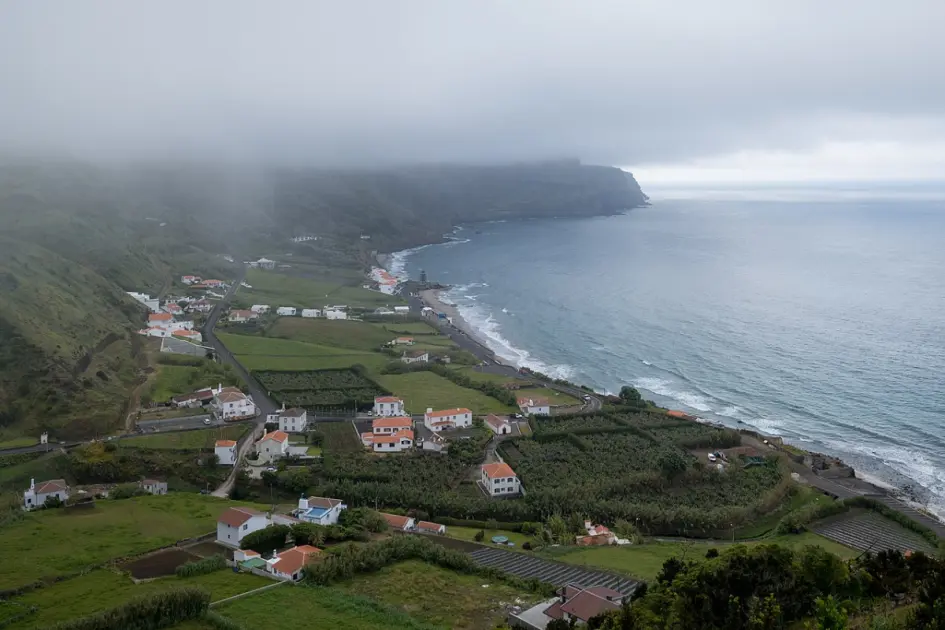
The Azores challenge every assumption about Atlantic beaches. Across nine islands stretching more than 600 km of ocean, the archipelago offers an extraordinary variety: golden sand beaches found nowhere else in Europe, volcanic rock pools heated by geothermal springs, dramatic black basalt coves, and crystal-clear water with visibility up to 40 metres. Whether you seek a family-friendly swim, a world-class surf break, or a hidden lagoon accessible only on foot, the Azores deliver.
Santa Maria: The Only Golden Sand Beaches in the Azores
Santa Maria is the southernmost and geologically oldest island in the Azores, and the only one with golden sandy beaches. Praia Formosa is the largest — a sweeping Blue Flag beach with full facilities, lifeguards in summer, and sea temperatures reaching 24°C in August. It hosts the renowned Mare de Agosto festival, one of Portugal's biggest open-air music events. Praia de São Lourenço, sheltered by limestone cliffs, offers calmer, crystal-clear water perfect for snorkelling.
São Miguel: Volcanic Variety
Praia de Santa Bárbara in Ribeira Grande is the island's surf capital, with consistent Atlantic swells and a laid-back vibe. Praia dos Mosteiros stuns with dramatic basalt columns rising from the sea. The natural pools of Ferraria are geothermally heated — at low tide, temperatures near the underwater fumaroles can exceed 30°C, a uniquely Azorean experience.
Terceira: Rock Pools and Black Sand
The natural pools of Biscoitos are among the most famous in the archipelago — a network of lava rock pools where Atlantic water flows through natural channels, creating sheltered swimming areas ideal for all ages. Admission is approximately €2. Porto Martins Beach is the island's most popular sand beach, with calmer waters and good facilities.
Faial: The Blue Island's Coastal Gems
Praia do Porto Pim, a horseshoe bay near Horta, offers calm, sheltered waters and is ideal for families. The Varadouro natural pools are geothermally warmed (up to 35°C), combining thermal relaxation with spectacular diving conditions in the same spot.
São Jorge: Fajã Beaches Reached on Foot
São Jorge's best beaches lie in its fajãs — coastal platforms accessible only via steep mountain trails. Fajã dos Cubres has a rare brackish lagoon, while Fajã da Caldeira de Santo Cristo is famous for its clams and inner lagoon, perfect for kayaking. The effort to reach them is absolutely rewarded.
Pico: Diving Paradise
Under the shadow of the Azores' highest volcano (2,351 m), Pico's Alagoa Beach and the Cachorro natural pools attract divers and snorkellers drawn by extraordinary water clarity — visibility regularly exceeds 30 metres.
Graciosa and Flores: Off the Beaten Track
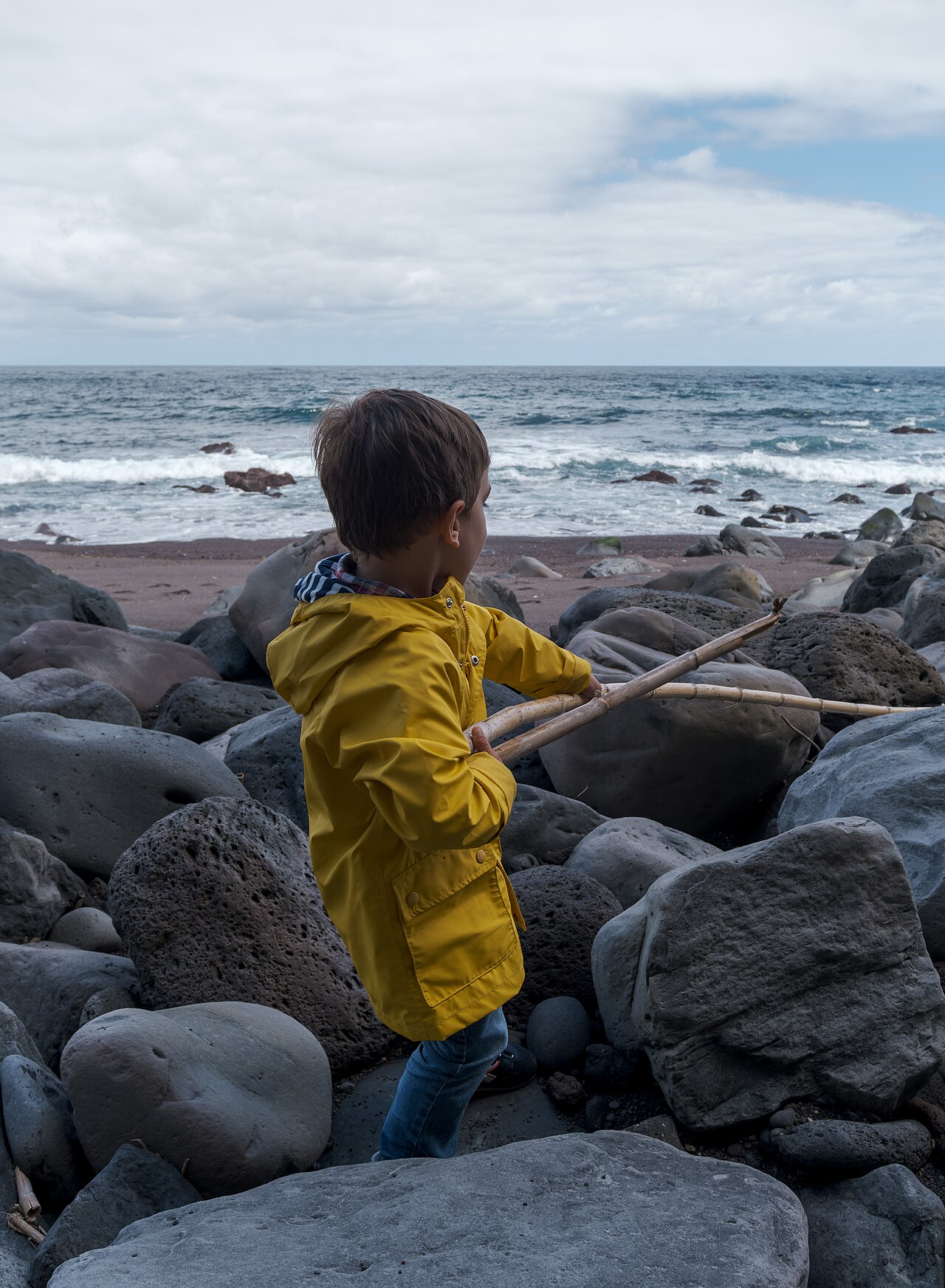
Graciosa's Carapacho natural pools sit beside a natural thermal spring. In Flores, Praia de Fajã Grande — surrounded by cliffs and backed by a waterfall — is among the most photogenic and isolated beaches in the entire archipelago.
Practical Beach Tips
- Best swimming season: July–September. Air temperatures 22–26°C, sea 22–24°C.
- Natural pool entry fees: Most charge €1.50–€3.00; some are free.
- Water quality: Blue Flag certification at Praia Formosa (Santa Maria) and several São Miguel beaches.
- Rip currents: Always check flag warnings. Atlantic-facing beaches can have strong currents even on calm-looking days.
- Sunset beaches: West-facing beaches on every island offer spectacular sunsets over the open Atlantic.
FAQ: Beaches in the Azores
Do the Azores have sandy beaches?
Yes. Santa Maria has golden sand beaches, the most extensive being Praia Formosa. Most other islands have black volcanic sand beaches or natural lava rock pools, which are equally beautiful and often more dramatic.
Is the sea warm enough to swim in the Azores?
The Gulf Stream keeps Azores waters mild year-round. Summer sea temperatures range from 22°C to 24°C — comparable to many Mediterranean resorts. Even in winter, temperatures rarely drop below 17°C.
Which Azores beaches are best for families?
Biscoitos rock pools (Terceira), Porto Pim Beach (Faial), and Praia Formosa (Santa Maria) are the most family-friendly, offering calm water, lifeguards in season, and good facilities.
Can I snorkel from the beaches?
Absolutely. Water clarity in the Azores is exceptional — visibility of 20–40 metres is common. The best snorkelling is off Pico, Faial, and the natural pools of Santa Maria.
Are there nudist beaches in the Azores?
There are no official nudist beaches in the Azores, though some remote and less-visited coves are used informally for topless bathing. The local culture is fairly conservative.