Azores Birdwatching: The Complete Guide to Endemic Species and Top Spots
Few destinations in Europe can match the Azores for birdwatching diversity and authenticity. Positioned at the crossroads of three continents in the middle of the North Atlantic Ocean, this Portuguese archipelago of nine volcanic islands records over 400 bird species and hosts some of the most remarkable avian endemics on the planet. Whether you are searching for the vulnerable Azores Bullfinch (Priolo), hoping to witness vast Cory's Shearwater colonies returning at dawn, or chasing rare American vagrants blown off-course by Atlantic storms, the Azores deliver experiences that stay with every birdwatcher for life. This complete guide covers all endemic species, the best birdwatching spots on each island, seasonal timing, and practical tips for planning your trip.
Why the Azores Are a World-Class Birdwatching Destination
The Azores' unique geographical position — roughly equidistant between Europe, North America, and Africa — creates an extraordinary ecological convergence zone. Migrating birds crossing the Atlantic are frequently swept off course by storms, making the islands, particularly Flores and Corvo, among the most productive vagrant hotspots in Europe. In October, the tiny island of Corvo consistently ranks as the best location on the continent for observing rare American passerines.
Beyond migration, the Azores harbor an ancient laurisilva forest ecosystem — a type of subtropical laurel forest found only in Macaronesia — that sustains birds found nowhere else on Earth. The archipelago also holds 80% of the world's breeding population of Cory's Shearwater and maintains one of the largest Roseate Tern nesting populations globally. With approximately 30 resident breeding species and habitats ranging from volcanic crater lakes to Atlantic cliff faces, the islands offer year-round ornithological interest.
Endemic Bird Species of the Azores
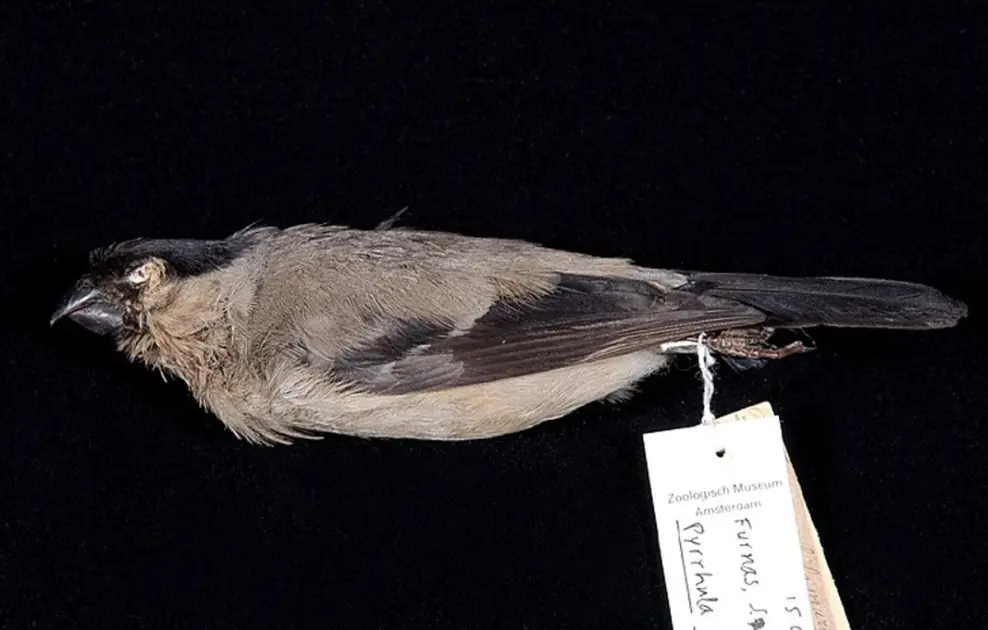
Azores Bullfinch — Priolo (Pyrrhula murina)
The Azores Bullfinch, known locally as the Priolo, is the archipelago's most iconic bird and one of the rarest passerines in Europe. Classified as Vulnerable by the IUCN, this compact finch measures 15–17 cm in length and weighs approximately 30 grams. Males display a striking black cap, face, wings, and tail, contrasted by soft grey body plumage; females are a more subdued grey-brown. Its call is a gentle, descending whistle — easy to miss amid forest sounds, but unmistakable once learned.
The Priolo is endemic exclusively to São Miguel Island, where it inhabits native laurisilva forest at elevations between 300 and 800 metres, concentrated in the Serra da Tronqueira range and the eastern valleys around Pico da Vara. The species was brought to the brink of extinction by habitat destruction — particularly the replacement of native forest with Japanese cedar plantations — and invasive plant species that reduced food availability.
The conservation story of the Priolo is a genuine European success: the population collapsed to an estimated 400 individuals in 2003, but EU LIFE-funded restoration projects led by SPEA (Portuguese Society for the Study of Birds) drove a remarkable recovery to 1,182 individuals by 2017. Over 200 hectares of invasive vegetation were removed and replanted with native laurisilva species. The Centro Ambiental do Priolo in Nordeste village serves as the conservation headquarters and provides up-to-date sighting information to visitors.
Best spot to see the Priolo: The unpaved forest road climbing toward Pico da Vara from Nordeste is the prime location. Search the first 500 metres carefully — Priolos frequently sit directly on the road surface. Visit between July and October, arriving at dawn for the highest activity. Misty mornings paradoxically improve sighting chances, as the birds become more active and visible.
Monteiro's Storm Petrel (Oceanodroma monteiroi)
Monteiro's Storm Petrel is another full endemic species and one of the rarest seabirds in Europe, breeding exclusively on three small islets off Graciosa Island: Ilhéu de Baixo, Ilhéu da Praia, and Baleia. The global breeding population is estimated at only 300 pairs. Unlike most storm petrels, it nests during the warm season (May to July), making it unusual among its family. Its close similarity to Band-rumped Storm Petrel makes field identification a genuine challenge, but a deeply satisfying one for experienced birders.
Atlantic Canary (Serinus canaria)
The Atlantic Canary, the wild ancestor of the familiar domestic canary, is endemic to Macaronesia and present across all nine Azorean islands. It prefers forest edges, gardens, and agricultural land, and its rich, melodious song is the signature soundtrack of an Azorean morning. Easy to observe and identify, it is often the first endemic species visitors encounter.
Endemic Subspecies
The Azores also harbor several taxonomically significant endemic subspecies:
- Azores Chaffinch (Fringilla coelebs moreletti) — a distinctly coloured subspecies common in high-altitude forests across the islands
- Azores Goldcrest (Regulus regulus azoricus) — a non-migratory resident found on five islands (Flores, Faial, Terceira, São Jorge, Pico) in coniferous and mixed woodland at mid elevations
- Azores Woodpigeon (Columba palumbus azorica) — a larger, robust subspecies inhabiting dense native forests
- Azores Buzzard (Buteo buteo rothschildi) — an endemic subspecies of Common Buzzard with distinct morphological features, visible soaring above forests on most islands
- Azores Robin (Erithacus rubecula rubecula) — a darker, more saturated subspecies present on all wooded islands
Seabird Colonies: A Global Importance
The Azores hold globally critical seabird populations. Cory's Shearwater (Calonectris borealis) nests in vast colonies across all islands — the archipelago accounts for the majority of the world's breeding pairs. On summer evenings, the skies above São Miguel, Pico, and Faial fill with thousands of returning shearwaters, their eerie wailing calls echoing across the landscape after dark. This nocturnal spectacle is unforgettable for any naturalist.
Roseate Tern (Sterna dougallii) maintains one of its largest global nesting populations in the Azores, visible along the coasts of multiple islands during summer. The Barolo Shearwater (Puffinus baroli), Europe's smallest shearwater, breeds on the islet off Santa Maria.
Best Birdwatching Spots by Island
São Miguel — Priolo Country
- Serra da Tronqueira / Pico da Vara: The undisputed top birding site in the Azores. Start at the Centro Ambiental do Priolo in Nordeste for orientation and recent sighting reports, then drive or hike the forest road toward Pico da Vara.
- Planalto dos Graminhais: High plateau with records of Wilson's Snipe and Snow Bunting in winter months.
- Lagoa das Furnas: Excellent for waders and wildfowl during spring and autumn migrations. The lake shore offers open sightlines.
- Lagoa das Sete Cidades: Waterbirds, ducks, herons, and grebes year-round in a stunning caldera setting.
- Praia dos Moinhos: Coastal lookout point for Cory's Shearwaters, terns, and passing seabirds.
Terceira — Vagrant Magnet
- Praia da Vitória harbor and lagoons: Famous for attracting Nearctic ducks such as American Wigeon, Blue-winged Teal, and rare transatlantic gulls.
- Cabo da Praia: Rocky coastline productive for vagrant shorebirds and rare gull species.
- Terceira Natural Park: Forest interior good for endemic subspecies and resident passerines.
Graciosa — Storm Petrel Island
Graciosa is an essential destination for those seeking Monteiro's Storm Petrel. Boat trips to the islets during May–July are the only way to observe this near-mythical bird reliably. Serra Branca regularly attracts Snow Buntings in winter. The island's quiet, uncrowded landscape makes every birding walk a pleasure.
Flores and Corvo — Atlantic Vagrant Capital
- Corvo: In October, this 17 km² island becomes Europe's premier vagrant trap. American warblers, vireos, thrushes, sparrows, and even rare hummingbirds have been recorded. The entire island is effectively one big birdwatching site. Accommodation books up months in advance during peak vagrant season.
- Flores: Native forests, volcanic lakes, and rugged coastal cliffs support an impressive diversity of species. The misty valleys are excellent for wintering birds and resident endemics.
São Jorge — Fajã dos Cubres (Ramsar Site)
Fajã dos Cubres is the Azores' only Ramsar-designated wetland of international importance. This coastal lagoon on the island's north coast attracts ducks, herons, waders, and passerines throughout the year. The combination of wetland and adjacent laurisilva forest makes it one of the most ecologically rich birdwatching sites in the archipelago.
Faial — Cliffs and Caldeira
- Charcos de Pedro Miguel: Inland pools and wet meadows attractive to migrating waders and ducks.
- Morro de Castelo Branco and Monte da Guia: Prime vantage points for observing Cory's Shearwaters and Roseate Terns over open ocean.
Pico — Volcanic Heights
- Caveiro Natural Reserve: High-altitude habitat for endemic subspecies including Azores Chaffinch and Goldcrest.
- Pico Wild Bird Rehabilitation Center: Educational visit with close-up encounters with recovering native species.
Santa Maria — Southernmost Sanctuary
The Ilhéu da Praia islet off Santa Maria hosts important breeding colonies of Cory's Shearwater and Barolo Shearwater. The island's drier, sunnier climate supports a slightly different flora and creates distinct habitat conditions compared to the wetter western islands.
When to Visit: Seasonal Birdwatching Calendar
- Spring (March–May): Returning migrants, active breeding song, Cory's Shearwaters arriving. Best for forest passerines and early seabirds.
- Summer (June–August): Priolo nidification, Monteiro's Storm Petrel breeding on Graciosa islets, shearwater colonies at full activity. Evening seabird watching at its best.
- Autumn (September–November): Peak migration season. October in Corvo is the apex of the Azorean birding calendar — rare American passerines make this month unmissable for twitchers.
- Winter (December–February): Snow Buntings on Graciosa and São Miguel, wintering wildfowl on lakes, smaller crowds. Weather can be challenging but rewarding.
Practical Tips for Birdwatching in the Azores
- Bring quality binoculars (8×42 or 10×42) and consider a spotting scope for seabirds and shorebirds.
- Wear neutral colours (green, brown, grey) to avoid disturbing birds.
- Dawn and late afternoon are peak activity periods — plan field sessions around these windows.
- Misty mornings on Serra da Tronqueira actually improve Priolo sightings — do not be deterred by fog.
- Hire specialist local guides: operators such as GerbyBirding and Bio&Bird Tours run small groups (maximum 6 people) and access private land and community conservation areas not available to independent visitors.
- Use Birda or eBird to log sightings and check recent observations by other birders in the area.
- Respect minimum distances from nests — human disturbance remains a significant threat to ground-nesting seabirds.
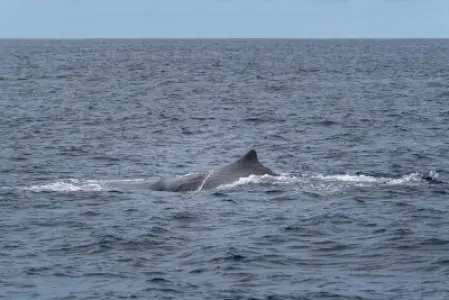
- The Azores complement birdwatching beautifully with whale watching and hiking — combining these activities makes for an exceptional naturalist's itinerary.
Conservation: Protecting the Azores' Avian Heritage
The SPEA leads bird conservation across the archipelago in partnership with the Regional Directorate of Environment. EU LIFE funding has enabled large-scale habitat restoration, particularly for the Priolo. Some ecotourism operators donate 10% of tour proceeds to local environmental NGOs — ask your operator before booking to ensure your visit contributes to conservation. The Azores' commitment to sustainable tourism is central to protecting these extraordinary ecosystems for future generations.
Frequently Asked Questions
What is the rarest bird in the Azores?
The Azores Bullfinch (Priolo) is the rarest bird in the archipelago and one of the most endangered passerines in Europe. Found only in the laurisilva forests of eastern São Miguel Island, its population was as low as 400 individuals in 2003 before conservation efforts drove recovery to over 1,100 by 2017. Monteiro's Storm Petrel, with only around 300 breeding pairs on Graciosa islets, is equally rare in global terms.
Which island is best for birdwatching in the Azores?
São Miguel is the top choice for endemic species, particularly the Priolo. Corvo is unmissable in October for rare American vagrants. Graciosa is essential for Monteiro's Storm Petrel. Each island offers a distinct ornithological profile, so a multi-island itinerary delivers the broadest experience.
Do I need a guide to see the Azores Bullfinch?
A guide is not mandatory but is strongly recommended. Local specialist guides know the Priolo's seasonal behaviour, have access to restricted areas, and their fees support conservation directly. The Centro Ambiental do Priolo in Nordeste (São Miguel) also provides free, current sighting information for independent visitors.
How many bird species can I expect to see in the Azores?
The Azores has recorded over 400 species in total, with approximately 30 resident breeding species. During October migration season on Corvo, a dedicated birder can realistically see 50 or more species in a single day, including rare American species not normally found in Europe.
Is birdwatching in the Azores good for beginners?
Yes. Species such as the Atlantic Canary, Azores Chaffinch, Common Buzzard, and Cory's Shearwater are relatively easy to observe and provide an excellent introduction. The Priolo and American vagrants offer greater challenge for experienced birders. Guided tours cater to all ability levels and are the recommended starting point for first-time visitors.