Mountain biking in the Azores is unlike anywhere else on earth. Picture cycling along the rim of smoking volcanic calderas, descending steep trails canopied by blue hydrangeas, threading through laurel forest where Atlantic mist turns everything dreamlike, and finishing at a black-sand cove accessible only by trail. Across nine volcanic islands with terrain rising to 2,351 metres on Pico and over 1,500 km of waymarked trails, the Azores has earned its reputation as one of Europe's most original MTB destinations — confirmed by back-to-back World Travel Awards as Europe's Leading Adventure Destination in 2023 and 2024.
Why the Azores Stand Out for Mountain Biking
Volcanic terrain creates highly technical descents over exposed basalt. Micro-climates produce dramatically different landscapes within a few kilometres. Light traffic on most islands means gravel tracks and rural lanes are genuinely rideable. And the endemic flora — tree ferns, giant heather, ancient laurisilva forest — frames every trail with scenery that cannot be replicated elsewhere. Whether you are an enduro rider chasing vertical drop or a leisure cyclist wanting café stops and ocean views, the Azores delivers.
São Miguel — The MTB Hub of the Azores
The largest island in the archipelago offers more than 400 km of rideable terrain and the widest range of difficulty levels.
Sete Cidades Caldera
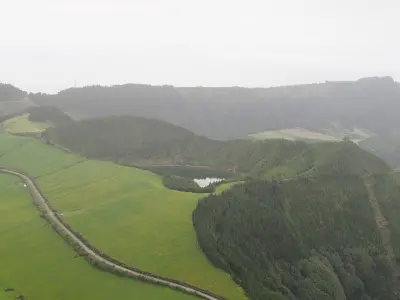
The twin crater lakes — one blue, one green — form the most iconic backdrop in Azorean MTB. The Sete Cidades Caldera Loop (12 km) rings the crater rim with constant lake views, combining technical hardpack with forest singletrack. The north-face descent to the Mosteiros coast drops over 400 metres of vertical — one of the most exhilarating runs in the archipelago.
Furnas and Nordeste
Trails through the volcanic valley of Furnas pass fumaroles, century-old tea plantations (the only in Europe), and botanical gardens. The Ribeira dos Caldeirões — Nordeste route crosses São Miguel's wildest terrain: Japanese cryptomeria forests, levada waterways, and clifftop viewpoints over the Atlantic. Root-strewn and muddy in winter, this is intermediate-to-advanced riding.
Lagoa do Fogo Circuit
A physically demanding climb to the crater lake of Serra da Cume — one of the most dramatic viewpoints in the Azores. The reward justifies every pedal stroke: an emerald lake inside a perfect volcanic bowl with the ocean visible on both sides of the island.
Pico — Technical Riding Under Portugal's Highest Volcano
Pico has the most technical terrain in the archipelago. The slopes of Pico volcano (2,351 m) plunge from alpine-style ridges to sea level in just a few kilometres. Trails cross the UNESCO Landscape of the Pico Island Vineyard Culture — the famous basalt-walled currais — as well as laurisilva forest and solidified lava flows locally called mistério, which demand robust tyres and good bike-handling skills.
The North Coast Route (Madalena to Santo Amaro, 35 km) is the most popular: flat, sea-level riding past UNESCO vineyards with Faial Island visible across the channel. The Lagoa do Capitão Circuit, at over 800 m altitude in the island's interior, winds through highland pastures and ancient craters — an isolated, silent world far above the Atlantic.
São Jorge — Fajã Trails
São Jorge is, for many MTB specialists, the most spectacular island in the Azores. Its narrow, elongated shape (55 km long, less than 8 km wide) creates a central ridge above 900 m with vertiginous descents to the fajãs — coastal platforms of volcanic origin perched directly above the sea. The Fajã dos Cubres and Fajã da Caldeira de Santo Cristo trails are the most iconic. Fair warning: descents to the fajãs include sections steeper than 25% on exposed rock, making them suitable for advanced riders only.
Terceira — History and Atlantic Views
Terceira combines cultural sightseeing with excellent trails. The Serra de Santa Bárbara Circuit rings the island's highest caldera (1,021 m) and is the most challenging route. The South Coast Trail from Angra do Heroísmo to Porto Martins offers panoramic coastal views and suits all levels. Angra has several e-bike rental points making the island even more accessible.
Flores — Hidden MTB Paradise
The westernmost island combines dramatic waterfalls, crater lakes wrapped in subtropical vegetation, and a network of dirt tracks traversing the island north to south. The Seven Lakes Circuit (40 km) links Flores's main caldeira lakes with considerable accumulated elevation. Soft, frequently wet terrain demands aggressive-tread tyres.
Bike Rental and Operators
Most islands have MTB and e-MTB rental operators. In São Miguel, companies including Futurismo Azores Adventures and Active Azores offer guided packages with transport and full equipment. Daily MTB hire: €25–40; e-bikes: €45–70. Guided tours with support van: €60–120 per person.
Best Seasons
- May–June: Mild temperatures, hydrangeas in full bloom, fewer crowds
- September–October: Most stable weather, golden vine landscape on Pico
- Winter: More rain, highly technical trails, dramatic scenery — best for experienced riders
Essential Tips
- Always wear a helmet — mandatory on guided trails, strongly recommended everywhere
- Pack waterproof layers: Azorean weather changes within minutes
- Aggressive-tread tyres (2.4"+) are recommended for basalt rock terrain
- Download offline maps before heading out — mobile coverage is patchy beyond towns
- Respect trail signage and private land boundaries
FAQ: Mountain Biking in the Azores
Do I need advanced MTB skills for the Azores?
No. The Azores offer trails for every level. Pico's north coast road and Terceira's rural lanes suit beginners. São Jorge's fajã descents and São Miguel's Lagoa do Fogo climb are for advanced riders. Most operators match trails to ability.
Can I bring my own bike to the Azores?
Yes. Airlines serving the Azores (SATA/Azores Airlines, Ryanair, TAP Air Portugal) accept bikes as checked baggage for approximately €30–60 per flight. Pack in a hard case or dedicated bike bag.
Are e-MTBs available in the Azores?
Yes and the range is growing fast. E-bikes are particularly well established in São Miguel and Terceira, making the steep volcanic terrain accessible to a much wider range of riders.
Which island is best for beginner mountain bikers?
Terceira and Pico's north coast are the most beginner-friendly: less extreme elevation, better support infrastructure, and clearer trail marking. São Miguel has the most options for all levels on a single island.
Is mountain biking permitted in all protected natural areas?
Not everywhere. Some Strict Nature Reserve zones restrict bicycle access. Always check with the Regional Environment Secretariat or local operators before planning routes in protected areas.