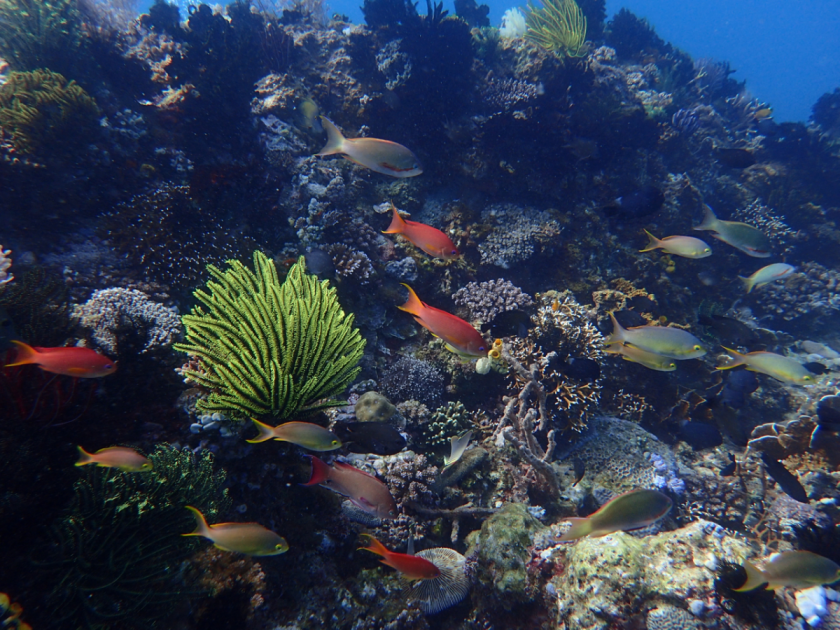
The Azores are widely regarded as one of the world's finest diving destinations. Located at the junction of three tectonic plates in the mid-North Atlantic, these waters combine exceptional visibility (regularly 30–40 metres), mild temperatures, and a marine biodiversity that astonishes even seasoned divers. Over 600 fish species, cold-water corals, sharks, manta rays, and even whales are possible encounters on an Azorean dive.
Why Dive the Azores?
- Visibility: 20–40 metres typically; over 50 metres on calm days
- Water temperature: 17–23°C (5mm wetsuit in winter, 3mm in summer)
- Biodiversity: 600+ fish species, cetaceans, turtles, and deep-water fauna
- Geology: Underwater caves, lava arches, basalt columns, and hydrothermal vents
- Sharks: Blue sharks, mako, and silky sharks are regular encounters
Faial: The Award-Winning Dive Destination
Faial is internationally recognised as the Azores' premier dive destination. The Capelinhos underwater volcanic crater (which erupted in 1957) offers unique lava formations, caves, and rich marine life. The Princess Alice Bank, a seamount 80 km south of Faial, is a world-class diving site for blue sharks, manta rays, and massive schools of fish.
Pico: Crystal-Clear Waters
Pico's waters have extraordinary clarity. The Cachorro underwater caves and Silveira lava arches are memorable dive sites. Regular dolphin encounters make every dive unforgettable.
São Miguel: Variety
The Vila Franca do Campo islet is the Azores' most famous snorkelling spot — a nearly circular natural lagoon with shallow, colourful fish-filled waters. Access by ferry (€10 per person; advance booking essential in summer). North coast caves and reefs near Rabo de Peixe offer frequent blue shark encounters in summer.
Megafauna Encounters
The Azores is one of few places on Earth to dive with blue sharks, oceanic manta rays, sea turtles, and dolphins in the same waters.
Dive Centres and Prices
All main islands have PADI/SSI dive centres. Average prices: guided dive €50–€70; discover scuba (first time) €80–€100; open water course €350–€450.
Blue Shark Diving in Faial
Blue shark diving trips from Horta last 3–4 hours with near-guaranteed summer encounters. Divers descend 15–20 metres; sharks approach naturally with controlled chumming. Cost: €80–€100 per person.
FAQ: Diving in the Azores
Do I need certification to dive in the Azores?
For autonomous diving above 12 metres, yes — PADI or equivalent required. For discovery dives (max. 12 m with instructor) and snorkelling, no certification needed.
Best time to dive in the Azores?
May–October is best. July–September offers maximum visibility, warmest water (22–23°C), and highest megafauna encounter probability.
Can I dive with sharks in the Azores?
Yes. Blue shark dives run regularly July–October, primarily from Faial. Blue sharks are not aggressive towards divers.
Is the Vila Franca islet open for snorkelling?
Yes. The natural lagoon is the Azores' top snorkelling destination. Access is controlled (max. 400 people/day). Advance booking essential in July–August. Ferry €10/person.
What wetsuit do I need?
3mm May–October; 5mm November–April. Water ranges from 17°C (winter) to 23°C (summer).