Complete Azores Island Hopping Guide: Ferries, Flights & Itineraries 2026
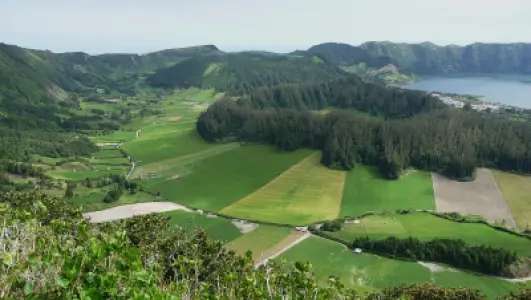
Island hopping in the Azores is one of Europe's most extraordinary travel experiences. Nine volcanic islands scattered across the North Atlantic, each with its own distinct character — from the emerald crater lakes of São Miguel to the UNESCO-listed lava vineyards of Pico and the dramatic sea cliffs of São Jorge. Whether you have five days or three weeks, this complete Azores island hopping guide for 2026 gives you everything you need: ferry schedules, inter-island flight prices, practical logistics, and the best multi-island itineraries to make the most of the archipelago.
The Three Island Groups of the Azores
Understanding the geography of the Azores is the first step to planning your island hopping trip. The archipelago is divided into three groups separated by hundreds of kilometres of open Atlantic Ocean:
- Eastern Group: São Miguel and Santa Maria. These two easternmost islands are connected by inter-island flights (around 30 minutes). São Miguel is the main gateway island, home to Ponta Delgada's international airport.
- Central Group: Terceira, Graciosa, São Jorge, Pico, and Faial. The heart of the archipelago and home to the famous Triangle. This group has the best ferry network, with year-round connections between Faial and Pico.
- Western Group: Flores and Corvo. The most remote and wildest islands of the Azores. A year-round ferry operates between Flores and Corvo (weather permitting), taking approximately 1 hour 30 minutes.
Critical note: There are no ferries between island groups. To travel between the Eastern and Central groups (or to the Western group), you must fly. This is the single most important logistical fact for planning island hopping in the Azores.
Inter-Island Ferries: Atlânticoline
Atlânticoline is the sole operator of scheduled inter-island ferry services in the Azores. It transports passengers, cargo, and vehicles, and is the backbone of island hopping within island groups.
Main Ferry Routes
- Blue Line (Linha Azul): Connects Faial (Horta) and Pico (Madalena) only. Operates multiple times daily year-round. Journey time: just 30 minutes. This is the most frequent and popular ferry route in the Azores.
- Green Line (Linha Verde): Connects Faial, Pico (Madalena and São Roque do Pico), and São Jorge (Velas). Primarily seasonal, with the most frequent services between May and September.
- Extended summer network: During peak season, Atlânticoline expands its routes to include Terceira and Graciosa, creating a fuller network across the Central Group.
Ferry Prices and Journey Times in 2026
The following prices are approximate and may vary by season and availability. Always confirm on the official Atlânticoline website before booking:
- Horta (Faial) → Madalena (Pico): ~€8–12 per person | 30 minutes
- Madalena (Pico) → Velas (São Jorge): ~€15–20 per person | 1 hour 20 minutes
- Horta (Faial) → Velas (São Jorge): ~€18–22 per person | 1 hour 40 minutes
- Flores → Corvo: ~€10–15 per person | 1 hour 30 minutes
Vehicle transport costs an additional €40–80 per car on a single crossing, depending on vehicle size and route. Book tickets in advance at atlanticoline.pt — especially during summer months when sailings fill up fast. There are no baggage weight limits on Atlânticoline ferries, so you can bring large suitcases without extra charges.
Seasonality: The Most Important Thing to Know
Ferry services in the Azores are heavily seasonal and highly weather-dependent. This is arguably the most misunderstood aspect of Azores travel planning. Here is what you need to know:
- Peak ferry season: May to September/October — most routes are fully operational with frequent departures.
- Winter (October to April): Most seasonal ferry routes are suspended or heavily reduced. Even the Green Line (Faial-Pico-São Jorge) may have very limited frequency. During this period, flying is the only practical option between most islands.
- Weather cancellations: Even in summer, rough Atlantic weather can cancel or delay sailings. Never plan tight same-day connections that rely on a ferry.
Inter-Island Flights in the Azores
SATA Air Açores (part of the Azores Airlines group) operates the domestic flight network across all nine islands year-round. Flights are the only connection between island groups and the most reliable option throughout winter.
Average Flight Prices
- São Miguel ↔ Terceira: €60–90 per one-way segment
- São Miguel ↔ Faial / Pico / São Jorge: €75–120 per one-way segment
- São Miguel ↔ Flores / Corvo: €90–140 per one-way segment
- Terceira ↔ Faial: €55–85 per one-way segment
Book inter-island flights as early as possible — ideally 2–3 months ahead for travel in June, July, and August. Use the Azores Airlines website or Skyscanner to compare prices. Flight times are generally 30–55 minutes depending on the route.
Delays and Cancellations
Inter-island flights in the Azores have a notably high rate of delays and cancellations — fog, strong winds, and unpredictable Atlantic weather conditions are part of everyday island life. Cancellation or delay rates exceeding 30 minutes can reach 25–30% on certain routes during winter months. Always keep at least one buffer day before any international connecting flight.
The Triangle: The Heart of Azores Island Hopping
The Azores Triangle — comprising Faial, Pico, and São Jorge — is the island hopping destination within the archipelago. The three islands sit within 50 km of each other, are connected by frequent ferry services, and each offers a completely different personality and set of experiences.
Faial — The Blue Island
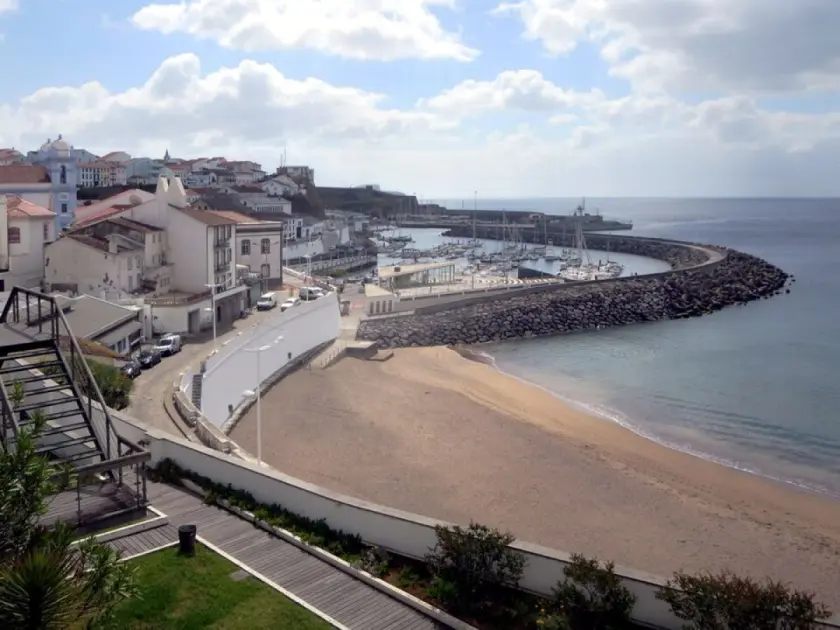
Faial earns its nickname from the hydrangeas that carpet the island every summer. Its main highlights are the Caldeira (a 2 km-wide summit caldera with a 400 m-deep crater), the Capelinhos volcano museum (the volcano emerged from the Atlantic in 1957–58 and is one of Europe's best volcanology centres), and the legendary marina of Horta. Horta Marina is one of the most famous sailor's stopovers in the North Atlantic — the tradition of painting murals on the harbour walls has been alive since 1987, and today thousands of artworks cover every surface.
Pico — The Island of Wine and Volcano
Pico is dominated by the Montanha do Pico (2,351 m), Portugal's highest point. The island's extraordinary black basalt lava vineyards — a network of low stone walls called currais built by hand over centuries to protect vines from Atlantic winds — have been a UNESCO World Heritage Site since 2004. Climbing Pico at dawn is one of the most memorable experiences in the Azores; guided ascents (mandatory, ~€25 for a guide) run from July to September. The waters off Pico are also among the world's best whale watching locations, with sperm whales present year-round.
São Jorge — The Island of the Fajãs
São Jorge is a long, narrow island of extraordinary drama — sheer cliffs of 300–500 m plunge directly into the Atlantic for much of its length. Its famous fajãs (lava platforms at sea level, formed when ancient lava flows reached the ocean) are unique geological formations found almost nowhere else on Earth. The Fajã da Caldeira de Santo Cristo is internationally renowned as one of Europe's best long-wave surf spots. São Jorge DOP cheese — aged 3 to 12 months — is one of the finest artisan cheeses in Portugal and a must-taste on any visit.
Best Island Hopping Itineraries for 2026
Itinerary 1: The Triangle (5–7 days)
The ideal circuit for travellers with less than a week who want deep, immersive experiences rather than rushed island-ticking:
- Days 1–2 | Faial: Arrive in Horta. Explore the Caldeira rim trail, visit the Capelinhos Volcano Museum, walk the marina and admire the painted murals.
- Day 3 | Pico: Take the 30-minute Blue Line ferry to Madalena. Tour the UNESCO lava vineyards, visit a local winery for a Verdelho tasting, and join an afternoon whale watching tour.
- Days 4–5 | São Jorge: Ferry to Velas (1 h 20 min). Hike down to the Fajã da Caldeira de Santo Cristo. Visit a cheese producer for a São Jorge DOP tasting.
- Days 6–7 | Back to Faial: Return by ferry to Horta. Final exploration or day trip to Pico. Fly out from Horta or connect via São Miguel.
Itinerary 2: Central & Eastern Azores (10–12 days)
- Days 1–4 | São Miguel: Sete Cidades, Furnas geothermal valley, south coast beaches, Gorreana tea plantation.
- Day 5 | Terceira: Fly (40 min). Angra do Heroísmo UNESCO city, Algar do Carvão volcanic cave.
- Days 6–7 | Graciosa: Ferry or short flight. The Caldeira and Furna do Enxofre — a lagoon inside a volcanic cave.
- Days 8–12 | The Triangle: Faial, Pico and São Jorge by ferry — see Itinerary 1 above for details.
Itinerary 3: The Wild West (8–10 days)
- Days 1–3 | São Miguel: Acclimatise and explore before heading west.
- Days 4–7 | Flores: Fly (approximately 2 hours with a stop). Flores is the most visually dramatic island in the Azores — cascading waterfalls, lagoons in volcanic craters, and dense green vegetation. The island feels genuinely untouched.
- Days 8–9 | Corvo: Ferry from Flores (1 h 30 min). The smallest island in the Azores (just 430 inhabitants) has a single village and one of the most spectacular volcanic calderas you'll ever hike into.
- Day 10 | Return: Ferry back to Flores, then fly to São Miguel for international connections.
Essential Practical Tips for Azores Island Hopping
Booking and Logistics
- Book ferries online at atlanticoline.pt well in advance, especially for July and August sailings with a car. Car spaces fill up weeks ahead.
- Book inter-island flights at least 2–3 months ahead for peak season. Availability drops sharply from May onwards.
- If renting a car, always confirm with the rental company whether the vehicle can be transported on ferries — some contracts explicitly prohibit it.
- Baggage on ferries has no weight limit — bring your full luggage without extra cost.
- For same-day round trips on ferries (e.g., a day trip from Faial to Pico), purchase your return ticket in advance to avoid selling out.
Best Time of Year
The sweet spot for Azores island hopping is late May to mid-June: most ferry routes are operational, the main summer crowds have not yet arrived, and prices are lower than July–August. June also offers increasingly stable weather without the peak-season premiums. July and August guarantee the most sunshine but come with higher prices and more tourists on the main routes.
Estimated Budget for a 7-Day Triangle Trip
- Ferry tickets (all crossings): €50–80
- Accommodation (hostel to 3-star hotel): €60–120/night
- Food and drink: €25–50/day
- Activities (whale watching, Pico guided ascent, cheese tasting): €80–150
- Total estimated budget: €800–1,500 per person (excluding long-haul flights)
FAQ — Azores Island Hopping
How many Azores islands can you visit in two weeks?
In two weeks, you can comfortably visit 4 to 6 islands. A popular combination is São Miguel + Terceira + the Triangle (Faial, Pico, São Jorge). Attempting all nine islands in two weeks is theoretically possible but leaves very little time on each island. Quality over quantity is the standard advice from experienced Azores travellers.
Can you island hop in the Azores in winter?
Yes, but with significant limitations. Between October and April, most seasonal ferry routes are suspended. The Blue Line (Faial–Pico) operates year-round but with reduced frequency. For all other inter-island travel in winter, flying is the only practical option. Prices are lower in winter, but weather-related cancellations are much more common.
Do you need to book Azores ferries in advance?
From July to August: yes, book 2–4 weeks ahead, especially if travelling with a car or a group. Outside peak season, tickets are generally available with a few days' notice, but booking online in advance is always recommended to secure your preferred sailing time.
Which Azores island is easiest to add to an island hopping itinerary?
Pico is the easiest addition thanks to its proximity to Faial — just 30 minutes by ferry on the Blue Line. It's easy to do a day trip from Faial to Pico (or vice versa). São Jorge, just over 1 hour from both Faial and Pico by ferry, fits naturally into any Triangle itinerary.
Are bicycles and motorcycles allowed on Atlânticoline ferries?
Yes. Bicycles are accepted at a reduced fare (sometimes free on certain routes). Motorcycles are transported as vehicles and charged accordingly. Check the current tariff table on the official Atlânticoline website for exact pricing by vehicle type.